
Have You Ever Wanted to Try Something New but Stopped Yourself by Thinking, “I’m Not Good Enough,” “I Can’t Do This,” Or “Maybe I’m Just Not Made for It”?
If You Have, You’re Not Alone. We All Experience Moments of Self-Doubt. Sometimes, The Biggest Thing Standing Between Us and a New Opportunity Isn’t a Lack of Talent or Resources. It’s The Way We Think About Ourselves and Our Abilities.
The Good News? You Don’t Have to Believe That Your Current Abilities Define Your Future.
A Fixed Mindset Makes You Focus on What You Cannot Do Today. A Growth Mindset Encourages You to Explore What You Could Learn Tomorrow. When You Begin Changing the Way You Think, You May Start Noticing Opportunities You Previously Ignored.
This Is Where the Idea of a Mega Mindset Comes In: Think Bigger, Stay Curious and Take Action to Discover New Possibilities.
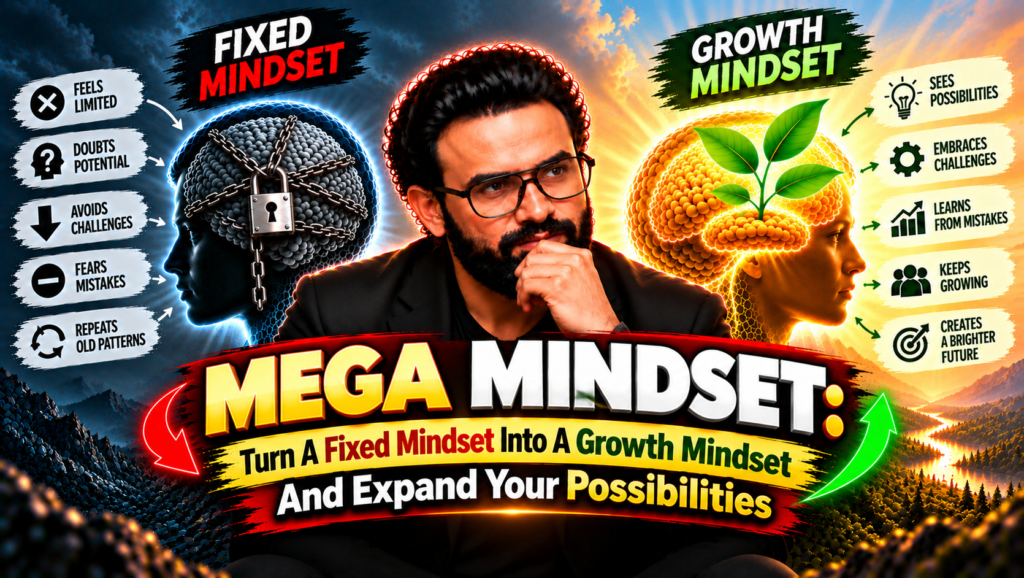
1. Understand What Is Holding You Back
A Fixed Mindset Is the Belief That Your Intelligence, Talent or Abilities are Largely Unchangeable. When You Think This Way, You May Avoid Challenges Because You Don’t Want to Look Incapable.
For Example, Imagine You Want to Start a Business. You Have an Idea, But You Tell Yourself, “I’m Not a Business-Minded Person.”
Instead of Exploring the Idea, Learning About Customers, Or Developing a Plan, You Give Up Before You Begin.
A Growth Mindset Takes a Different Approach. It Recognizes That Abilities Can Develop Through Learning, Practice, Useful Feedback, And Experience.
You Might Think, “I’ve Never Started a Business Before, But I Can Learn the Basics and Take My First Step.”
Notice The Difference? The Situation Hasn’t Changed, But Your Response Has.
A Fixed Mindset Treats Your Current Ability as a Final Answer. A Growth Mindset Treats It as A Starting Point.
2. Replace “I Can’t” With “How Can I Learn?”
The Words You Use When Talking to Yourself Can Influence How You Respond to Challenges.
When You Say, “I Can’t Do This,” You May Close the Door Before Exploring Your Options. But When You Ask, “How Can I Learn to Do This?” You Give Yourself a Question to Work On.
Try Replacing These Common Thoughts:
- “I’m Bad at Public Speaking” With “I Can Improve My Speaking Skills with Practice.”
- “I’m Not Creative” With “I Can Explore Different Ways to Develop My Creativity.”
- “I’ll Never Understand This” With “What Can I Try to Understand It Better?”
- “I’m Too Old to Start Something New” With “What Is One New Skill I Can Begin Learning Today?”
You Don’t Need to Pretend That Everything Is Easy. You Simply Need to Leave Room for Improvement.
The Goal Isn’t to Convince Yourself That You Can Do Anything Instantly. It’s to Remind Yourself That You May Be Capable of More Than You Currently Realize.
3. Stop Letting the Fear of Failure Make Your Decisions
One Major Reason People Stay Within Their Comfort Zones Is the Fear of Failure.
They Worry About Making Mistakes, Receiving Criticism or Looking Inexperienced. As A Result, They Choose What Feels Safe Even When They Want Something Different.
Consider A Student Who Wants to Participate in A School Competition but Worries About Losing. A Fixed Mindset Might Say, “If I Don’t Win, Everyone Will Think I’m Not Talented.”
A Growth Mindset Asks, “What Can I Learn by Participating, Regardless of The Result?”
The Student May Still Feel Nervous, But Now the Experience Has Value Beyond Winning.
Failure Doesn’t Automatically Make You Stronger. What Matters Is How You Respond to It. Reflect on What Happened, Identify What You Can Improve and Decide What to Do Differently Next Time.
Don’t Make Success Your Only Reason to Try. Make Learning Part of The Goal, too.
4. Turn Challenges into Opportunities to Grow
It’s Easy to Feel Motivated When Everything Is Going Well. The Real Test Comes When You Face a Difficult Task, An Unexpected Problem or A Disappointing Result.
A Mega Mindset Doesn’t Mean Ignoring Difficulties or Pretending That Every Problem Is an Opportunity. It Means Looking for A Constructive Response, Even When the Situation Is Uncomfortable.
Suppose You Apply for a Job and Don’t Get Selected.
You Could Conclude That You’re Not Good Enough and Stop Applying. Or You Could Review Your Interview Performance, Improve Your Resume, Practice Answering Questions and Prepare for the Next Opportunity.
You May Not Control Every Outcome, But You Can Often Influence How You Prepare and Respond.
When You Face a Challenge, Ask Yourself Three Questions:
- What Is This Situation Teaching Me?
- What Can I Improve or Do Differently?
- What Is The Next Useful Step I Can Take?
These Questions Help Move Your Attention Away from Helplessness and Toward Action.
5. Focus on Progress Instead of Perfection
Perfectionism Can Quietly Keep You Stuck.
You May Delay Starting a Project Because You Want the Perfect Plan. You May Avoid Sharing Your Work Because You Think It Needs More Improvement. You May Compare Your First Attempt with Someone Else’s Tenth Year of Experience.
The Result? You Spend More Time Worrying About Being Good Than Actually Getting Better.
A Growth Mindset Encourages You to Focus on Progress.
If You Want to Write, Start with One Paragraph. If You Want to Improve Your Fitness, Begin with a Manageable Routine. If You Want to Learn a New Digital Skill, Practice for A Short Time Each Day.
Small Steps May Seem Insignificant, But They Help You Build Experience and Understand What Works for You.
Instead of Asking, “Am I Good at This Yet?” Try Asking, “Am I Making Progress?”
You Don’t Need to Master Everything Today. You Need to Keep Learning and Adjusting as You Go.
6. Learn From People Without Comparing Your Journey
Comparison Can Make You Underestimate Your Own Potential.
You See Someone Else’s Achievements and Think They Are Naturally Talented, More Intelligent or More Capable Than You. You May Forget That You Don’t Know How Many Mistakes, Struggles or Hours of Practice Came Before Their Success.
Instead Of Using Other People’s Progress as Evidence That You’re Falling Behind, Use It as a Source of Learning.
If Someone Communicates Well, Observe How They Explain Ideas. If Someone Runs a Successful Business, Study How They Understand Their Customers. If A Classmate Performs Well in a Subject, Ask Which Study Methods Help Them.
You Don’t Need to Copy Another Person’s Journey. You Can Learn from Their Experience and Adapt Useful Ideas to Your Circumstances.
Let Comparison Inspire Your Learning, Not Decide Your Worth.
7. Build Your Growth Mindset Through Daily Actions
Changing Your Mindset Is Not a One-Time Decision. It Is a Habit You Strengthen Through Everyday Choices.
You Don’t Have to Transform Your Entire Life Overnight. Begin With A Few Simple Practices.
Notice Your Thoughts: Pay Attention When You Tell Yourself That Something Is Impossible or That You’re Not Capable.
Question The Assumption: Ask Whether You’re Describing a Fact or Making a Prediction Based on Fear.
Choose One Small Challenge: Try Something That Stretches Your Abilities Without Overwhelming You.
Ask For Feedback: Listen To Useful Suggestions and Decide How You Can Apply Them.
Reflect On Your Progress: At the End of The Day, Identify One Thing You Learned, One Action You Took or One Mistake That Taught You Something Useful.
These Actions May Seem Small, But They Help You Respond to Situations More Thoughtfully.
Remember, A Growth Mindset Doesn’t Mean Ignoring Your Limitations. It Means Understanding That Some Limitations Can Change with Practice, Support, Time and the Right Approach.
8. Think Bigger: Discover Your Mega Possibilities
Your Mindset Influences What You Notice, What You Attempt and How You Respond When Things Become Difficult.
When You Believe That Your Abilities Can Develop, You May Become More Willing to Explore Unfamiliar Paths. You May Ask More Questions, Seek Feedback, And Give Yourself Permission to Begin Before You Feel Completely Ready.
That Doesn’t Mean Positive Thinking Guarantees Success. Circumstances, Opportunities, Resources and Support Matter, too. But A More Flexible Mindset Can Help You Make Better Use of the Opportunities Available to You.
This Is the Heart of Mega Mindset.
It’s About Refusing to Treat Today’s Challenges as Permanent Definitions of Who You Are. It’s About Staying Open to Learning, Taking Responsibility for Your Next Step, And Recognizing That Your Future May Offer Possibilities You Haven’t Explored Yet.
So, The Next Time You Think, “I Can’t Do This,” Pause for A Moment.
Ask Yourself, “What If I Can Learn?”
That Simple Question May Not Solve the Entire Problem, But It Can Help You Find a Place to Begin.
Final Thoughts: Your Mindset Can Open New Doors
You Don’t Need to Become a Completely Different Person to Create Change. You Can Begin by Changing How You Respond to Your Thoughts, Mistakes, Challenges and Opportunities.
Replace Self-Doubt with Curiosity. Replace The Fear of Looking Inexperienced with The Willingness to Learn. Replace The Pressure to Be Perfect with the Commitment to Make Progress.
You Won’t Control Every Outcome and You Won’t Succeed at Everything You Try. But You Can Continue Developing Your Skills, Learning from Experience and Choosing Your Next Step with Greater Confidence.
Your Current Abilities are Part of Your Story, Not Necessarily the Whole Story.
Think Bigger. Stay Curious. Take Action.
Mega Mindset. Mega Possibilities.
Frequently Asked Questions (Faqs)
1. What Is a Fixed Mindset?
A Fixed Mindset Is the Belief That Abilities, Intelligence or Talents Are Largely Unchangeable. It Can Lead People to Avoid Challenges Because They Fear Failure or Worry About Appearing Incapable.
2. What Is a Growth Mindset?
A Growth Mindset Is the Belief That Abilities Can Develop Through Learning, Practice, Feedback, And Experience. It Encourages People to Approach Challenges as Opportunities to Improve.
3. Can I Change from a Fixed Mindset to A Growth Mindset?
Yes. You Can Gradually Develop a More Growth-Oriented Approach by Noticing Limiting Thoughts, Questioning Your Assumptions, Learning from Mistakes, And Taking Small Steps Outside Your Comfort Zone.
4. How Does a Growth Mindset Expand Possibilities?
A Growth Mindset Can Encourage You to Try New Things, Seek Feedback, Develop Skills, And Consider Alternatives When You Face Difficulties. These Actions May Help You Discover Opportunities You Previously Overlooked.
5. Does Having a Growth Mindset Mean I Will Always Succeed?
No. Success Also Depends on Circumstances, Resources, Opportunities, And Other Factors. A Growth Mindset Doesn’t Guarantee Success, But It Can Help You Learn from Experience and Respond More Constructively to Setbacks.
6. What Is the Easiest Way to Practice a Growth Mindset Every Day?
Start By Noticing One Limiting Thought and Replacing It with a Useful Question. For Example, change “I Can’t Do This” To “What Can I Learn or Try Next?” Then Take One Small, Practical Action.
7. What Does “Mega Mindset, Mega Possibilities” Mean?
It Means Staying Open to Learning, Thinking Beyond Your Current Assumptions and Taking Action to Explore New Opportunities. It Encourages You to See Personal Growth as an Ongoing Journey Rather Than a Fixed Destination.