
Have You Ever Wondered Why Two People Can Face the Same Challenge but Respond in Completely Different Ways?
One Person Sees a Difficult Task and Thinks, “This Is Too Hard. I Should Give Up.” Another Looks at the Same Task and Thinks, “This Is Challenging, But Maybe I Can Figure It Out.”
The Situation Is the Same. The Difference Lies in How They Interpret It.
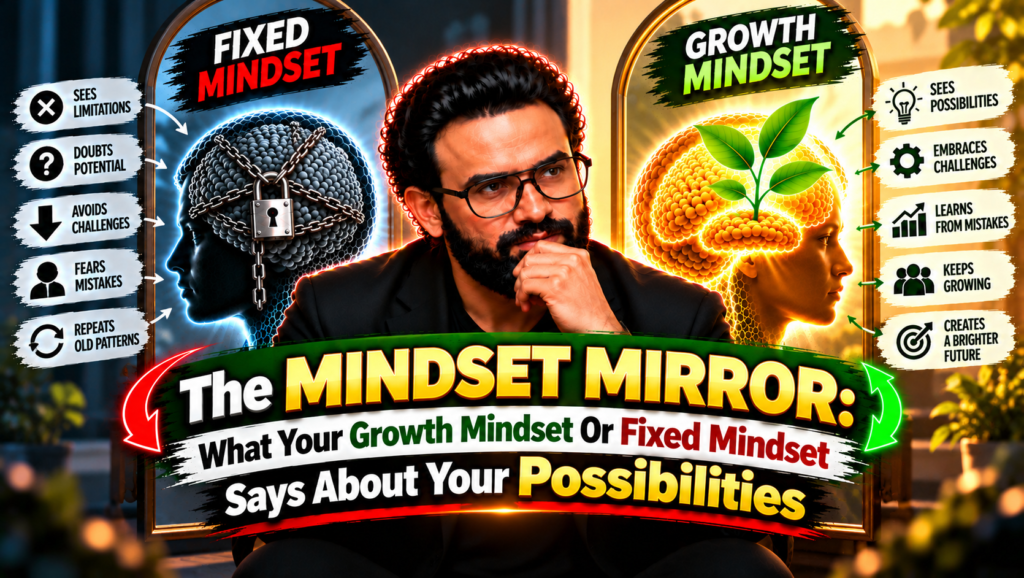
Our Mindset Acts Like a Mirror. It Reflects the Beliefs We Hold About Ourselves, Our Abilities and What We Think Is Possible. Sometimes, This Mirror Helps Us Recognize Our Strengths. At Other Times, It Reflects Our Fears So Clearly That We Mistake Them for Facts.
Understanding Your Mindset Can Help You Recognize the Thoughts Influencing Your Decisions and Discover Possibilities You May Have Overlooked.
Welcome To the World of Mega Mindset, Mega Possibilities, Where Personal Growth Begins with a Simple Question: What Is My Mindset Showing Me?
1. Your Mindset Is a Mirror, Not Your Identity
Imagine Looking into A Mirror and Seeing a Tired Face. Does That Mean You Will Always Feel Tired? Of Course Not. Your Reflection Shows You a Moment, Not Your Entire Future.
Your Mindset Works in a Similar Way.
If You Believe You’re Not Creative, You May Avoid Activities That Require Creativity. If You Believe You’re Poor at Communication, You May Hesitate to Speak in Meetings or Share Your Ideas.
Over Time, These Choices Can Reinforce the Beliefs You Started With.
But Here’s Something Important: A Thought About Yourself Isn’t Automatically a Permanent Truth.
You Might Struggle with a Skill Today and Improve with Practice. You Might Feel Uncomfortable Speaking in Public and Gradually Become More Confident Through Experience.
Your Mindset Can Influence the Choices You Make, But It Doesn’t Define Every Ability You Have or Every Opportunity Available to You.
The First Step Toward Growth Is Learning to Look at Your Thoughts Without Accepting Every One of Them as A Final Judgment.
2. What Does a Fixed Mindset Reflect?
A Fixed Mindset Is the Belief That Abilities and Intelligence are Largely Unchangeable. When You Approach Life This Way, You May See Your Current Performance as Proof of What You Can or Cannot Do.
For Example, Imagine You’re Learning a New Skill and Make Several Mistakes.
A Fixed Mindset Might Tell You:
- “I’m Just Not Talented Enough.”
- “Other People are Naturally Better Than Me.”
- “If I Can’t Do It Well Now, I’ll Never Be Good at It.”
- “I Shouldn’t Try Because I Might Fail.”
These Thoughts Can Make You Focus More on Protecting Your Self-Image Than Developing Your Abilities.
You Might Avoid Challenges, Reject Feedback, Or Give Up Early Not Necessarily Because You Lack Potential, But Because You Don’t Want to Experience the Discomfort of Being a Beginner.
The Danger Is That Your Decisions May Become Smaller Than Your Actual Possibilities.
A Fixed Mindset Often Asks, “What If I Can’t?” Before Asking, “What Could I Learn?”
Recognizing This Pattern Isn’t a Reason to Criticize Yourself. It’s An Opportunity to Understand What’s Happening and Choose a Different Response.
3. What Does a Growth Mindset Reflect?
A Growth Mindset Begins with A Different Belief: Your Abilities Can Develop Through Effort, Effective Strategies, Learning and Feedback.
It Doesn’t Mean You Believe You’re Good at Everything. It Means You Accept That Your Current Abilities May Not Represent Your Future Abilities.
Consider Someone Who Wants to Start Creating Videos but Has Never Edited One Before.
A Fixed Mindset Might Say, “I’m Not a Technical Person. This Isn’t for Me.”
A Growth Mindset Might Say, “I Don’t Know How to Edit Videos Yet. I Can Start with the Basics and Improve as I Practice.”
The Second Person Hasn’t Suddenly Gained Technical Skills. Instead, They’ve Adopted an Approach That Makes Learning Possible.
A Growth Mindset Encourages You To:
- Treat Challenges as Opportunities to Develop Skills.
- Learn From Mistakes Instead of Hiding Them.
- Use Feedback to Improve Your Approach.
- Recognize Progress Rather Than Demand Perfection.
- Stay Open to Possibilities You Haven’t Explored.
You May Still Experience Fear, Frustration and Disappointment. The Difference Is That These Feelings Don’t Have to Make Every Decision for You.
4. Your Possibilities Often Begin with Better Questions
The Questions You Ask Yourself Can Influence the Options You Consider.
Think About the Difference Between These Two Questions:
Fixed Mindset: “Why Am I So Bad at This?”
Growth Mindset: “What Part of This Do I Need to Practice?”
The First Question Focuses on Judging Yourself. The Second Directs Your Attention Toward Something You Can Work On.
Try Applying This Shift to Everyday Situations.
If You Don’t Get the Results You Wanted in an Exam, Ask, “Which Study Methods Should I Change?”
If Your Business Isn’t Attracting Customers, Ask, “What Can I Learn About My Audience and Their Needs?”
If You Find It Difficult to Maintain a Habit, Ask, “How Can I Make This Habit Easier to Repeat?”
Better Questions Don’t Guarantee Better Outcomes, But They Can Help You Identify Useful Next Steps.
When You Stop Treating Every Difficulty as Proof of Personal Failure, You Create More Room for Curiosity, Experimentation and Learning.
5. Look Beyond the Reflection of Fear
Fear Often Presents Itself as a Prediction.
You Might Think, “People Will Laugh at My Idea,” “I’ll Embarrass Myself,” Or “I’ll Never Succeed.”
Sometimes, Risks are Real and Deserve Careful Consideration. But Sometimes, Your Mind Is Treating an Uncertain Outcome as If It Has Already Happened.
The Goal Isn’t to Ignore Risks. It’s To Examine Them Honestly.
Ask Yourself:
- What Do I Actually Know About This Situation?
- What Am I Assuming Might Happen?
- Can I Take a Small Step Without Risking Too Much?
- What Would I Learn Even If the Result Wasn’t Perfect?
For Example, If You Want to Share Your Writing but Fear Criticism, You Don’t Have to Publish a Book Immediately. You Could Begin by Sharing One Short Piece with Someone You Trust.
Small Experiments Help You Gather Real Experience Instead of Relying Entirely on Imagined Outcomes.
Sometimes You’ll Discover That the Task Is Harder Than Expected. Other Times, You’ll Realize That Your Fear Exaggerated the Difficulty.
Either Way, You Gain Information That Can Guide Your Next Decision.
6. Your Mindset Can Change the Way You See Other People
The Mindset Mirror Doesn’t Only Affect How You See Yourself. It Can Influence How You Interpret Other People’s Success, too.
When Someone Achieves Something Impressive, A Fixed Mindset May Lead You to Think, “They’re Naturally Talented. I Could Never Do That.”
A Growth Mindset Encourages a More Useful Response: “What Can I Learn from How They Approached This?”
You Can Study Their Habits, Strategies, Decisions and Experiences Without Assuming That Your Journeys Must Look Identical.
You Can Also Remember That People Have Different Resources, Responsibilities, Opportunities, And Starting Points. Growth Doesn’t Require Pretending That Everyone Faces the Same Circumstances.
The Aim Is Not to Turn Every Successful Person into a Standard You Must Meet. It’s To Remain Open to Lessons That Might Help You Move Toward Your Own Goals.
Other People’s Achievements Don’t Have to Reduce Your Belief in Yourself. They Can Offer Ideas Worth Exploring.
7. Practice Looking at Yourself with A Growth Mindset
You Don’t Need to Change Every Belief at Once. Begin By Noticing Your Responses to Everyday Challenges.
Try This Simple Five-Minute Mindset Reflection at The End of Each Day.
Step 1: Identify A Limiting Thought.
Write Down One Moment When You Doubted yourself or Wanted to Give Up.
Step 2: Examine The Thought.
Ask Whether It Describes a Fact, A Temporary Difficulty or an Assumption About Your Abilities.
Step 3: Reframe It.
Replace A Final Judgment with A Practical Question. For Example, change “I’m Terrible at This” To “Which Part Should I Work on First?”
Step 4: Choose One Action.
Decide On a Small Step You Can Take, Such As Practicing for Ten Minutes, Asking for Feedback, Or Trying Another Strategy.
Step 5: Recognize What You Learned.
At The End of the Day, Notice What the Experience Taught You, Even If the Result Wasn’t What You Hoped For.
This Exercise Isn’t About Forcing Yourself to Think Positively. It’s About Thinking More Accurately, Responding More Constructively and Giving Yourself a Fair Opportunity to Improve.
Final Thoughts: Change The Reflection, Explore the Possibilities
Your Mindset Is Like a Mirror, But It Isn’t a Complete Picture of Your Potential.
A Fixed Mindset May Reflect Your Fears, Past Experiences, Or Current Limitations. A Growth Mindset Helps You Consider What Might Change Through Learning, Practice, Support, And Experience.
You Don’t Have to Believe That Every Dream Is Achievable or That Every Obstacle Can Be Overcome. You Simply Need to Remain Willing to Explore What Is Possible Before Deciding What Isn’t.
The Next Time Your Inner Voice Says, “I Can’t Do This,” Pause and Look Again.
Ask Yourself, “Is This a Permanent Limitation, Or Is There Something I Can Learn?”
That Question Can Help You Move from Self-Judgment to Self-Discovery and from Avoiding Challenges to Exploring New Paths.
Think Bigger. Stay Curious. Take Action.
Mega Mindset. Mega Possibilities.
Frequently Asked Questions (FAQs)
1. What Is the Mindset Mirror?
The Mindset Mirror Is a Way of Describing How Your Beliefs About Yourself Influence the Way You Interpret Challenges, Abilities, Mistakes, And Opportunities. It Is a Metaphor, Not A Psychological Test.
2. What Is the Difference Between a Growth Mindset and a Fixed Mindset?
A Fixed Mindset Treats Abilities as Largely Unchangeable, While A Growth Mindset Recognizes That Abilities Can Develop Through Learning, Practice, Effective Strategies, And Feedback.
3. Does A Fixed Mindset Mean I Have No Potential?
No. A Fixed Mindset Reflects a Way of Thinking, Not A Final Measurement of Your Abilities. Recognizing Limiting Beliefs Can Help You Consider New Approaches and Opportunities to Learn.
4. How Can I Recognize a Fixed Mindset in Everyday Life?
Notice When You Avoid Challenges Because You’re Afraid of Failure, Compare Your Abilities with Others, Reject Useful Feedback or Assume That Struggling Means You Cannot Improve.
5. Can A Growth Mindset Help Me Discover New Possibilities?
It Can Encourage You to Try Unfamiliar Activities, Seek Feedback, Develop Skills, And Consider Alternative Solutions. These Behaviors May Help You Identify Opportunities You Previously Overlooked.
6. How Can I Develop a Growth Mindset?
Start By Noticing Limiting Thoughts, Replacing Final Judgments with Learning-Focused Questions, Practicing Useful Skills, Accepting Constructive Feedback and Reflecting on Your Progress.
7. Does A Growth Mindset Guarantee Success?
No. Results Also Depend on Circumstances, Opportunities, Resources and Other Factors. A Growth Mindset Can Support Learning and Persistence, But It Cannot Guarantee a Particular Outcome.