How Many Times Have You Stopped Yourself Before Even Trying?
Maybe You Wanted to Start Something New, But A Small Voice Inside Your Head Said, “I Can’t.”
Maybe You Wanted to Apply for A Better Job.
Maybe You Wanted to Start a Business.
Maybe You Wanted to Learn a New Skill.
Maybe You Wanted to Speak Confidently, Create Something, Travel Somewhere New, Or Finally Pursue a Dream You Had Been Postponing.
And Then Doubt Appeared.
“I’m Not Good Enough.”
“I Don’t Have Enough Experience.”
“What If I Fail?”
“Someone Else Is Better Than Me.”
These Thoughts are Common. But They Don’t Have to Control Your Decisions.
One of the Most Powerful Mindset Shifts You Can Make Is Moving From “I Can’t” to “What If I Can?”
That Simple Question Creates Space for Curiosity, Courage, Learning, And Action.
This Is the Heart of Mega Mindset, Mega Possibilities.
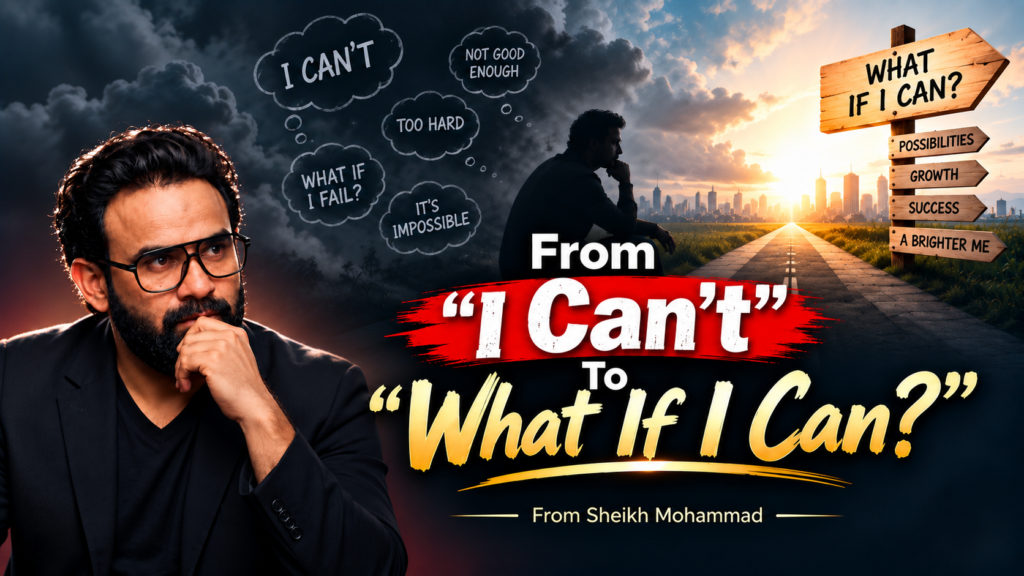
The Power Of “I Can’t”
The Phrase “I Can’t” Sounds Like a Conclusion.
When You Tell Yourself, “I Can’t Do This,” Your Brain May Stop Searching for Solutions.
You Don’t Investigate.
You Don’t Practice.
You Don’t Ask for Help.
You Don’t Experiment.
You Simply Stop.
Sometimes You Genuinely Have Limitations. You May Not Have the Knowledge, Skills, Money, Time, Or Resources Required Right Now.
But There Is a Major Difference Between Saying:
“I Can’t Do This.”
And:
“I Can’t Do This Yet.”
The Second Statement Leaves the Door Open.
It Suggests That Learning and Growth are Possible.
What If You Can?
Now Imagine Replacing “I Can’t” With:
“What If I Can?”
This Does Not Mean Pretending Success Is Guaranteed.
It Means Becoming Curious.
What If You Can Learn The Skill?
What If You Can Improve?
What If You Can Find Another Approach?
What If You Can Ask Someone for Help?
What If You Can Start Smaller?
What If You Can Become Better Than You are Today?
These Questions Shift Your Attention from Limitations to Possibilities.
You Don’t Need to Know the Answer Immediately.
You Simply Need to Be Willing to Explore.
Your Current Ability Is Not Your Final Ability
One of the Biggest Mindset Mistakes People Make Is Treating Their Current Ability as Permanent.
You Might Say:
“I’m Terrible at Public Speaking.”
But Perhaps You’ve Simply Had Very Little Practice.
You Might Say:
“I’m Not Good with Technology.”
Perhaps You Haven’t Had the Opportunity to Learn.
You Might Say:
“I’m Not Creative.”
Maybe You Have Never Given Yourself Permission to Experiment.
Your Current Skill Level Is a Snapshot.
It Is Not Necessarily Your Final Destination.
Skills Can Improve Through Practice, Feedback, Education, And Experience.
That Is Why the Word “Yet” Is So Powerful.
“I Can’t Do It Yet.”
“I Don’t Understand It Yet.”
“I’m Not Confident Yet.”
“I Haven’t Figured It Out Yet.”
Yet Means The Story Is Still Being Written.
Challenge The Voice of Doubt
Everyone Experiences Self-Doubt from Time to Time.
The Goal Is Not to Eliminate Every Doubtful Thought.
The Goal Is to Question It.
When Your Mind Says:
“I Can’t.”
Ask:
“Why Not?”
Then Ask:
“What Exactly Is Stopping Me?”
Maybe You Discover That You Lack Knowledge.
Great. You Can Learn.
Maybe You Lack Experience.
You Can Practice.
Maybe You Lack Confidence.
You Can Start with a Smaller Challenge.
Maybe You Need Support.
You Can Ask for Help.
Once You Identify the Real Barrier, You Can Begin Working on It.
A Vague Belief Becomes a Specific Problem.
And Specific Problems are Easier to Solve.
Stop Waiting to Feel Ready
One of the Most Common Reasons People Stay Stuck Is That They Wait to Feel Completely Ready.
They Tell Themselves:
“I’ll Start When I Have More Confidence.”
But Confidence Often Comes from Starting.
You Learn by Doing.
You Become Comfortable by Practicing.
You Discover What Works by Experimenting.
You Gain Experience by Taking Action.
Think About Learning to Ride a Bicycle. You Cannot Become Comfortable Simply by Reading About Balance. At Some Point, You Have to Get on the Bicycle.
The Same Principle Applies to Many Areas of Life.
You Don’t Need Complete Confidence to Take the First Step.
Sometimes The First Step Creates the Confidence You Were Waiting For.
Turn Fear Into A Question
Fear Often Asks:
“What If I Fail?”
Try Asking:
“What If I Succeed?”
Or Even Better:
“What Can I Learn By Trying?”
This Doesn’t Mean Ignoring Risk.
Smart Thinking Includes Understanding Possible Consequences and Making Thoughtful Decisions.
But Fear Should Not Automatically Become Your Final Answer.
If Something Matters to You, Explore It.
Learn About It.
Prepare For It.
Take A Reasonable First Step.
You May Discover That the Situation Is Not as Frightening as You Imagined.
Small Steps Can Change Your Thinking
You Don’t Have to Prove That You Can Achieve Your Biggest Dream Today.
Prove That You Can Take One Step.
If Your Goal Is to Start a Business, Research Your Idea.
If You Want to Learn a Language, Learn A Few Words.
If You Want to Write a Book, Write One Page.
If You Want to Improve Your Fitness, Begin with a Simple Routine.
If You Want to Become a Better Speaker, Practice for Five Minutes.
Small Actions are Powerful Because They Create Evidence.
You Start Seeing:
“I Took the First Step.”
Then:
“I Made Progress.”
Then:
“Maybe I Can Do More.”
Progress Changes Beliefs.
Don’t Let Other People’s Opinions Define You
Sometimes “I Can’t” Comes from Other People.
Someone May Have Told You:
“You’re Not Capable.”
“That Won’t Work.”
“You’re Not Experienced Enough.”
“You Should Choose Something Safer.”
Other People’s Opinions Can Be Useful When They Provide Thoughtful Feedback.
But An Opinion Is Not a Prediction of Your Future.
Listen.
Learn.
Evaluate.
Then Make Your Own Informed Decision.
You Are Allowed to Grow Beyond Other People’s Expectations.
Learn From People Who Started Before You
If You Want to Expand Your Belief in What Is Possible, Study People Who Have Already Learned What You Want to Learn.
Don’t Focus Only on Their Success.
Look at Their Journey.
What Did They Struggle With?
What Mistakes Did They Make?
What Skills Did They Develop?
How Long Did It Take?
What Did They Do When Things Went Wrong?
Learning About Other People’s Journeys Can Remind You That Success Rarely Happens Instantly.
Behind Many Impressive Results are Years of Learning, Practice, Failure, Adjustment, And Persistence.
Create A “What If I Can?” Habit
You Can Turn This Mindset into A Daily Practice.
Whenever You Catch Yourself Saying “I Can’t,” Pause.
Then Ask:
“What If I Can?”
Follow It With:
“What Would I Need to Learn?”
“What Is Within My Control?”
“What Is One Small Step I Can Take?”
This Gives Your Mind Something Productive to Work With.
Instead Of Shutting Down the Possibility, You Begin Exploring It.
Mega Mindset, Mega Possibilities
The Idea Behind Mega Mindset, Mega Possibilities Is Not That You Should Believe Every Goal Is Easy.
It Is About Refusing To Close The Door Before You Explore What Is Possible.
A Mega Mindset Says:
“I May Not Know How Yet, But I Can Learn.”
It Says:
“This Is Difficult, But I Can Take The Next Step.”
It Says:
“I Might Fail, But I Can Learn From The Experience.”
It Says:
“I Don’t Need to Be Perfect to Begin.”
This Mindset Creates Movement.
And Movement Creates Possibilities.
Your Question Can Change Your Direction
Sometimes The Difference Between Staying Stuck and Moving Forward Is a Single Question.
Instead Of:
“Why Can’t I?”
Ask:
“What If I Can?”
That Question Does Not Promise Success.
But It Creates Curiosity.
Curiosity Leads to Learning.
Learning Leads to Action.
Action Creates Experience.
Experience Creates Growth.
And Growth Can Reveal Possibilities You Could Not See Before.
Conclusion
Your Mind Will Sometimes Tell You That You Cannot Do Something.
Listen But Don’t Automatically Believe It.
Question The Thought.
Look For the Real Obstacle.
Learn What You Need to Learn.
Take A Small Step.
Then Take Another.
You Don’t Need to Know Exactly How the Entire Journey Will Unfold.
You Only Need to Be Willing to Discover What You Are Capable Of.
The Next Time You Hear Yourself Say:
“I Can’t.”
Pause.
Take A Breath.
And Ask:
“What If I Can?”
That Question Could Be the Beginning of a New Way of Thinking.
A New Decision.
A New Action.
A New Opportunity.
A New Version Of You.
Change “I Can’t” Into “What If I Can?”
Think Bigger.
Stay Curious.
Keep Learning.
Keep Moving.
Mega Mindset. Mega Possibilities.
Frequently Asked Questions
1. Why Do I Often Think “I Can’t”?
The Thought Can Come from Fear, Past Experiences, Lack of Confidence, Uncertainty, Or A Belief That Your Current Abilities Cannot Change. Recognizing The Thought Is the First Step Toward Challenging It.
2. What Does “What If I Can?” Mean?
It Is a Possibility-Focused Question. It Does Not Guarantee Success; Instead, It Encourages You to Explore What Might Be Possible Through Learning, Preparation, And Action.
3. How Can I Stop Limiting Myself?
Start By Identifying Limiting Thoughts and Questioning Them. Replace Absolute Statements Such As “I Can’t” With Realistic Growth-Focused Statements Such As “I Can Learn” Or “I Can Try a Different Approach.”
4. Does Confidence Come Before Taking Action?
Not Always. Confidence Often Grows Through Action and Experience. Taking Small, Manageable Steps Can Help You Develop Confidence Over Time.
5. How Can I Build A Stronger Mindset?
Practice Questioning Limiting Beliefs, Learning from Mistakes, Accepting Useful Feedback, Setting Achievable Goals, And Taking Consistent Action Even When You Feel Uncertain.
6. Can A “What If I Can?” Mindset Guarantee Success?
No. A Positive or Growth-Focused Mindset Cannot Guarantee a Particular Result. It Can, However, Encourage You to Explore Possibilities, Learn from Setbacks, And Take Meaningful Action.