What If Potential Is All Around You but You Simply Haven’t Trained Yourself to Notice It Yet?
A Conversation Could Become a Connection.
A Problem Could Become an Idea.
A New Skill Could Become an Opportunity.
A Mistake Could Become a Lesson.
A Small Beginning Could Become Something Much Bigger.
We Often Think of Potential as Something Special That Belongs to A Few Talented People.
But Potential Exists in Many Places.
The Challenge Is Learning to Recognize It.
A Potential-Focused Mindset Helps You Look Beyond What Something Is Today and Ask What It Could Become Tomorrow.
That’s An Important Part of Mega Mindset, Mega Possibilities.
Because When You Learn to See Potential Everywhere, Ordinary Situations Can Start Looking Very Different.
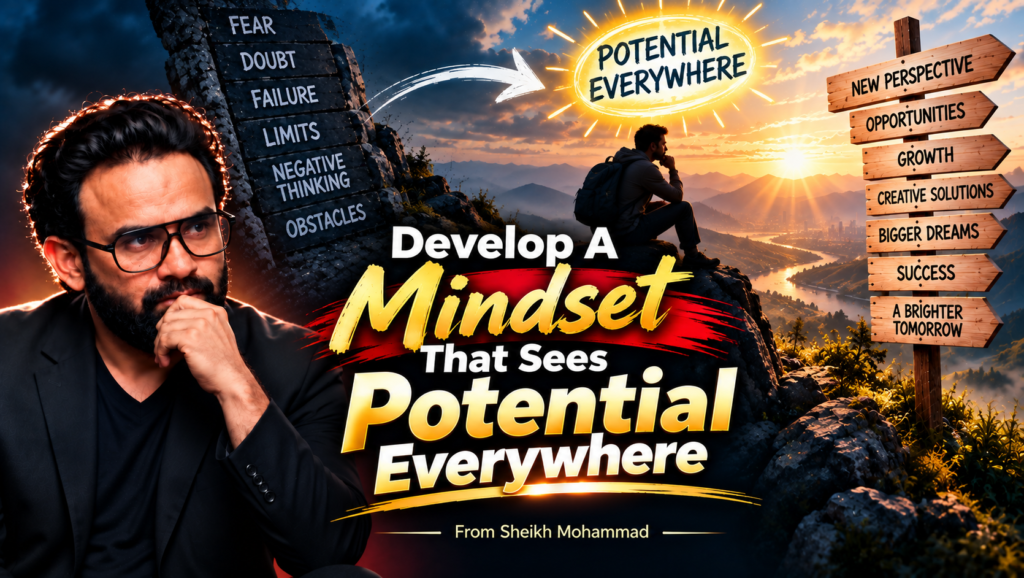
Potential Is About What Could Be
Think About a Small Seed.
If You Look Only at What Is in Front of You, You See Something Tiny.
But Inside That Seed Is the Potential to Grow into Something Much Bigger.
People and Ideas Can Be Similar.
A Beginner May Look Inexperienced.
A New Business May Look Small.
A Simple Idea May Not Seem Impressive.
A New Employee May Not Know Much Yet.
A Difficult Situation May Not Appear Valuable.
But The Present Moment Doesn’t Always Reveal the Full Potential of Something.
That’s Why It Is Useful to Ask:
“What Could This Become?”
Instead of Judging Something Only by Where It Is Today, Consider Where It Might Go with Time, Learning, Effort and the Right Conditions.
Learn To Look Beyond the Surface
We Often Make Quick Judgments.
“This Idea Won’t Work.”
“This Person Isn’t Experienced.”
“This Opportunity Isn’t Big Enough.”
“This Skill Won’t Be Useful.”
“This Is Just a Small Project.”
But What If You’re Looking Only at The Surface?
A Small Project Could Teach You Skills That Become Valuable Later.
A New Connection Could Introduce You to An Entirely Different Field.
A Simple Idea Could Lead to a Better Idea.
A Difficult Assignment Could Help You Discover a Strength.
The Point Isn’t to Assume That Everything Will Become Successful.
It’s To Avoid Dismissing Possibilities Too Quickly.
Curiosity Keeps the Door Open.
See Potential in Yourself
One Of the Most Important Places to Look for Potential Is Yourself.
You May Look at Your Current Abilities and Think:
“I’m Not Good Enough.”
“I Don’t Have the Right Skills.”
“I’m Not Confident.”
“I’ve Never Done Anything Like This.”
But Your Current Ability Is Not a Complete Description of Your Potential.
Think About Everything You Can Do Today That You Couldn’t Do A Few Years Ago.
You Learned.
You Practiced.
You Experienced.
You Made Mistakes.
You Improved.
That Process Can Continue.
Instead Of Asking:
“What Am I Capable of Right Now?”
Also Ask:
“What Could I Become Capable Of?”
That Question Creates Room for Growth.
See Potential in Problems
Problems Are Often Frustrating.
But Problems Can Also Reveal Needs.
Someone Is Struggling with Something.
Something Is Too Slow.
Something Is Too Expensive.
Something Is Confusing.
Something Could Be Easier.
Something Is Missing.
These Problems Can Become Opportunities for People Who are Willing to Understand Them.
Instead Of Simply Saying:
“That’s A Terrible Problem.”
Try Asking:
“Why Does This Problem Exist?”
Then Ask:
“Could There Be A Better Way?”
You Don’t Have to Turn Every Problem into a Business.
Sometimes The Potential Is Simply Learning How to Improve a Situation.
See Potential in People
People Are Often Judged by What They Can Do Today.
But Everyone Starts Somewhere.
A Beginner May Become Highly Skilled.
A Quiet Person May Become a Strong Leader.
A Student May Become an Expert.
Someone Who Lacks Confidence Today May Become Confident Through Experience.
This Doesn’t Mean Assuming That Everyone Will Become Extraordinary.
It Means Giving People Room To Learn And Grow.
The Same Applies To Yourself.
Don’t Define Yourself Permanently by One Mistake, One Failure, Or One Difficult Period.
You are a Work in Progress.
And So Is Everyone Else.
See Potential In Learning
Every New Skill Can Expand Your Possibilities.
Learning To Communicate Better Can Improve Your Career.
Learning Technology Can Open New Opportunities.
Learning To Write Can Help You Express Ideas.
Learning About Business Can Change How You See Problems.
Learning From Different Cultures Can Expand Your Perspective.
You Don’t Always Know Where a New Skill Will Lead.
That’s Part of The Excitement.
A Skill You Learn Today May Connect with Another Skill You Learn Tomorrow.
Those Connections Can Create Possibilities You Couldn’t See Before.
So Don’t Only Ask:
“Is This Useful Right Now?”
Also Ask:
“Where Could This Knowledge Become Useful Later?”
See Potential In Small Beginnings
Many People Underestimate Small Beginnings.
They Think:
“It’s Too Small to Matter.”
But Everything Has to Start Somewhere.
A Business Starts with an Idea.
A Book Starts with A Sentence.
A Community Starts with A Few People.
A Skill Starts with a Beginner.
A Habit Starts with One Action.
A Journey Starts with One Step.
Small Doesn’t Mean Meaningless.
Small Often Means Unfinished.
Give Something Enough Time, Attention, And Learning, And It May Develop into Something Much Bigger.
You Don’t Have to Know Exactly What It Will Become.
You Can Simply Start.
Train Yourself to Ask, “What If?”
One of the Simplest Ways to Develop a Potential-Focused Mindset Is to Use the Question:
“What If?”
What If This Idea Works?
What If I Learn This Skill?
What If This Person Has Something Valuable to Teach Me?
What If This Challenge Leads Me Somewhere Unexpected?
What If I Try a Different Approach?
What If I’m Capable of More Than I Think?
You Don’t Have to Believe Every “What If.”
You Simply Need to Explore It.
Possibility Begins with Curiosity.
Don’t Ignore Reality
Seeing Potential Doesn’t Mean Becoming Unrealistic.
You Still Need Facts.
You Still Need Planning.
You Still Need Effort.
You Still Need to Test Ideas.
You Still Need to Accept When Something Isn’t Working.
A Potential-Focused Mindset Isn’t:
“Everything Will Work.”
It Is:
“Let’s Find Out What Is Possible.”
That Distinction Matters.
Instead of Assuming Success, Experiment.
Instead of Making Promises, Gather Information.
Instead of Blindly Believing, Learn.
Potential Becomes Meaningful When It Meets Reality.
Turn Potential into Action
Seeing Potential Is Only the Beginning.
Eventually, You Need to Do Something.
If You See Potential in a Skill, Practice It.
If You See Potential in an Idea, Test It.
If You See Potential In A Relationship, Build It.
If You See Potential In Yourself, Develop Yourself.
If You See Potential In A Problem, Explore Solutions.
Action Turns Possibility into Experience.
And Experience Gives You Better Information About What Can Actually Work.
You Don’t Need to Make a Huge Commitment.
Start With a Small Experiment.
Learn.
Observe.
Adjust.
Then Decide What to Do Next.
Make Potential a Daily Habit
You Can Train Yourself to See Potential Every Day.
At The End of the Day, Ask Yourself:
What Did I Notice Today That I Hadn’t Noticed Before?
What Problem Could Be Improved?
What Did I Learn?
Who Could I Learn From?
What Small Idea Could Become Something Bigger?
What Potential Do I See in Myself?
These Questions Encourage Your Mind to Look Beyond the Obvious.
Over Time, You May Become More Naturally Curious.
And Curiosity Can Become a Powerful Habit.
Look Again
Sometimes The Opportunity Isn’t Missing.
You Simply Haven’t Looked Closely Enough.
The Person You Overlooked May Have a Valuable Perspective.
The Skill You Ignored May Become Useful.
The Small Project May Teach You Something Important.
The Difficult Experience May Reveal a Strength.
The Simple Idea May Become the Beginning of Something Meaningful.
This Doesn’t Mean Every Person, Idea, Or Situation Will Become Extraordinary.
It Means You Don’t Have to Decide Too Quickly.
Pause. Look Again. Ask Questions. Explore.
That Is How You Begin Seeing Potential.
Mega Mindset. Mega Possibilities.
Your World Is Filled with Possibilities.
But Possibilities are Easier to Notice When You Train Your Mind to Look for Them.
See Potential in Yourself.
See Potential in Learning.
See Potential in People.
See Potential in Problems.
See Potential in Small Beginnings.
And Most Importantly, Remember That Potential Is not the Same as Guaranteed Success.
Potential Is an Invitation to Explore.
So, The Next Time You Encounter Something Ordinary, Don’t Immediately Ask:
“What Is This?”
Ask:
“What Could This Become?”
And The Next Time You Look at Yourself, Don’t Ask Only:
“What Can I Do Today?”
Ask:
“What Could I Become Capable of Tomorrow?”
That Shift in Thinking Can Open New Doors.
Look Deeper. Think Bigger. Stay Curious. Explore Potential.
Because When You Develop a Mindset That Sees Potential Everywhere, You May Discover That Your Possibilities Are Much Larger Than You First Imagined.
Frequently Asked Questions
1. What Does It Mean to See Potential Everywhere?
It Means Looking Beyond the Current Situation and Considering What Something Could Become. This Could Include People, Ideas, Problems, Skills, Experiences and Even Small Beginnings.
2. How Can I Develop a Potential-Focused Mindset?
Practice Curiosity. Ask Questions Such As “What Could This Become?” And “What Can I Learn from This?” Stay Open to New Experiences and Avoid Dismissing Ideas or People Too Quickly.
3. Can I Learn to See Potential in Myself?
Yes. Focus On Your Ability to Learn and Develop Rather Than Only Your Current Abilities. Think About Skills You’ve Gained in the Past and Use That as Evidence That You Can Continue Growing.
4. Does Seeing Potential Mean Believing Everything Will Succeed?
No. Seeing Potential Means Being Open to Possibilities, Not Guaranteeing Outcomes. Testing Ideas, Gathering Information, Learning and Adapting are Still Important.
5. How Can Problems Reveal Potential?
Problems Often Reveal Needs, Inefficiencies or Areas That Could Be Improved. By Understanding The Problem and Exploring Possible Solutions, You May Discover New Ways to Create Value or Learn Something Useful.
6. What Is the Connection Between Potential and Mega Mindset?
Mega Mindset Encourages You to Look Beyond Current Limitations and Remain Open to Growth. Seeing Potential Everywhere Is One Way to Practice That Mindset in Everyday Life.