Have You Ever Faced a Situation That Felt Completely Negative – Only to Realize Later That It Taught You Something Important?
Maybe A Rejection Pushed You to Improve.
A Failed Plan Made You Discover a Better Approach.
A Difficult Conversation Changed the Way You Understood Someone.
A Missed Opportunity Led You Somewhere Unexpected.
The Situation Didn’t Necessarily Change.
Your Perspective Changed.
And Sometimes, That Is Enough to Change What You See as Possible.
We Often Look at Life Through the Lens of Our Experiences, Beliefs, Fears, Expectations, And Habits. Two People Can Experience the Same Event and Walk Away with Completely Different Interpretations.
One Sees a Dead End.
The Other Sees a Lesson.
One Sees a Problem.
The Other Sees Something to Solve.
One Says, “This Is the End.”
The Other Asks, “What Could Come Next?”
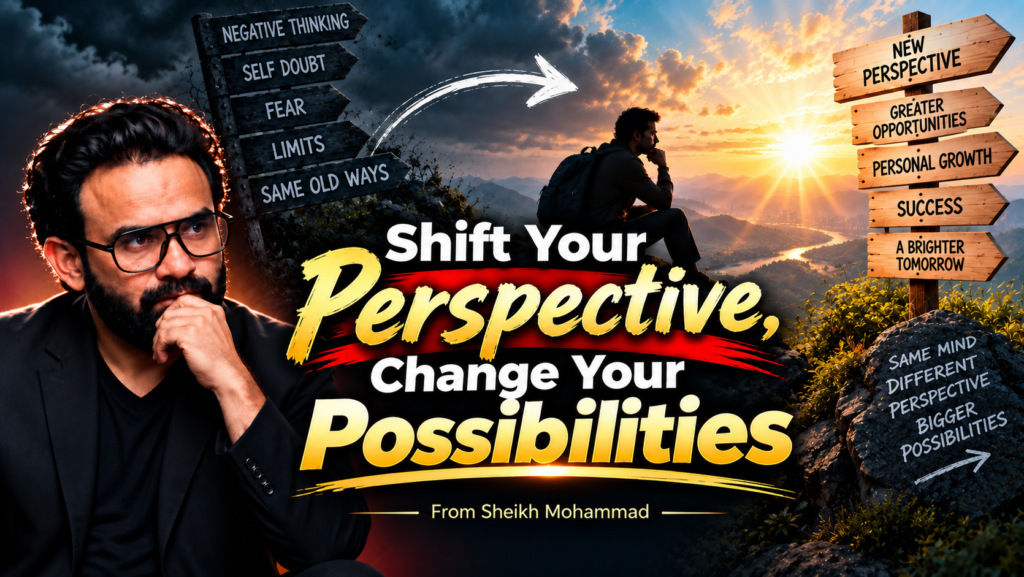
This Is the Power of Perspective.
And It Is an Important Part of Mega Mindset, Mega Possibilities.
The Situation Is Not Always the Whole Story
Imagine You Don’t Get a Job You Really Wanted.
Your First Thought Might Be:
“I’m Not Good Enough.”
But There are Many Other Possibilities.
Maybe Another Candidate Had More Experience.
Maybe The Company Was Looking for a Different Skill.
Maybe Your Interview Could Have Been Stronger.
Maybe The Role Wasn’t Actually the Right Fit.
Maybe This Rejection Gives You Time to Improve Before Your Next Opportunity.
The Event Is the Same:
You Didn’t Get the Job.
But The Meaning You Give That Event Can Be Very Different.
That’s Why Perspective Matters.
You May Not Control Everything That Happens.
But You Can Often Choose How You Interpret What Happens and What You Do Next.
Ask A Different Question
One Of the Easiest Ways to Shift Your Perspective Is to Change Your Question.
Instead Of Asking:
“Why Is This Happening to Me?”
Ask:
“What Can I Learn From This?”
Instead Of:
“Why Did This Fail?”
Ask:
“What Could I Do Differently Next Time?”
Instead Of:
“Why Don’t I Have Opportunities?”
Ask:
“Where Could I Create an Opportunity?”
Instead Of:
“What Did I Lose?”
Ask:
“What Did I Gain from This Experience?”
These Questions Don’t Magically Solve Problems.
But They Change Where Your Attention Goes.
And When Your Attention Changes, You May Begin Noticing Options You Couldn’t See Before.
Look At the Same Problem from Another Angle
Imagine You’re Trying to Start a Business, But Nobody Is Buying Your First Product.
You Could Conclude:
“My Business Idea Is a Failure.”
Or You Could Look at It Differently:
“I Have Information. People Aren’t Buying. Now I Need to Understand Why.”
Maybe The Price Is Wrong.
Maybe The Product Doesn’t Solve an Important Enough Problem.
Maybe People Don’t Understand the Value.
Maybe You’re Reaching the Wrong Audience.
Maybe The Product Needs Improvement.
The Second Perspective Doesn’t Make the Problem Disappear.
It Turns the Problem into Something You Can Investigate.
Perspective Can Turn Frustration Into Curiosity.
And Curiosity Can Lead to Action.
Your First Interpretation Isn’t Always the Truth
Our Minds are Quick.
Something Happens and We Immediately Create a Story About It.
Someone Doesn’t Reply to Your Message.
You Think:
“They’re Ignoring Me.”
Someone Gives You Feedback.
You Think:
“They Don’t Like My Work.”
You Make a Mistake.
You Think:
“I’m Terrible at This.”
But Your First Interpretation May Not Be the Complete Picture.
The Person May Be Busy.
The Feedback May Be Intended To Help You Improve.
The Mistake May Simply Mean You are Still Learning.
Before Accepting Your First Interpretation as Fact, Pause.
Ask:
“What Else Could This Mean?”
That One Question Can Create Space Between an Event and Your Reaction.
Don’t Let One Moment Define Everything
A Difficult Day Can Feel Like a Difficult Life.
One Failure Can Feel Like Permanent Failure.
One Rejection Can Feel Like Proof That Nobody Will Ever Say Yes.
But One Moment Is Still Only One Moment.
Your Mind Can Sometimes Take a Small Event and Turn It into A Huge Conclusion.
“I Failed Today” Becomes:
“I Always Fail.”
“This Didn’t Work” Becomes:
“Nothing Will Ever Work.”
“I Don’t Know This” Becomes:
“I’m Not Capable.”
Be Careful With These Conclusions.
Replace Permanent Statements with Specific Ones.
Instead Of:
“I’m Bad at This.”
Try:
“I’m Still Learning This.”
Instead Of:
“Nothing Is Working.”
Try:
“This Approach Isn’t Working Yet.”
Specific Thinking Gives You Room to Respond.
Perspective Can Change How You See Challenges
A Challenge Can Be Viewed in Different Ways.
You Can See It as Punishment.
Or You Can See It as A Test.
You Can See It as An Obstacle.
Or You Can See It as a Problem to Solve.
You Can See It as Proof That You’re Incapable.
Or You Can See It as an Opportunity to Develop a Skill.
Again, This Doesn’t Mean Every Challenge Is Secretly Wonderful.
Some Situations are Genuinely Difficult.
Some Losses Hurt.
Some Experiences Take Time to Process.
Positive Perspective Doesn’t Require You to Pretend That Pain Isn’t Real.
It Simply Asks:
“Now That This Has Happened, How Do I Want to Respond?”
Learn To Zoom Out
When You’re in the Middle of a Difficult Situation, It Can Feel Like Everything.
But Try Zooming Out.
Ask Yourself:
“Will This Matter Five Years from Now?”
Sometimes The Answer Will Be Yes.
Sometimes It Will Be No.
Either Way, The Question Can Help You Understand the Size of the Problem.
You May Realize That Today’s Embarrassment Is Temporary.
Today’s Rejection Is One Event.
Today’s Mistake Is One Lesson.
Today’s Difficult Week Is Not Necessarily Your Entire Future.
Zooming Out Doesn’t Make Problems Unimportant.
It Helps Put Them into Perspective.
Look For What the Experience Is Teaching You
Every Experience Doesn’t Have to Produce an Obvious Lesson.
But Many Experiences Can Teach Us Something If We’re Willing to Reflect.
A Failed Project Can Teach You About Planning.
A Difficult Customer Can Teach You About Communication.
A Missed Deadline Can Teach You About Time Management.
A Disagreement Can Teach You About Listening.
A Rejection Can Teach You About Preparation.
A Mistake Can Teach You Where Your Process Needs Improvement.
After A Difficult Experience, Ask:
“What Do I Know Now That I Didn’t Know Before?”
That Question Turns Experience into Learning.
And Learning Expands Your Possibilities.
Surround Yourself With Different Perspectives
Sometimes You Can’t See a Situation Differently Because You’re Too Close to It.
This Is Where Other People Can Help.
Talk To Someone You Trust.
Ask For Honest Feedback.
Listen To Someone with More Experience.
Read About How Others Handled Similar Situations.
You Don’t Have to Accept Every Opinion.
The Goal Is to See the Situation from Another Angle.
A Perspective You Hadn’t Considered Might Reveal an Option You Completely Missed.
Different Perspectives Can Expand Your Mental Map.
Practice The Perspective Shift
You Can Build This Skill Through a Simple Daily Exercise.
Whenever Something Doesn’t Go as Planned, Write Down Three Things:
1. What Happened?
Separate The Facts from Your Interpretation.
2. What Am I Telling Myself About It?
Notice Your Story.
3. What Else Could Be True?
Look For Another Reasonable Interpretation.
Then Ask:
“What Can I Do Next?”
This Simple Process Helps Create a Gap Between What Happened and How You Respond.
And That Gap Can Be Powerful.
A New Perspective Can Create a New Path
Sometimes You Don’t Need a Completely New Life.
You Need to Look at Your Existing Life Differently.
The Skill You Thought Was Useless May Become Valuable Somewhere Else.
The Experience You Thought Was Wasted May Teach You Something Important.
The Person You Didn’t Expect to Meet May Introduce You to A New Idea.
The Failure You Wanted to Forget May Become One of Your Greatest Lessons.
Perspective Doesn’t Change History.
It Changes What You Can Do with the Experience.
And That Can Change Your Future.
Mega Mindset. Mega Possibilities.
The Next Time You Face a Difficult Situation, Pause.
Don’t Immediately Decide What It Means.
Ask:
What Else Could Be True?
What Can I Learn?
What Can I Control?
What Possibility Am I Not Seeing?
What Can I Do Next?
You May Not Be Able to Change What Happened.
But You Can Change the Lens Through Which You Look at It.
And Sometimes, Changing the Lens Is Enough to Reveal a Door That Was There All Along.
Shift Your Perspective. Expand Your Thinking. Explore New Possibilities.
Because When You See Differently, You May Discover That You Can Move Differently Too.
And That Is Where a Mega Mindset Begins.
Frequently Asked Questions
1. What Does “Shift Your Perspective” Mean?
Shifting Your Perspective Means Looking at A Situation from Another Reasonable Angle Instead of Accepting Your First Interpretation as the Only Explanation. It Can Help You Identify Lessons, Options, And Possible Next Steps.
2. Can Changing Your Perspective Change a Situation?
Changing Your Perspective Doesn’t Necessarily Change the Situation Itself. However, It Can Change How You Respond to the Situation, Which May Lead to Different Decisions and Actions.
3. How Can I Change My Perspective When I’m Facing a Difficult Problem?
Pause And Separate Facts from Assumptions. Ask What Else Could Be True, What You Can Learn, What You Can Control and What You Can Do Next.
4. Does Positive Thinking Mean Ignoring Problems?
No. A Healthy Perspective Acknowledges Problems Honestly. The Goal Isn’t to Pretend Everything Is Fine but to Look for Constructive Ways to Understand and Respond to the Situation.
5. Why Is Perspective Important for a Mega Mindset?
Perspective Influences How You Interpret Challenges and Opportunities. A Flexible Perspective Can Help You Remain Curious, Learn from Experiences, And Explore Possibilities Instead of Immediately Assuming That a Difficult Situation Is the End.
6. What Is One Simple Question I Can Use to Shift My Perspective?
Try Asking:
“What Else Could Be Possible Here?”
This Question Encourages You to Look Beyond Your First Conclusion and Consider Alternatives.