
What If Your Response to Challenges Tells You More About Your Mindset Than Your Achievements Do?
You Don’t Need to Be Successful at Everything to Have a Growth Mindset.
You Don’t Need to Feel Confident All the Time.
You Don’t Need to Enjoy Failure.
A Growth Mindset Is More About How You Respond to Learning, Challenges, Mistakes, Feedback and Change.
Maybe You Try Something Difficult Even When You’re Unsure.
Maybe You Can Admit, “I Don’t Know.”
Maybe You Look at A Mistake and Ask, “What Can I Learn from This?”
These Small Behaviors Can Reveal a Growth-Oriented Way of Thinking.
And The Best Part Is That a Growth Mindset Isn’t Something You Simply Have or Don’t Have. You Can Strengthen the Habits That Support Learning and Improvement.
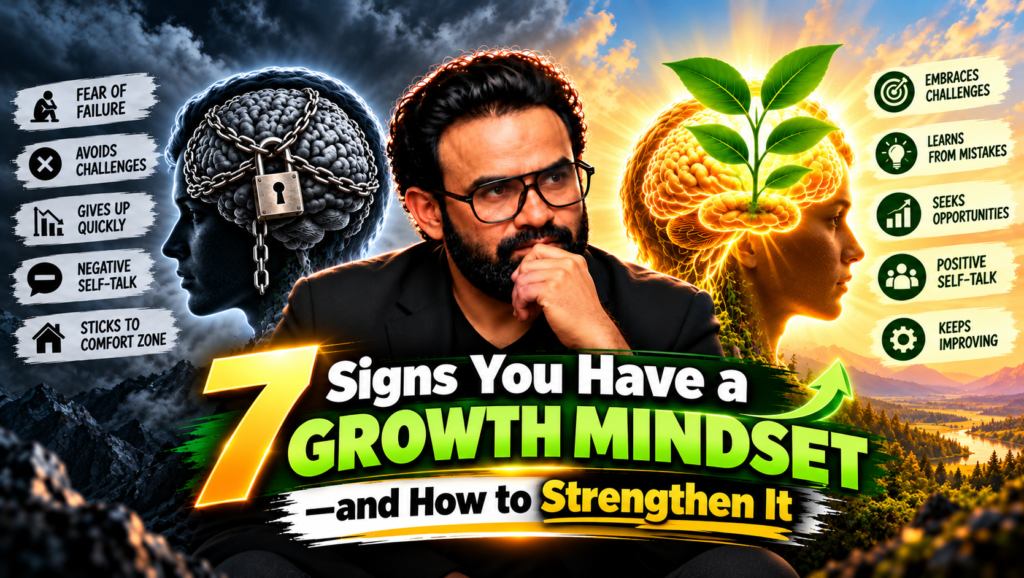
So, Let’s Explore 7 Signs of A Growth Mindset and How You Can Make Each One Stronger.
1. You See Challenges as Opportunities to Learn
A Growth Mindset Doesn’t Mean You Love Every Challenge.
You May Still Feel Nervous, Frustrated or Uncertain.
The Difference Is That Difficulty Doesn’t Automatically Make You Quit.
Instead, You May Think:
“This Is Difficult. What Can I Learn?”
For Example, Imagine You’re Asked to Lead a Project You’ve Never Handled Before.
A Fixed Response Might Be:
“I’ve Never Done This. I Can’t.”
A Growth-Oriented Response Could Be:
“I’ve Never Done This Before. What Do I Need to Learn?”
That Small Shift Creates Room for Action.
How To Strengthen It
The Next Time Something Feels Difficult, Don’t Immediately Ask:
“Can I Do This?”
Ask:
“What Would I Need to Learn to Make Progress?”
You Don’t Need to Solve the Entire Challenge at Once.
Start With the Next Learnable Step.
2. You Treat Mistakes as Information
Mistakes are Uncomfortable.
Nobody Enjoys Discovering That They Got Something Wrong.
But A Growth Mindset Doesn’t Automatically Treat Mistakes as Proof of Incompetence.
Instead, It Asks:
“What Happened?”
And:
“What Can I Do Differently Next Time?”
Imagine You Give a Presentation and Forget an Important Point.
You Could Think:
“I’m Terrible at Presentations.”
Or You Could Think:
“I Need a Better Preparation and Practice System.”
The Second Response Turns the Experience into Information.
How To Strengthen It
- What Happened?
- What Did I Learn?
- What Will I Change Next Time?
After A Mistake, Ask Yourself Three Questions:
This Turns Reflection into a Learning Habit.
3. You are Open to Feedback
Feedback Isn’t Always Easy to Hear.
Sometimes It Can Make You Uncomfortable.
But A Growth Mindset Understands That Other People May Notice Things You Cannot See Yourself.
You Don’t Have to Accept Every Piece of Feedback.
You Can Evaluate It.
But Instead of Immediately Becoming Defensive, You Can Ask:
“Is There Something Useful Here?”
For Example, If Someone Says Your Explanation Wasn’t Clear, You Don’t Have to Conclude That You’re a Poor Communicator.
You Can Ask:
“Which Part Wasn’t Clear and How Can I Explain It Better?”
How To Strengthen It
When Receiving Feedback, Pause Before Responding.
Ask:
“What Is One Useful Thing I Can Take From This?”
Even One Useful Insight Can Help You Improve.
4. You Believe Skills Can Be Developed
One of the Strongest Signs of a Growth Mindset Is Believing That Your Current Skill Level Isn’t Necessarily Your Final Skill Level.
You Might Say:
“I’m Not Good at This Yet.”
That Word-Yet-Matters.
You Recognize the Current Reality Without Turning It into a Permanent Identity.
Maybe You’re Not Comfortable with Public Speaking.
Maybe You’re Still Learning Technology.
Maybe Writing Doesn’t Come Naturally to You.
Instead of Saying:
“That’s Just Not Who I Am.”
You Ask:
“Can I Develop This Skill?”
How To Strengthen It
Choose One Skill You Want to Improve.
Then Break It Into Smaller Abilities.
For Example, If You Want to Become Better at Communication, You Could Practice:
- Listening
- Explaining Ideas
- Asking Questions
- Storytelling
- Speaking Clearly
Don’t Try to Master Everything at Once.
Develop One Part at a Time.
5. Other People’s Success Inspires You to Learn
How Do You Feel When Someone Else Succeeds?
If You Immediately Think:
“They’re Better Than Me.”
You May Be Falling into Comparison.
But A Growth Mindset Can Turn Comparison into Curiosity.
You Can Ask:
“What Can I Learn From Them?”
Suppose Someone Has Built a Successful Business.
Instead Of Simply Comparing Your Results with Theirs, Study Their Process.
What Skills Did They Develop?
What Decisions Did They Make?
What Mistakes Might They Have Learned From?
What Can You Apply to Your Own Situation?
Their Success Doesn’t Have to Become Evidence That You’re Behind.
It Can Become a Learning Resource.
How To Strengthen It
The Next Time Someone Impresses You, Identify One Thing You Can Learn from Them.
Then Put That Lesson into Practice.
6. You Keep Going When Progress Is Slow
Growth Isn’t Always Obvious.
Sometimes You Work Hard for Weeks and Don’t See Dramatic Results.
That’s When Your Mindset Matters.
A Fixed Mindset Might Say:
“This Isn’t Working. I’m Not Good at It.”
A Growth Mindset May Ask:
“What Should I Change?”
Maybe You Need More Practice.
Maybe Your Strategy Needs Adjustment.
Maybe You Need Better Guidance.
Maybe Your Goal Needs to Be Broken into Smaller Steps.
Persistence Doesn’t Mean Doing the Same Thing Forever.
It Means Remaining Willing to Learn, Adapt and Make Informed Changes.
How To Strengthen It
Instead of Measuring Only the Final Result, Track Small Improvements.
Ask:
“What Can I Do Today That I Couldn’t Do a Month Ago?”
Progress Becomes Easier to Notice When You Measure Learning, Not Just Outcomes.
7. You Believe You Can Improve Through Action
A Growth Mindset Isn’t Just a Positive Belief.
It Shows Up in Behavior.
You Learn.
You Practise.
You Experiment.
You Ask Questions.
You Make Adjustments.
You Try Again.
For Example, Someone Who Wants to Become Better at Writing Doesn’t Simply Tell Themselves:
“I Can Become a Better Writer.”
They Write.
They Read.
They Study.
They Get Feedback.
They Practise.
They Improve.
This Is Where Mindset Becomes Meaningful.
How To Strengthen It
Turn One Belief Into One Action.
If You Want to Improve a Skill, Decide What You Will Practice Today.
Don’t Wait for Motivation to Become Perfect.
Take A Small Step.
Then Learn from What Happens.
How To Strengthen Your Growth Mindset Every Day
You Don’t Need a Complicated Routine.
Try These Simple Habits.
Ask Better Questions
Replace:
“Why Am I Bad at This?”
With:
“What Can I Improve?”
Use “Yet”
Instead Of:
“I Can’t Do This.”
Try:
“I Can’t Do This Yet.”
Celebrate Progress
Don’t Only Celebrate Big Achievements.
Notice Small Improvements Too.
Learn From Feedback
Look For Useful Information Instead of Automatically Treating Feedback as Criticism.
Stay Curious
When Something Doesn’t Work, Become Curious About Why.
Take Small Actions
Learning Becomes Stronger When You Put It into Practice.
A Simple Growth Mindset Check
At The End of Each Week, Ask Yourself:
What Did I Learn?
What Challenge Did I Face?
What Mistake Taught Me Something?
What Feedback Did I Receive?
Where Did I Improve?
What Will I Practise Next Week?
These Questions Shift Your Attention from Simply Judging Yourself to Understanding Your Development.
Build Your Mega Mindset
A Mega Mindset Doesn’t Mean Believing You’re Perfect.
It Means Staying Open to Becoming Better.
You Can Say:
“I Don’t Know.”
And Then Learn.
You Can Say:
“I Made a Mistake.”
And Then Reflect.
You Can Say:
“I’m Not Good at This Yet.”
And Then Practise.
You Can Say:
“Someone Is Better Than Me at This.”
And Then Become Curious.
That Is a Powerful Way to Approach Life.
Your Current Abilities are Important, But They Don’t Have to Become Permanent Labels.
Every Skill You Develop Can Change What You’re Able to Explore.
And Every New Skill Can Introduce You to New Possibilities.
Final Thoughts
A Growth Mindset Isn’t About Being Positive Every Minute.
It’s About Remaining Open to Learning When Things Don’t Go as Planned.
If You Recognize These Seven Signs in Yourself, That’s Encouraging.
But Don’t Worry If You Don’t Recognize All of Them.
Mindset Is Not a Test You Pass or Fail.
You Can Strengthen It One Habit at A Time.
Take On One Challenge.
Learn From One Mistake.
Accept One Useful Piece of Feedback.
Practise One Skill.
Celebrate One Small Improvement.
Then Do It Again.
Because Growth Isn’t Always About Making a Giant Leap.
Sometimes It’s About Becoming 1% Better, One Step at a Time.
And When Your Willingness to Learn Grows, Your View of What Might Be Possible Can Grow with It.
Think Bigger. Stay Curious. Keep Learning. Take Action.
Mega Mindset. Mega Possibilities.
Faqs
1. What are the Signs of a Growth Mindset?
Seven Common Signs Include Seeing Challenges as Learning Opportunities, Treating Mistakes as Information, Being Open to Feedback, Believing Skills Can Develop, Learning from Other People’s Success, Continuing When Progress Is Slow, And Turning Beliefs About Growth into Action.
2. Can I Develop a Growth Mindset?
Yes. You Can Strengthen Growth-Oriented Habits by Becoming More Aware of Your Thinking, Learning from Mistakes, Accepting Useful Feedback, Practicing Skills, And Focusing on Progress.
3. Does Having a Growth Mindset Mean I Should Never Give Up?
No. A Growth Mindset Doesn’t Mean Continuing with Every Goal Regardless of Circumstances. It Means Being Willing to Learn, Adapt, And Make Thoughtful Decisions Rather Than Automatically Stopping Because Something Is Difficult.
4. Is A Growth Mindset the Same as Being Confident?
No. You Can Have a Growth Mindset While Still Feeling Nervous or Uncertain. A Growth Mindset Is More About Believing That Learning and Improvement Are Possible.
5. How Can I Strengthen My Growth Mindset Every Day?
Ask Learning-Focused Questions, Use “Yet” Reflect on Mistakes, Seek Useful Feedback, Practice Skills, And Track Small Improvements.
6. Can A Growth Mindset Help Me Handle Failure?
It Can Encourage You to Look at Failure as Information Rather Than Simply as A Judgment About Your Ability. You Can Examine What Happened, Identify Lessons and Decide What to Change.
7. What Does Growth Mindset Have to Do with Mega Mindset?
Mega Mindset Is About Expanding Your Thinking and Remaining Open to Possibilities. A Growth Mindset Supports That Philosophy by Encouraging Learning, Curiosity, Development and Action.