
Have You Ever Thought:
“I’m Just Not Good at This.”
Maybe You Struggled with Mathematics in School.
Maybe Public Speaking Makes You Nervous.
Maybe Technology Feels Complicated.
Maybe You Believe You’re Simply Not a Creative Person.
But Here’s an Interesting Question:
Are These Permanent Limitations or Simply Descriptions of Where You are Right Now?
The Idea Behind a Growth Mindset Is That Many Human Abilities Can Develop Through Learning, Practice, Feedback and Experience.
This Doesn’t Mean Everyone Can Become Excellent at Everything. It Doesn’t Mean Effort Guarantees Success. And It Doesn’t Mean You Can Simply Think Positively and Change Your Life Overnight.
The Science Is More Interesting and More Nuanced Than That.
Research Suggests That People’s Beliefs About Whether Abilities Can Change are Associated with How They Approach Challenges, Mistakes, Feedback, And Learning. Researchers Have Also Investigated Growth Mindset Using Behavioral and Brain-Based Methods.
So, What Actually Happens When You Start Believing:
“I Can Improve”?
Let’s Explore the Science Behind the Idea.
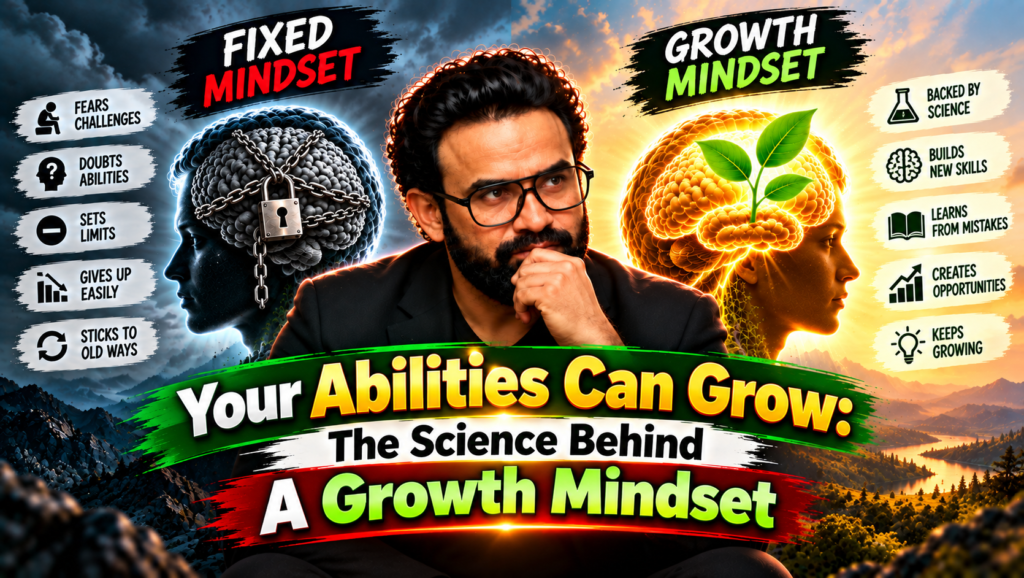
What Is a Growth Mindset?
A Growth Mindset Is the Belief That Abilities and Intelligence are Capable of Development.
A Fixed Mindset, In Contrast, Treats These Qualities As Relatively Stable Or Unchangeable.
The Distinction Is Simple.
A Fixed Mindset Might Say:
“I’m Not Good At Maths.”
A Growth Mindset Might Say:
“Math’s Is Difficult for Me Right Now, But I Can Learn.”
The Growth Mindset Doesn’t Deny the Current Difficulty.
It Simply Doesn’t Treat Today’s Performance as The Final Definition of Your Ability.
Research On Mindset Has Found Associations Between Growth-Oriented Beliefs and How People Approach Challenges, Setbacks, Mistakes, And Learning.
Your Brain Is Capable of Change
One Reason the Idea of Growth Mindset Is Interesting Is That the Brain Itself Isn’t a Completely Static System.
The Brain Changes in Response to Learning and Experience.
Researchers Studying Growth Mindset Have Investigated Neural Activity Related to Error Processing, Feedback, Cognitive Control, Motivation, And Learning. A 2025 Scoping Review Identified 15 Studies Examining Neural Evidence Related to Growth Mindset, Using Methods Including Ege and Mir.
This Research Is Still Developing.
The Evidence Does Not Mean That Simply Thinking Positively Physically Transforms Your Brain in a Magical Way.
Instead, It Suggests That Mindset Is Connected to Processes Involved in How People Respond to Errors, Feedback, Challenges and Learning.
That’s An Important Distinction.
Mistakes Can Become Learning Signals
Think About What Happens When You Make a Mistake.
You Answer a Question Incorrectly.
You Make an Error in Your Work.
You Forget Something Important.
You Make A Poor Decision.
A Fixed Interpretation Might Be:
“I’m Not Capable.”
A Growth-Oriented Interpretation Might Be:
“Something Went Wrong. What Can I Learn?”
Researchers Have Specifically Studied the Relationship Between Growth Mindset and How People Process Errors and Feedback. The Recent Neural Evidence Review Found That Error and Feedback Processing Is One of The Most Frequently Investigated Areas in Growth-Mindset Neuroscience.
The Practical Lesson Isn’t That Mistakes are Automatically Beneficial.
It’s That Your Response to Mistakes Matters.
A Mistake Can Become the End of The Learning Process or Information That Helps Guide the Next Attempt.
Learning Changes More Than Your Knowledge
When You Learn a New Skill, You’re Not Simply Collecting Information.
You’re Also Developing the Ability to Use That Information.
Imagine Learning to Drive.
At First, Many Actions Require Conscious Attention.
Steering.
Braking.
Checking Mirrors.
Understanding Traffic.
With Practice, Many of These Actions Become More Familiar.
The Same Broad Principle Applies to Many Forms of Learning.
You Start With Limited Knowledge.
You Practise.
You Receive Feedback.
You Adjust.
You Gain Experience.
Your Performance Can Change.
This Is One Reason the Phrase “I Can’t Do This Yet” Can Be More Useful Than “I Can’t Do This.”
The First Describes a Current Stage.
The Second Can Turn a Current Stage into a Permanent Identity.
But Does Growth Mindset Actually Improve Performance?
This Is Where We Need to Be Careful.
Growth Mindset Has Received a Lot of Attention, But Scientific Evidence Doesn’t Support the Idea That Simply Telling People to “Have A Growth Mindset” Produces Large Improvements in Achievement.
A 2023 Systematic Review and Meta-Analysis Examined 63 Studies Involving Nearly 98,000 Participants. Across All Studies, The Overall Effect of Growth Mindset Interventions on Academic Achievement Was Small, And It Became Statistically Nonsignificant After Accounting for Potential Publication Bias. In The Highest-Quality Subset, The Effect was Also Nonsignificant.
Other Research Has Found More Positive Effects in Particular Circumstances. For Example, A Large 2019 National Experiment in U.S. Secondary Schools Found That a Brief Growth-Mindset Intervention Improved Ninth-Grade Core-Course Grades Among Lower-Achieving Students and Increased Enrollment in Advanced Mathematics Courses.
So The Most Accurate Message Isn’t:
“Growth Mindset Guarantees Better Results.”
It’s:
“Growth Mindset Can Be Useful, But Its Effects Depend on The Person, The Environment, And How the Intervention Is Implemented.”
Research Reviews Have Specifically Highlighted This Variation Across People and Contexts.
Mindset Alone Isn’t Enough
Imagine Telling Someone:
“Your Abilities Can Grow!”
But Then Giving Them:
- No Time to Practice
- No Useful Feedback
- No Resources
- No Support
- No Opportunity to Apply What They’re Learning
The Belief Alone May Not Be Enough.
Research Has Highlighted the Importance of the Surrounding Environment. A Review of Growth-Mindset Research in Adolescents Concluded That Mindset Interventions Tend to Be More Effective When Educational Environments Actually Provide Opportunities for Students to Act on the Belief That Abilities Can Develop.
This Is an Important Lesson for Everyday Life.
If You Want to Grow, Don’t Just Change Your Thoughts.
Also Create Conditions That Support Growth.
Find Resources.
Practise.
Ask Questions.
Get Feedback.
Find Mentors.
Create Opportunities to Apply What You’re Learning.
Growth Mindset Is About the Process
Imagine You Want to Become a Better Writer.
A Fixed Mindset Might Focus on the Result:
“I’m Not Naturally A Good Writer.”
A Growth Mindset Focuses on The Process:
“How Can I Improve My Writing?”
You Might Read More.
Write Regularly.
Study Good Examples.
Ask For Feedback.
Rewrite Your Work.
Learn New Techniques.
Over Time, Those Actions Can Change Your Skill Level.
The Mindset Isn’t the Entire Process.
It’s One Part of How You Approach the Process.
Your Abilities Can Grow but Not Without Action
This Is Perhaps the Most Important Point.
Growth Mindset Isn’t:
Think → Magically Improve.
It’s Closer To:
Believe Improvement Is Possible → Learn → Practise → Receive Feedback → Adjust → Practise Again.
The Belief Creates Openness.
Action Creates Experience.
Experience Provides Feedback.
Feedback Helps Guide Improvement.
And Improvement Can Create New Possibilities.
This Is Why a Mega Mindset Should Never Be Reduced to Positive Thinking.
It’s About Possibility + Learning + Action.
How To Strengthen Your Growth Mindset
You Can Start with A Few Simple Habits.
1. Replace “I Can’t” With “What Can I Learn?”
Don’t Pretend the Challenge Is Easy.
Break It Down.
Ask What Knowledge or Skill You Need.
2. Treat “Yet” As A Useful Word
Instead Of:
“I’m Not Good at This.”
Try:
“I’m Not Good at This Yet.”
3. Study Your Mistakes
After Something Goes Wrong, Ask:
What Happened?
What Can I Learn?
What Will I Change Next Time?
4. Practise Deliberately
Don’t Just Repeat the Same Action.
Identify What Needs Improvement and Practice That Part.
5. Seek Useful Feedback
Ask Someone You Trust:
“What Is One Thing I Could Improve?”
Then Consider Their Answer Carefully.
6. Track Progress
Don’t Measure Only the Final Result.
Look At What You Understand or Do Better Now Than You Did Before.
Build Your Mega Mindset
A Mega Mindset Doesn’t Mean Believing You Have Unlimited Ability.
It Means Being Willing to Explore the Possibility of Growth.
You Can Say:
“I Don’t Know This Yet.”
You Can Say:
“I’m Struggling with This.”
You Can Say:
“I Made a Mistake.”
And Then Add:
“What Can I Learn from Here?”
That Question Keeps the Learning Process Alive.
Your Current Ability Matters.
Your Circumstances Matter.
Your Resources Matter.
Your Environment Matters.
But Your Current Ability Doesn’t Have to Become a Permanent Label.
Research Continues to Explore Exactly How Growth Mindset Works, When It Helps and for Whom. The Evidence Is Encouraging in Some Contexts but Also Shows Meaningful Variation and Limitations.
That’s A Much More Useful Message Than Simply Saying:
“Believe In Yourself and Anything Is Possible.”
Instead:
Believe Improvement Is Possible. Then Learn, Practice, Adapt, And Act.
Final Thoughts
The Science Behind Growth Mindset Isn’t a Story About Unlimited Human Potential.
It’s A Story About Something More Practical:
People’s Abilities Can Develop and The Way We Think About Learning Can Influence How We Respond to Challenges.
But Mindset Is Only One Piece of The Puzzle.
You Still Need Practice.
You Need Useful Strategies.
You Need Feedback.
You Need Opportunities.
You Need Supportive Environments.
And Sometimes, You Need to Change Direction.
So The Next Time You Think:
“I’m Just Not Good at This.”
Pause.
Ask:
“Is This My Permanent Ability or Simply My Current Level?”
Then Ask:
“What Can I Learn Next?”
That Question May Not Guarantee the Result You Want.
But It Can Keep You Open to Learning.
And Staying Open to Learning Is One of The Most Powerful Ways to Expand Your Possibilities.
Think Bigger. Stay Curious. Keep Learning. Take Action.
Mega Mindset. Mega Possibilities.
Faqs
1. What Is the Science Behind a Growth Mindset?
Growth Mindset Research Examines People’s Beliefs About Whether Abilities and Intelligence Can Develop. Researchers Have Studied How These Beliefs Relate to Motivation, Behavior, Learning, Error Processing and Responses to Feedback. Neuroscience Research Is Also Beginning to Investigate the Neural Processes Associated with Growth Mindset.
2. Can The Brain Change Through Learning?
The Brain Is Capable of Changing in Response to Learning and Experience. Research On Growth Mindset Has Investigated Neural Processes Involving Cognitive Control, Motivation, Memory and Responses to Errors and Feedback.
3. Does A Growth Mindset Guarantee Success?
No. Research Does Not Support the Idea That Simply Adopting a Growth Mindset Guarantees Academic or Professional Success. Studies Have Found Effects That Vary Considerably by Person and Context, With Some High-Quality Evidence Showing Small or Nonsignificant Effects on Academic Achievement.
4. Is “I Can Learn” Better Than “I Can’t”?
In Situations Where Improvement Is Realistically Possible, “I Can Learn” Can Encourage a More Open Approach to Challenges. It Doesn’t Mean Every Skill or Outcome Is Achievable; It Means You Avoid Treating Your Current Ability as Automatically Permanent.
5. What Role Does Practice Play in A Growth Mindset?
Practice Is Central. A Growth Mindset Is Not Simply a Belief That Improvement Will Happen Automatically. Learning Generally Involves Practice, Feedback, Adjustment, And Opportunities to Apply New Skills.
6. Does Growth Mindset Work for Everyone in the Same Way?
No. Research Shows Meaningful Variation in the Effects of Growth Mindset Interventions. The Surrounding Environment, Individual Differences, Implementation and Available Opportunities Can All Matter.
7. How Does Growth Mindset Connect with Mega Mindset?
Mega Mindset Encourages People to Think Beyond Unnecessary Limitations While Staying Grounded in Learning and Action. Growth Mindset Supports That Philosophy by Treating Current Abilities as a Starting Point Rather Than Automatically Treating Them as Permanent Boundaries.