
Challenges are A Normal Part of Life.
You Face Them at Work.
You Face Them While Learning.
You Face Them in Relationships, Business, Health, Finances and Personal Goals.
But Here’s Something Interesting:
The Challenge Itself Isn’t the Only Thing That Matters. How You Respond to It Matters Too.
Imagine Two People Facing the Same Difficult Situation.
One Thinks:
“This Is Too Hard. I Can’t Do It.”
The Other Thinks:
“This Is Difficult. What Can I Learn or Try Next?”
Neither Person Has an Easy Path.
But Their Mindset Changes How They Approach the Problem.
This Is Where a Growth Mindset Can Make a Meaningful Difference.
A Growth Mindset Doesn’t Make Challenges Disappear. It Doesn’t Guarantee Success and It Doesn’t Mean You Should Keep Pushing Toward Every Goal Regardless of Circumstances.
Instead, It Encourages You to Approach Difficulty with Curiosity, Learning, Flexibility, And Action.
That’s How Challenges Can Become Opportunities to Develop Not Because Every Challenge Is Good, But Because Your Response Can Contain Room for Growth.
And That Connects Directly with Mega Mindset, Mega Possibilities.
What Is a Challenge Through a Fixed Mindset?
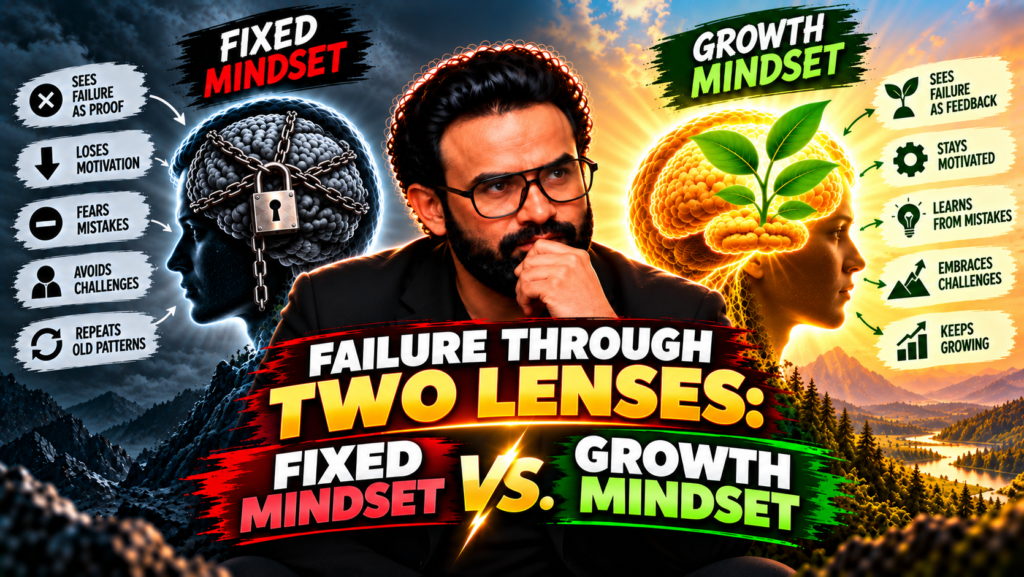
A Fixed Mindset Often Interprets Difficulty as Evidence of Limited Ability.
You Might Think:
“If I Were Good at This, It Would Be Easy.”
“I’m Not Capable of Doing This.”
“Other People Can Do It, But I Can’t.”
“Maybe This Isn’t Meant for Me.”
When You Think This Way, The Challenge Becomes More Than a Difficult Task.
It Becomes a Statement About Who You are.
For Example, Imagine You’re Asked to Give Your First Professional Presentation.
You Feel Nervous.
You Make A Few Mistakes.
A Fixed Mindset Might Conclude:
“I’m Terrible at Public Speaking.”
That Conclusion Can Make You Avoid Future Opportunities to Practice.
The Challenge Ends-But the Belief Remains.
A Growth Mindset Sees Difficulty Differently
A Growth Mindset Doesn’t Pretend That the Presentation Was Easy.
It Might Say:
“Public Speaking Is Difficult for Me Right Now.”
Then It Asks:
“What Can I Improve Before the Next Presentation?”
Maybe You Need to Practice More.
Maybe You Need to Prepare Your Points Differently.
Maybe You Need to Work on Your Delivery.
Maybe You Need to Become More Familiar with the Subject.
The Challenge Becomes a Source of Information.
Instead Of Asking:
“What Does This Say About My Ability?”
You Ask:
“What Does This Show Me About What I Need to Work On?”
That’s A Major Shift.
1. Challenges Become Problems to Solve
A Fixed Mindset Can Make a Challenge Feel Like a Wall.
A Growth Mindset Can Turn It into a Problem to Understand.
Suppose You’re Struggling to Manage Your Time.
A Fixed Response Might Be:
“I’m Terrible at Time Management.”
A Growth Response Asks:
“What’s Making My Schedule Difficult to Manage?”
Maybe You Have Too Many Commitments.
Maybe You Don’t Prioritize Tasks.
Maybe You Underestimate How Long Things Take.
Maybe You’re Constantly Distracted.
Now You Have Specific Problems to Examine.
You Can Test Different Solutions.
The Challenge Becomes More Manageable Because You’ve Stopped Treating It as An Identity Problem.
2. You Become More Willing to Learn
When You Believe Abilities Can Develop, Not Knowing Something Becomes Less Threatening.
You Can Say:
“I Don’t Know How to Do This.”
And Then Ask:
“Where Can I Learn?”
You Might Read.
Take A Course.
Watch A Tutorial.
Ask Someone Experienced.
Practise.
Experiment.
Being A Beginner Becomes Part of the Process Rather Than Something to Hide.
This Is Especially Valuable When Facing Challenges That Require Skills You Haven’t Developed Yet.
3. You Break Big Challenges into Smaller Steps
Large Challenges Can Feel Overwhelming.
Imagine Saying:
“I Need to Completely Change My Career.”
That’s A Huge Problem.
A Growth Mindset Can Encourage You to Break It Down.
What Skills are Needed?
What Roles Interest You?
What Qualifications Matter?
What Can You Learn This Month?
Who Can You Speak With?
What Small Project Could You Try?
Instead of Solving the Entire Future Today, You Focus on The Next Useful Step.
Progress Becomes Easier When the Challenge Has a Clear Starting Point.
4. You Become More Comfortable With Being a Beginner
One Of the Biggest Challenges in Learning Is Accepting That You Won’t Be Good Immediately.
Your First Attempt May Be Awkward.
Your First Video May Look Basic.
Your First Presentation May Feel Uncomfortable.
Your First Business Campaign May Not Perform Well.
That’s Normal.
A Growth Mindset Allows You to Think:
“I’m Learning.”
Rather Than:
“I Should Already Be Good at This.”
When You Stop Demanding Immediate Mastery, You Create More Room for Practice.
and Practice Creates Experience.
5. You Respond to Setbacks with Questions
A Setback Can Trigger Frustration.
That’s Natural.
But After the Initial Emotion, A Growth-Oriented Response Asks Useful Questions.
What Happened?
What Was Within My Control?
What Didn’t Work?
What Did I Learn?
What Could I Change?
What Should I Try Next?
These Questions Don’t Guarantee a Solution.
But They Prevent One Setback from Becoming the End of The Conversation.
6. You Become More Open to Feedback
Challenges Often Reveal Things You Can’t See by Yourself.
Someone Else May Notice a Weakness in Your Approach.
A Fixed Mindset May Interpret This as Criticism:
“They Think I’m Not Good Enough.”
A Growth Mindset Can Ask:
“Is There Something Here That Can Help Me Improve?”
You Don’t Have to Accept Every Opinion.
Good Feedback Should Be Evaluated.
But Remaining Open to Useful Feedback Gives You More Information and Better Information Can Improve Your Decisions.
7. You Adapt When Your First Strategy Doesn’t Work
A Growth Mindset Doesn’t Mean Repeating the Same Action Endlessly.
Suppose You Study for an Exam but Your Results Don’t Improve.
A Fixed Mindset Might Say:
“I’m Just Not Smart Enough.”
A Growth-Oriented Response Asks:
“Is My Study Method Working?”
Maybe You Need More Practice Questions.
Maybe You Need a Different Explanation.
Maybe You Need to Change Your Study Schedule.
Maybe You Need Help with a Particular Topic.
The Goal Isn’t Simply to Work Harder.
It’s To Learn What Works.
8. You Stop Expecting Challenges to Feel Easy
Sometimes We Assume:
“If This Is Right for Me, It Shouldn’t Be This Difficult.”
But Difficulty Is Often Part of Learning.
Learning A Language Can Be Difficult.
Starting A Business Can Be Difficult.
Building A New Habit Can Be Difficult.
Speaking In Public Can Be Difficult.
Learning A Technical Skill Can Be Difficult.
Difficulty Doesn’t Automatically Mean You’re on The Wrong Path.
Sometimes It Simply Means You’re Working at the Edge of What You Currently Know.
The Better Question Is:
“Is This Difficulty Helping Me Learn Something Valuable?”
9. You Become More Patient with Progress
Growth Rarely Happens Overnight.
You May Practice for Days and See Little Change.
You May Work on A Project for Months Before Seeing Meaningful Results.
A Growth Mindset Helps You Focus on The Process as Well as the Outcome.
Instead of Asking Only:
“Have I Succeeded Yet?”
Ask:
“What Am I Better At Now?”
Small Improvements Matter.
You Don’t Have to Become Dramatically Better Every Day.
Consistent Learning Can Add Up Over Time.
How To Use a Growth Mindset During Your Next Challenge
The Next Time You Face Something Difficult, Try This Simple Five-Step Process:
Step 1: Name The Challenge
What Exactly Is Difficult?
Be Specific.
Step 2: Separate The Problem From Your Identity
Instead Of:
“I’m Bad at This.”
Say:
“I’m Struggling with This Part.”
Step 3: Identify What You Can Learn
What Knowledge or Skill Would Make the Situation Easier?
Step 4: Choose One Small Action
Don’t Solve Everything at Once.
Take The Next Useful Step.
Step 5: Review And Adjust
After Taking Action, Ask:
“What Worked and What Should I Change?”
Then Continue.
Challenges Can Expand Your Possibilities
Every Challenge Doesn’t Automatically Make You Stronger.
But Challenges Can Reveal Areas Where You Can Learn.
A Difficult Presentation Can Help You Develop Communication Skills.
A Failed Project Can Teach You About Planning.
A Difficult Conversation Can Improve Your Ability to Listen.
A New Responsibility Can Reveal Skills You Didn’t Know You Could Develop.
The Important Thing Is to Remain Curious About What the Experience Can Teach You.
That’s Where Possibility Enters the Picture.
Build Your Mega Mindset
A Mega Mindset Doesn’t Mean Looking at Every Problem and Saying:
“Everything Is Possible!”
It’s More Practical Than That.
It Means Asking:
“What Is Possible From Here?”
Maybe You Can’t Solve Everything Today.
But Perhaps You Can Learn One Thing.
Maybe You Can’t Change the Entire Situation.
But Perhaps You Can Change Your Response.
Maybe You Can’t Guarantee the Outcome.
But Perhaps You Can Improve Your Preparation.
Maybe The Original Plan Won’t Work.
But Perhaps Another Path Will.
This Way of Thinking Keeps You Engaged with Reality While Leaving Room for Possibility.
Final Thoughts
Challenges are Unavoidable.
But The Way You Respond to Them Is Something You Can Work On.
A Fixed Mindset May Turn Difficulty into a Judgment:
“This Proves I Can’t.”
A Growth Mindset Turns Difficulty into a Question:
“What Can I Learn from This?”
That Doesn’t Mean Every Challenge Will End Successfully.
It Doesn’t Mean Effort Guarantees Results.
And It Doesn’t Mean You Should Continue with Every Goal Forever.
It Means You Remain Willing to Learn, Adapt and Make Thoughtful Decisions.
So, The Next Time Life Gives You a Difficult Problem, Pause Before Saying:
“I Can’t Do This.”
Try Asking:
“What Is the Next Thing I Can Learn, Practice, Or Change?”
You Don’t Need to Solve the Whole Challenge Today.
Just Take the Next Useful Step.
Think Bigger. Stay Curious. Keep Learning. Take Action.
Mega Mindset. Mega Possibilities.
Faqs
1. How Does a Growth Mindset Change the Way You Handle Challenges?
It Encourages You to View Challenges as Situations Where You Can Learn, Adapt and Improve Rather Than Automatically Treating Difficulty as Proof That You Lack Ability.
2. Does A Growth Mindset Make Challenges Easier?
Not Necessarily. A Growth Mindset Doesn’t Remove Difficulty. It Can Change How You Respond To Difficulty By Encouraging Learning, Problem-Solving, And Flexibility.
3. What Should I Do When A Challenge Feels Overwhelming?
Break It Into Smaller Parts. Identify What You Can Control, Determine What You Need To Learn, And Focus On One Practical Next Step Rather Than Solving Everything At Once.
4. Does A Growth Mindset Mean I Should Never Give Up?
No. Sometimes The Right Decision Is To Change Your Strategy, Pause, Or Move Toward A Different Goal. A Growth Mindset Encourages Thoughtful Adaptation Rather Than Blindly Continuing.
5. How Can I Use Failure During a Challenge?
Treat The Result As Information. Ask What Happened, What You Learned, What You Can Change, And Whether You Should Try Again or Choose Another Approach.
6. Can Challenges Help Develop New Skills?
They Can. Challenges Often Create Situations Where You Need to Learn, Practice, Communicate, Solve Problems, Or Adapt. The Challenge Itself Doesn’t Guarantee Growth, But Your Response to It Can Create Learning Opportunities.
7. How Does This Connect to Mega Mindset?
Mega Mindset Encourages You to Look Beyond Immediate Limitations and Ask What Is Possible from Your Current Situation. A Growth Mindset Supports This by Keeping You Open to Learning, Adaptation and Action.