
Failure Has a Way of Revealing How We Think.
When Something Goes Wrong, One Person May Think:
“I Knew I Wasn’t Good Enough.”
Another May Think:
“That Didn’t Work. What Can I Learn From It?”
The Failure Is The Same.
The Result Is The Same.
But The Meaning Each Person Gives It Is Different.
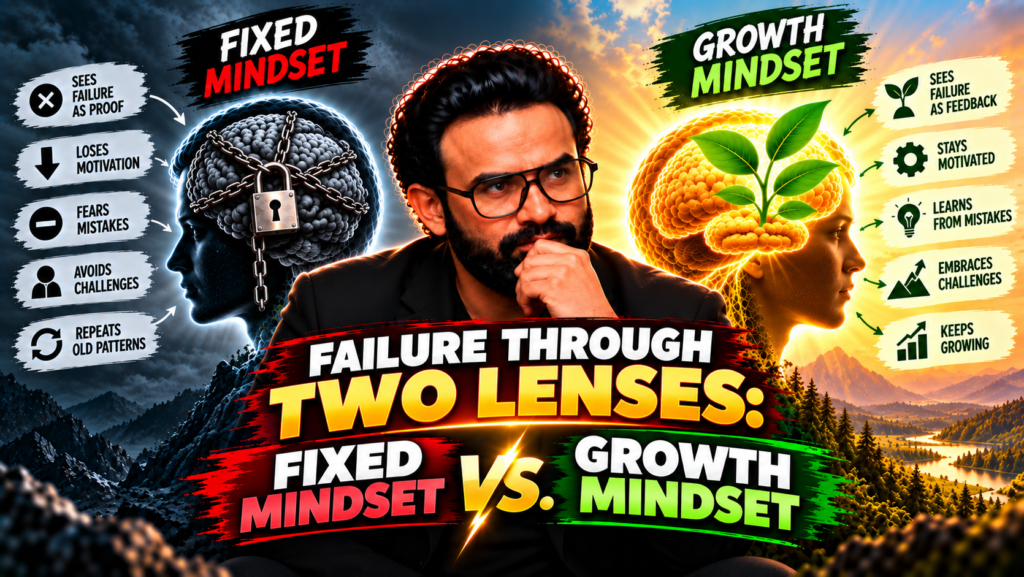
This Is One of the Clearest Differences Between a Fixed Mindset and A Growth Mindset.
A Fixed Mindset Can Turn Failure into A Judgment About Your Ability or Identity.
A Growth Mindset Can Treat Failure as Information That May Help You Learn, Adjust and Try a Different Approach.
That Doesn’t Mean Failure Is Always Good or That Every Setback Automatically Makes You Stronger. Sometimes Failure Is Painful, Costly or A Sign That You Need to Change Direction.
But The Way You Interpret Failure Can Influence What You Do Next.
And What You Do Next Can Create New Possibilities.
That’s The Heart of Mega Mindset, Mega Possibilities.
What Does Failure Mean to You?
Think About the Last Time Something Didn’t Go as Planned.
Maybe You:
- Didn’t Get the Job You Wanted
- Failed An Exam
- Lost A Customer
- Made A Mistake at Work
- Started A Project That Didn’t Succeed
- Posted Something That Received Little Response
- Tried To Build a New Habit and Gave Up
What Did You Tell Yourself Afterward?
Perhaps:
“I’m Not Capable.”
Or:
“I’ll Never Be Able to Do This.”
Or Maybe:
“What Can I Learn from What Happened?”
Your Answer Can Reveal Which Lens You’re Using.
The Fixed Mindset Lens
A Fixed Mindset Often Connects Failure with Identity.
The Thinking Can Sound Like:
“I Failed, So I’m A Failure.”
“I Didn’t Get Selected, So I’m Not Good Enough.”
“I Struggled with This, So I’m Not Talented.”
“Someone Else Succeeded, So They’re Naturally Better Than Me.”
This Way of Thinking Can Make Failure Feel Much Bigger Than the Event Itself.
A Single Unsuccessful Attempt Becomes Evidence About Who You are.
And When Failure Becomes an Identity Judgment, You May Become More Likely to Avoid Situations Where You Could Fail Again.
For Example, Imagine Someone Gives a Presentation and Receives Poor Feedback.
They Think:
“I’m Terrible at Public Speaking.”
The Next Time They’re Asked to Present, They May Avoid It.
That Means They Lose Another Opportunity to Practice.
The Original Failure Now Influences Future Behaviors.
The Growth Mindset Lens
A Growth Mindset Separates the Outcome from Your Identity.
Instead Of:
“I’m A Failure.”
You Might Think:
“That Attempt Didn’t Work.”
Instead Of:
“I’m Bad at Presentations.”
You Might Think:
“My Presentation Needs Improvement.”
Instead Of:
“I Can’t Do This.”
You Might Ask:
“What Do I Need to Learn?”
This Doesn’t Mean Pretending That the Failure Wasn’t Serious.
It Means Looking at the Experience with Enough Distance to Learn from It.
The Question Changes From:
“What Does This Failure Say About Me?”
To:
“What Does This Failure Teach Me?”
That’s A Powerful Shift.
Failure Doesn’t Always Mean You Should Try Again
There’s An Important Distinction Here.
A Growth Mindset Doesn’t Mean:
“Never Give Up.”
Sometimes The Right Response to Failure Is to Try Again.
Sometimes It’s to Change Your Strategy.
Sometimes It’s to Ask for Help.
Sometimes It’s to Pause.
And Sometimes It’s to Decide That the Goal Isn’t Worth Pursuing.
For Example, If A Business Idea Fails, Simply Repeating the Same Strategy May Not Be Useful.
A Growth-Oriented Response Could Be:
“What Did the Result Tell Me and What Should I Change?”
Learning Can Lead to Persistence.
But It Can Also Lead to Adaptation.
That’s An Important Part of Genuine Growth.
The Five-Question Failure Review
After A Setback, Try Asking Yourself Five Questions.
1. What Actually Happened?
Start With The Facts.
Avoid Immediately Turning the Event into a Judgment About Yourself.
For Example:
“My Application Wasn’t Selected.”
That’s Different From:
“I’m Not Good Enough.”
2. What Was Within My Control?
Maybe Your Preparation Was Within Your Control.
Maybe The Final Decision Wasn’t.
Separating These Can Help You Focus Your Energy Where It Matters.
3. What Did I Learn?
Look For Information.
What Worked?
What Didn’t?
What Surprised You?
What Would You Do Differently?
4. What Can I Change?
Learning Becomes Useful When It Influences Your Next Action.
Maybe You Need More Practice.
Maybe Your Strategy Needs Adjustment.
Maybe You Need Additional Knowledge.
5. What Should I Do Next?
Your Next Step Could Be:
Try Again.
Try Differently.
Learn More.
Ask For Help.
Change Direction.
The Answer Will Depend on The Situation.
Failure and Fear of Judgment
Sometimes We aren’t Afraid of Failure Itself.
We’re Afraid of What Other People Will Think.
“What If They Laugh?”
“What If They Think I’m Not Capable?”
“What If Everyone Sees Me Fail?”
This Fear Can Make You Avoid Opportunities Entirely.
A Growth Mindset Doesn’t Remove That Fear.
Instead, It Can Change Your Relationship with It.
You Can Acknowledge:
“I Might Make Mistakes.”
And Still Decide:
“I’m Willing to Learn.”
You Don’t Need to Become Fearless.
You Need to Become Willing to Take Reasonable Action Despite Uncertainty.
Failure Can Reveal What You Need to Learn
Imagine Someone Wants to Become a Content Creator.
They Publish Ten Posts and Receive Almost No Engagement.
A Fixed Mindset Might Say:
“I’m Not Meant to Create Content.”
A Growth Mindset Might Investigate.
Maybe The Content Wasn’t Reaching the Right Audience.
Maybe The Hooks Were Weak.
Maybe The Topics Weren’t Aligned with Audience Interests.
Maybe The Creator Needed More Time to Understand the Platform.
The Result Doesn’t Automatically Tell You Exactly What to Do Next.
But It Gives You Something to Investigate.
Failure Can Become a Source of Questions.
And Good Questions Can Lead to Better Decisions.
Don’t Romanticize Failure
Failure Isn’t Automatically Valuable.
Sometimes It Simply Hurts.
Sometimes It Creates Financial Loss.
Sometimes It Damages Trust.
Sometimes It Tells You That a Particular Approach Wasn’t Suitable.
The Lesson Isn’t:
“Failure Is Always Good.”
The More Useful Lesson Is:
“Failure Can Contain Information If I’m Willing to Examine It.”
You Don’t Have to Celebrate a Setback.
You Can Acknowledge the Disappointment While Still Asking:
“What Can I Take from This Experience?”
That’s A More Realistic Approach to Growth.
How to Build a Growth-Oriented Response to Failure
You Can Practice This in Everyday Situations.
Replace Identity with Experience
Instead Of:
“I’m A Failure.”
Try:
“This Attempt Failed.”
Replace Blame with Curiosity
Instead Of:
“Why Does This Always Happen to Me?”
Ask:
“What Caused This Result?”
Replace Giving Up with Evaluation
Instead Of:
“I’m Done.”
Ask:
“Should I Continue, Change My Approach or Choose Another Direction?”
Replace Comparison with Learning
Instead Of:
“They’re Better Than Me.”
Ask:
“What Can I Learn from Their Approach?”
Replace Fear with Preparation
Instead Of Waiting Until You Feel Completely Confident, Identify What Preparation Could Reduce the Risk.
The “Yet” Mindset After Failure
Sometimes Failure Creates a Permanent-Sounding Conclusion.
“I Can’t Do This.”
Try:
“I Can’t Do This Yet.”
But Remember: “Yet” Isn’t A Magic Word.
It Doesn’t Promise That Every Goal Will Eventually Work Out.
It Simply Keeps You Open to the Possibility of Learning.
Maybe You Need A New Skill.
Maybe You Need More Practice.
Maybe You Need A Different Strategy.
Maybe You Need to Discover That This Particular Goal Isn’t Right for You.
All Of Those Outcomes Can Teach You Something.
Build Your Mega Mindset
A Mega Mindset Doesn’t Ignore Failure.
It Changes How You Approach It.
You Can Feel Disappointed and Still Learn.
You Can Make a Mistake and Still Improve.
You Can Experience a Setback and Still Ask Useful Questions.
You Can Decide to Stop Pursuing One Goal and Still Carry Valuable Lessons Forward.
The Goal Isn’t to Turn Every Failure into A Motivational Story.
The Goal Is to Make Your Experiences Useful.
Think Of Failure as A Checkpoint.
Pause.
Look Around.
Understand What Happened.
Then Decide What Comes Next.
That’s A Much More Powerful Approach Than Allowing One Result to Define Your Entire Future.
Final Thoughts
Failure Gives You Two Very Different Lenses.
Through A Fixed Mindset:
Failure Becomes Identity.
Through A Growth Mindset:
Failure Becomes Information.
The Second Approach Doesn’t Guarantee Success.
But It Can Help You Remain Curious, Examine Your Choices, Learn from Experience, And Make Better-Informed Decisions.
The Next Time Something Doesn’t Work, Give Yourself Permission to Feel Disappointed.
Then, When You’re Ready, Ask:
What Happened?
What Did I Learn?
What Can I Change?
What Should I Try Next?
Your Failure Doesn’t Have to Define You.
It Can Simply Become One Chapter in the Much Larger Story of Your Learning.
Think Bigger. Stay Curious. Learn From Every Experience. Take The Next Step.
Mega Mindset. Mega Possibilities.
Faqs
1. What Is the Difference Between a Growth Mindset and A Fixed Mindset When Dealing with Failure?
A Fixed Mindset May Interpret Failure as Evidence That a Person Lacks Ability. A Growth Mindset Focuses More on What Can Be Learned from the Experience and What Might Be Changed Next.
2. Does A Growth Mindset Mean I Should Always Try Again After Failing?
No. Growth Can Mean Trying Again, Changing Your Strategy, Asking for Help, Or Deciding That a Particular Goal Isn’t Worth Pursuing. The Key Is Making the Decision Thoughtfully Rather Than Treating Failure as a Judgment About Your Identity.
3. How Can I Stop Seeing Failure as A Personal Judgment?
Separate The Event from Your Identity. Instead of Saying “I’m A Failure,” Describe What Actually Happened: “This Attempt Didn’t Work.” Then Look for Lessons and Factors You Can Influence.
4. Can Failure Always Teach Us Something?
Not Every Failure Provides an Obvious Lesson Immediately. Sometimes You Need Time and Reflection Before Understanding What Happened. Failure Also Doesn’t Automatically Become Valuable Simply Because It Occurred.
5. How Can I Use Failure to Improve?
Review What Happened, Identify What Was Within Your Control, Consider What You Learned, Decide What to Change and Choose a Sensible Next Step.
6. Why Do People with a Fixed Mindset Fear Failure?
Failure Can Feel Threatening When a Person Sees Ability as a Fixed Part of Their Identity. A Poor Result May Then Feel Like Proof That They Aren’t Capable Rather Than Simply Feedback About One Attempt.
7. How Does This Connect with Mega Mindset?
Mega Mindset Encourages You to See Setbacks as Part of a Larger Learning Journey. Instead Of Allowing One Result to Define Your Potential, You Can Examine the Experience, Learn from It, And Remain Open to New Possibilities.