
Your Career Isn’t Shaped Only by Your Qualifications, Experience, Or Job Title.
It Is Also Shaped by How You Respond When Things Don’t Go According to Plan.
A New Responsibility Comes Your Way.
A Manager Gives You Difficult Feedback.
A Colleague Gets Promoted.
You Make a Mistake.
A Project Fails.
A New Technology Changes the Way You Work.
In These Moments, Your Mindset Can Influence What You Do Next.
A Fixed Mindset May Tell You:
“I’m Not Good at This.”
A Growth Mindset May Ask:
“What Can I Learn?”
The Difference May Seem Small, But It Can Affect How You Approach Challenges, Feedback, Learning and Career Opportunities.
A Growth Mindset Doesn’t Guarantee Promotions or Career Success. Your Industry, Skills, Opportunities, Workplace, Relationships and Circumstances All Matter.
But The Way You Think Can Influence How You Respond to Those Circumstances.
And That Is Where Mega Mindset, Mega Possibilities Comes into the Workplace.
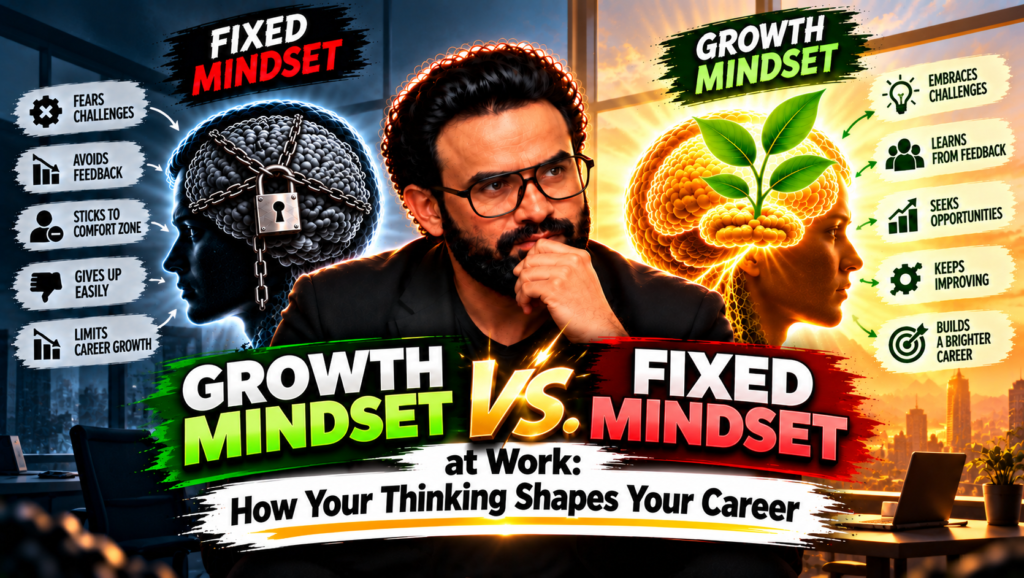
What Does a Fixed Mindset Look Like at Work?
A Fixed Mindset at Work Often Involves Treating Your Current Abilities as Permanent.
You Might Think:
- “I’m Not a Leadership Person.”
- “I’m Terrible at Presentations.”
- “I’m Not Good with Technology.”
- “I’ll Never Be Good at Sales.”
- “I’m Not Smart Enough for That Role.”
- “I’ve Always Been Bad at Communication.”
These Thoughts May Come from Real Experiences.
Maybe You’ve Struggled with Presentations.
Maybe You Received Poor Feedback.
Maybe You Tried Learning a Technical Skill and Found It Difficult.
But The Problem Begins When One Experience Becomes a Permanent Conclusion About Your Career.
Instead of Seeing a Skill as Something You Can Develop, You See It as Part of Your Identity.
What Does a Growth Mindset Look Like at Work?
A Growth Mindset Doesn’t Mean Believing You are Good at Everything.
Instead, It Encourages You to Think:
“I Can Improve.”
You Might Say:
“I’m Not Comfortable Presenting Yet, So I’ll Practise.”
“This Software Is Unfamiliar, So I Need to Learn It.”
“My Manager’s Feedback Is Difficult to Hear, But There May Be Something Useful in It.”
“I Didn’t Get the Promotion. What Can I Learn from the Experience?”
The Focus Shifts from Protecting Your Current Image to Developing Your Future Capabilities.
That Can Create a Very Different Approach to Career Growth.
1. Growth Mindset Makes You More Open to Learning
Work Is Constantly Changing.
New Tools Appear.
Processes Change.
Industries Evolve.
Job Responsibilities Expand.
Skills That Were Valuable A Few Years Ago May Need to Be Updated.
A Fixed Mindset Can Make Learning Feel Threatening:
“I Should Already Know This.”
A Growth Mindset Can Say:
“This Is Something New. Let Me Learn It.”
Imagine Your Company Introduces a New Software System.
Instead Of Avoiding It Because You Don’t Understand It, You Decide to Learn the Basics.
You Ask Questions.
You Practise.
You Make Mistakes.
Eventually, The Unfamiliar Becomes More Familiar.
Learning Becomes Part of Your Career Rather Than Something You Only Do When You’re Struggling.
2. You Become More Willing to Take on Challenges
Career Growth Often Involves Doing Things You Haven’t Done Before.
You May Be Asked to Lead a Meeting.
Manage A Project.
Train A Colleague.
Speak To a Client.
Present To Senior Leaders.
Take Responsibility for a New Team.
A Fixed Mindset May Think:
“If I Haven’t Done This Before, I Shouldn’t Do It.”
A Growth Mindset Asks:
“What Would I Need to Learn to Handle This?”
You Still Need to Evaluate Whether the Opportunity Is Realistic and Appropriate.
But You Don’t Automatically Reject It Simply Because You’re Inexperienced.
3. Feedback Becomes a Career Tool
Feedback Can Be Uncomfortable.
Nobody Enjoys Hearing:
“This Needs Improvement.”
But Feedback Can Help You Identify Skills That May Be Holding You Back.
A Fixed Mindset Might Interpret Feedback As:
“My Manager Thinks I’m Bad at My Job.”
A Growth Mindset Might Ask:
“What Exactly Should I Improve?”
For Example, If Your Manager Says Your Presentations Need to Be Clearer, You Can Work On:
- Organizing Your Ideas
- Simplifying Slides
- Improving Your Delivery
- Practising Beforehand
- Understanding Your Audience
Feedback Becomes Actionable.
You Aren’t Required to Accept Every Criticism.
But Useful Feedback Can Help You Identify Your Next Area of Development.
4. You Handle Career Setbacks Differently
Careers Rarely Move in a Perfectly Straight Line.
You May Not Get the Promotion You Wanted.
You May Lose an Important Client.
You May Make a Mistake.
You May Fail an Interview.
You May Receive a Project That Doesn’t Succeed.
A Fixed Mindset May Turn the Setback into an Identity:
“I’m Not Good Enough.”
A Growth Mindset Separates the Event from the Person:
“I Didn’t Get the Result I Wanted. What Can I Learn?”
Maybe You Need Stronger Skills.
Maybe Your Interview Preparation Needs Improvement.
Maybe Your Communication Needs Work.
Maybe Another Candidate Simply Had a Different Experience.
The Lesson Isn’t Always Obvious.
But Asking Better Questions Keeps You Engaged with Your Career Rather Than Defined by One Setback.
5. You Learn from Colleagues Instead of Competing with Everyone
Workplaces Naturally Involve Comparison.
Someone Gets Promoted.
Someone Receives Praise.
Someone Seems More Confident.
Someone Earns a Bigger Responsibility.
A Fixed Mindset May Think:
“Their Success Proves I’m Behind.”
A Growth Mindset Can Ask:
“What Can I Learn From How They Work?”
Maybe They’re Excellent at Communication.
Maybe They Manage Relationships Well.
Maybe They’re Organized.
Maybe They Take Initiative.
Study The Behaviour.
You Don’t Have to Become Exactly Like Them.
You Can Identify Useful Skills and Develop Your Own Version.
6. You Become More Comfortable Saying “I Don’t Know”
One Of the Most Useful Career Habits Is Being Able to Admit When You Don’t Know Something.
A Fixed Mindset May Feel Pressure to Appear Knowledgeable All the Time.
So You Avoid Questions.
You Pretend to Understand.
You Make Assumptions.
A Growth Mindset Recognizes That Learning Requires Curiosity.
You Can Say:
“I Don’t Know Yet. Let Me Find Out.”
That Doesn’t Make You Less Capable.
It Can Demonstrate That You’re Willing to Learn Rather Than Pretend.
7. You Treat Career Growth as a Process
A Fixed Mindset May Focus Heavily on Titles:
“I Need to Become a manager.”
A Growth Mindset Also Focuses on Capability:
“What Skills Do I Need to Become Ready for That Responsibility?”
That Might Include:
- Leadership
- Communication
- Decision-Making
- Problem-Solving
- Delegation
- Strategic Thinking
- Industry Knowledge
The Title Is an Outcome.
The Skills Are Part of the Preparation.
When You Focus on Developing Capabilities, You Give Yourself Something Practical to Work On.
8. You Adapt When the Workplace Changes
Change Can Create Uncertainty.
A New Manager Arrives.
Your Responsibilities Change.
Technology Changes Your Workflow.
Your Company Restructures.
A Fixed Mindset May Think:
“Things Were Better Before.”
A Growth Mindset Asks:
“What Do I Need to Learn to Work Effectively in This New Situation?”
That Doesn’t Mean Accepting Every Change Without Question.
You Can Disagree with Decisions.
You Can Raise Concerns.
You Can Protect Reasonable Boundaries.
But Staying Open to Learning Can Help You Adapt Without Becoming Stuck in the Past.
How To Build a Growth Mindset at Work
Try These Simple Habits.
Ask For Useful Feedback
Don’t Simply Ask:
“How Am I Doing?”
Ask:
“What’s One Thing I Could Improve?”
Choose One Skill to Develop
Pick A Skill That Would Genuinely Help Your Career.
Then Practise It Consistently.
Keep A Learning List
Write Down Skills, Tools, Concepts, Or Areas You Want to Understand Better.
Reflect After Major Projects
Ask:
What Worked?
What Didn’t?
What Would I Do Differently Next Time?
Don’t Let One Result Define You
A Missed Promotion or Unsuccessful Project Is an Event-Not Your Entire Career Story.
A Quick Workplace Mindset Check
Think About These Statements:
“I’m Not a Leadership Person.”
“I’m Bad at Networking.”
“I Can’t Learn New Technology.”
“I’m Not Confident Enough for That Role.”
“They Got Promoted Because They’re Naturally Better.”
Now Try Turning Each into a Learning Question.
“What Leadership Skills Can I Develop?”
“How Can I Improve My Networking?”
“What Part of This Technology Can I Learn First?”
“What Skills Would Prepare Me for That Role?”
“What Can I Learn from Their Approach?”
You Don’t Need to Convince Yourself That You’re Already Ready.
You Simply Need to Identify What You Can Develop.
Build Your Mega Mindset at Work
A Mega Mindset Doesn’t Mean Chasing Every Promotion or Saying Yes to Every Opportunity.
It Means Approaching Your Career with Curiosity and a Willingness to Develop.
You May Not Have the Skill Today.
Learn It.
You May Not Feel Confident Today.
Practise.
You May Have Made a Mistake.
Reflect.
You May Have Missed an Opportunity.
Understand Why.
You May Be Facing Change.
Adapt Where Appropriate.
Your Career Isn’t Completely Under Your Control.
But Your Willingness to Learn, Reflect and Improve Is an Area Where You Can Often Make Meaningful Choices.
And Those Choices Can Influence the Possibilities You Explore.
Final Thoughts
Your Career Is More Than a Collection of Job Titles.
It’s Also a Collection of Skills, Experiences, Relationships, Decisions and Lessons.
A Fixed Mindset Can Make Your Current Abilities Feel Like Permanent Career Boundaries.
A Growth Mindset Treats Them as Areas That Can Potentially Be Developed.
That Doesn’t Guarantee Success.
But It Can Change How You Approach Opportunities.
Instead Of:
“I’m Not Ready.”
Ask:
“What Do I Need to Learn to Become Ready?”
Instead Of:
“I Failed.”
Ask:
“What Can I Learn from This?”
Instead Of:
“They Are Better Than Me.”
Ask:
“What Can I Learn from Them?”
Your Career Won’t Always Move Exactly According to Plan.
But A Willingness to Learn Can Help You Respond When the Plan Changes.
Think Bigger. Stay Curious. Keep Learning. Take Action.
Mega Mindset. Mega Possibilities.
Faqs
1. What Is a Growth Mindset at Work?
A Growth Mindset at Work Means Approaching Skills and Challenges with The Belief That Improvement Is Possible Through Learning, Practice, Feedback, And Experience.
2. How Does a Fixed Mindset Affect Your Career?
A Fixed Mindset Can Lead You to Avoid Challenges, Reject Feedback, Fear Mistakes, Or Assume That You Lack the Ability to Take on Certain Responsibilities. These Patterns May Limit the Opportunities You Explore.
3. Does A Growth Mindset Guarantee Career Success?
No. Career Outcomes Depend on Many Factors, Including Skills, Opportunities, Workplace Conditions, Industry Changes, Relationships, Timing, And Circumstances. A Growth Mindset Is One Factor That Can Influence How You Respond to Those Conditions.
4. How Can I Develop a Growth Mindset at Work?
Start By Asking for Useful Feedback, Learning New Skills, Reflecting on Setbacks, Accepting Reasonable Challenges, Studying Successful Colleagues and Treating Unfamiliar Tasks as Opportunities to Learn.
5. How Should I Respond When I Don’t Get a Promotion?
Give Yourself Time to Process the Disappointment, Then Look for Useful Information. Ask What Skills or Experience Could Strengthen Your Future Opportunities and Whether There Is Actionable Feedback You Can Use.
6. Is Saying “I Don’t Know” Good for Your Career?
In Many Situations, Honestly Acknowledging What You Don’t Know and Showing That You’re Willing to Learn Can Be More Productive Than Pretending to Have an Answer. The Key Is to Follow “I Don’t Know” With A Willingness to Find Out.
7. What Does Mega Mindset Mean for Career Growth?
Mega Mindset Means Approaching Your Career with A Broader View of Possibility While Staying Grounded in Learning and Action. Instead Of Defining Yourself Only by Your Current Skills, You Focus on What You Can Develop Next.