
Have You Ever Looked at Someone Else’s Success and Thought, “I Could Never Do That”?
Maybe You See Someone Building a Successful Business, Speaking Confidently on Stage, Learning A New Skill, Or Achieving a Goal That Once Seemed Impossible.
You Admire Their Achievement, But Somewhere Inside, You Believe It’s Different for You.
Why?
Sometimes, The Biggest Obstacle Isn’t the Opportunity in Front of Us. It’s The Belief That the Opportunity Is Beyond Our Reach.
When You Assume You Cannot Learn Something, You May Never Explore It. When You Believe a Challenge Is Too Difficult, You May Avoid Taking the First Step. And When You Focus Only on Your Limitations, You Can Overlook Possibilities That Deserve Your Attention.
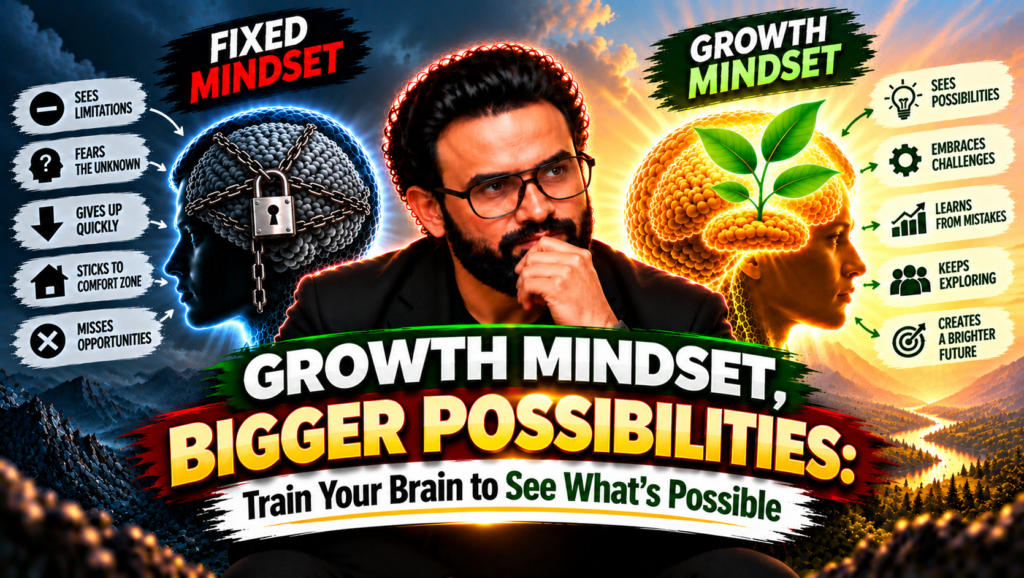
A Growth Mindset Encourages You to Question These Assumptions.
Instead Of Asking, “Can I Do This Right Now?” You Begin Asking, “What Would I Need to Learn to Make This Possible?”
That Small Shift Can Change How You Approach Challenges, Opportunities and Your Future.
1. Your Mindset Influences What You Notice
Imagine Two People Looking at The Same Opportunity.
A New Technology Is Becoming Popular. One Person Thinks, “This Is Too Complicated for Me.” The Other Thinks, “I Wonder How I Could Learn to Use It.”
The Opportunity Is the Same, But Their Responses are Different.
The First Person May Move on Without Exploring It. The Second May Research the Technology, Watch Tutorials, Ask Questions and Discover Ways to Apply It.
This Doesn’t Mean the Second Person Is Guaranteed to Succeed. It Means They are More Willing to Investigate What Might Be Possible.
Our Beliefs Can Influence Which Options We Notice, Which Risks We Consider and Which Actions We Take.
When You Change the Questions You Ask, You May Begin Noticing Opportunities You Previously Overlooked.
2. Stop Treating Your Current Abilities as Your Final Limits
One of the Most Common Barriers to Growth Is Assuming That Your Current Skills Define Your Future.
You Might Say:
- “I’m Not a Good Communicator.”
- “I’m Not Creative Enough.”
- “I’m Too Old to Learn Something New.”
- “I Don’t Understand Technology.”
- “I’m Not the Kind of Person Who Starts a Business.”
These Statements May Reflect How You Feel Today, But They Don’t Necessarily Tell You What You Could Learn with Practice and Support.
Instead of Treating a Weakness as A Permanent Identity, Examine the Specific Skill You Want to Develop.
If You Struggle With Communication, Practice Explaining Your Ideas Clearly.
If Technology Feels Confusing, Learn One Tool at A Time.
If You Want to Start a Business, Begin by Understanding a Customer’s Problem.
You Don’t Need to Become an Expert Before You Begin.
Your Current Ability Is a Starting Point, Not A Complete Description of Your Potential.
3. Train Yourself to Ask “What If?”
The Question “What If?” Can Help You Explore Alternatives Beyond Your Usual Assumptions.
What If You Tried a Different Strategy?
What If You Asked Someone Experienced for Advice?
What If You Learned a Skill That Could Help You Solve a Problem?
What If the Obstacle, You’re Facing Requires a New Approach Rather Than More Effort?
These Questions Don’t Guarantee Answers, But They Encourage Curiosity.
For Example, Imagine You Want to Share Your Knowledge Online but Feel Uncomfortable Appearing on Camera.
You Might Assume That Creating Content Isn’t for You.
But What If You Explored Voice-Over Videos, Written Posts, Screen Recordings, Or Simple Presentations?
You May Discover an Approach That Fits Your Strengths and Preferences.
The Lesson Is Simple: Don’t Reject an Entire Possibility Before Exploring the Different Ways It Might Work.
4. Replace Fear of Failure with Curiosity
Fear Often Makes Us Focus on What Could Go Wrong.
What If I Fail? What If People Criticize Me? What If I Waste My Time? What If I’m Not Good Enough?
These Concerns aren’t Always Unreasonable. Risks Deserve Careful Consideration.
However, When Fear Becomes the Only Factor Guiding Your Decisions, You May Miss Valuable Learning Experiences.
Try Adding a Different Set of Questions:
What Could I Learn from Trying?
What Would a Small, Low-Risk Experiment Look Like?
How Could I Prepare More Effectively?
What Information Would Help Me Make a Better Decision?
Suppose You Want to Sell a Digital Product but Aren’t Sure Whether People Will Buy It.
Instead of Spending Months Building a Complicated Product, You Could Research Your Audience, Talk to Potential Customers, Or Test a Simple Offer.
This Approach Doesn’t Eliminate Risk. It Helps You Learn Before Making a Bigger Commitment.
A Growth Mindset Doesn’t Require Reckless Optimism. It Encourages Thoughtful Experimentation.
5. Learn to See Challenges as Questions to Solve
When A Challenge Appears, Your First Reaction May Be to See It as A Wall.
You Think, “This Is Impossible.”
A Growth-Oriented Approach Asks, “What Exactly Makes This Difficult?”
That Question Helps Break a Large Problem into Smaller Parts.
Imagine You Want to Improve Your Career but Don’t Know Where to Begin.
The Problem May Involve Several Different Questions:
- Which Skills are in Demand in My Field?
- What Skills Do I Already Have?
- Where Are My Knowledge Gaps?
- Who Could Provide Useful Guidance?
- What Is One Step I Can Take This Month?
Suddenly, The Challenge Becomes Something You Can Investigate.
You May Not Have Complete Control Over Your Circumstances, But You Can Often Identify a Practical Action.
Possibility Becomes Easier to Explore When You Turn a Vague Problem into Specific Questions.
6. Expand Your Possibilities Through Learning
Sometimes, Opportunities Remain Invisible Because We Don’t Yet Have the Knowledge to Recognize Them.
Learning Helps Expand What You Understand and What You Can Consider Doing.
Reading About a New Subject, Learning from Experienced People, Experimenting with Tools and Exploring Unfamiliar Ideas Can Reveal Options You Hadn’t Previously Considered.
You Don’t Need to Study Everything.
Choose Learning That Connects with Your Goals.
If You Want to Grow a Business, Learn About Customer Needs and Marketing.
If You Want to Improve Your Career, Explore Relevant Skills and Seek Feedback.
If You Want to Become More Confident, Practice the Situations You Currently Avoid.
Then Apply What You Learn.
Knowledge Becomes More Useful When You Turn It into Action.
7. Build A Daily Habit of Looking for Possibilities
You Don’t Need to Make Dramatic Changes to Develop a More Opportunity-Focused Mindset.
Start With A Few Simple Habits.
Notice One Assumption.
Identify Something You’ve Decided You Cannot Do. Ask Whether That Belief Is Based on Evidence, Experience, Fear, Or A Lack of Knowledge.
Explore One Alternative.
Consider Another Method, Resource, Or Direction You Haven’t Tried.
Take One Small Action.
Read An Article, Practice A Skill, Ask A Question, Or Speak With Someone Who Can Help.
Reflect On What You Discover.
Did You Learn Something New? Did Your Original Assumption Change? What Will You Try Next?
Over Time, This Routine Can Help You Approach Uncertainty with More Curiosity and Make More Informed Decisions.
Build Your Mega Mindset
A Growth Mindset Doesn’t Mean Believing That Every Dream Will Come True or That Every Obstacle Can Be Overcome Through Positive Thinking.
Some Opportunities Are Limited By Circumstances. Some Goals Require Resources You May Not Have Yet. And Some Plans Need To Change When Reality Doesn’t Match Your Expectations.
But You Don’t Have To Assume That Today’s Limitations Tell The Whole Story Of Tomorrow.
You Can Learn New Skills. You Can Question Old Beliefs. You Can Seek Guidance, Experiment with Different Approaches, And Discover Alternatives You Hadn’t Considered.
The Goal Is Not to Convince Yourself That Everything Is Possible.
It Is to Become More Willing to Explore What Is Possible, Understand What It Requires, And Take Action Where You Can.
The Next Time You Catch Yourself Thinking, “That’s Not for Me,” Pause and Ask:
“What Would I Need to Learn, Change or Try to Explore This Possibility?”
You May Discover That the First Step Toward a Bigger Future Isn’t Having All the Answers.
It’s Being Willing to Ask a Better Question.
Think Bigger. Stay Curious. Take Action.
Mega Mindset. Mega Possibilities.
Frequently Asked Questions
1. What Is a Growth Mindset?
A Growth Mindset Is the Belief That Abilities Can Develop Through Learning, Practice, Feedback, And Effective Strategies. It Encourages People to Approach Challenges as Opportunities to Improve.
2. How Does a Growth Mindset Help You See More Possibilities?
It Encourages You to Question Assumptions, Explore Alternatives, Learn New Skills and Consider Approaches You Might Otherwise Dismiss. This Can Help You Recognize and Investigate More Opportunities.
3. Can I Train My Brain to Think More Positively?
You Can Practice Noticing Unhelpful Thought Patterns and Replacing Automatic Conclusions with More Balanced Questions. The Goal Isn’t to Ignore Problems but To Consider Them Clearly and Identify Constructive Next Steps.
4. How Can I Stop Limiting Myself with Negative Beliefs?
Identify The Belief, Examine the Evidence Behind It and Ask Whether Your Current Skills or Circumstances Could Change. Then Choose a Small Action That Helps You Test Your Assumption.
5. Does A Growth Mindset Mean Anything Is Possible?
No. A Growth Mindset Doesn’t Remove Real-World Limitations or Guarantee Success. It Encourages You to Explore Opportunities, Develop Skills, Adapt Your Approach, And Make Thoughtful Decisions.
6. What Is One Daily Habit That Develops a Growth Mindset?
Ask Yourself, “What Is One Thing I Could Learn or Try Today That Might Help Me Move Forward?” Choose A Realistic Action and Reflect on What You Discover.
7. How Does Growth Mindset Connect with Mega Mindset, Mega Possibilities?
The Mega Mindset Philosophy Encourages You to Think Beyond Current Assumptions, Remain Open to Learning and Take Purposeful Action. A Growth Mindset Supports This by Helping You Explore Possibilities Without Assuming That Your Current Abilities Define Your Future.