
Have You Ever Told Yourself, “This Is Just The Way I Am”?
Maybe You Believe You’re Not Confident Enough, Not Creative Enough, Or Simply Not Good At Learning New Things. Perhaps You’ve Tried To Change A Habit But Returned To Your Old Patterns After A Few Days.
Over Time, These Thoughts Can Begin To Feel Like Facts.
But What If The Way You Think Today Doesn’t Have To Determine How You Think Tomorrow?
Yes, You Can Develop A Different Mindset. It Takes Awareness, Practice, Patience, And A Willingness To Challenge Your Usual Responses.
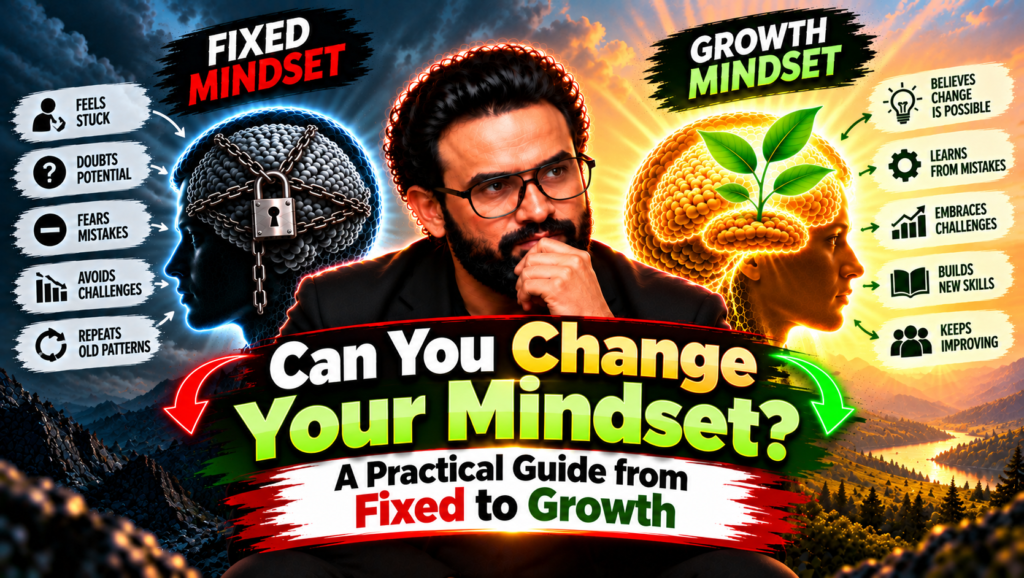
A Fixed Mindset Tends To View Abilities As Relatively Unchangeable, While A Growth Mindset Recognizes That Abilities Can Develop Through Learning, Practice, Feedback, And Effective Strategies.
The Goal Isn’t To Become Positive Every Minute Or Believe You Can Achieve Absolutely Anything. It’s To Learn How To Respond More Constructively When You Face Difficulties.
Let’s Explore How To Begin.
1. Understand Your Current Mindset
You Can’t Change A Pattern You Haven’t Noticed.
Start By Paying Attention To Your Thoughts When Something Becomes Difficult.
Imagine You’re Learning A New Skill And Making Repeated Mistakes.
A Fixed-Mindset Response Might Be:
“I’m Terrible At This. I’ll Never Learn It.”
A Growth-Oriented Response Might Be:
“This Is Harder Than I Expected. What Do I Need To Understand Better?”
Both Responses Acknowledge Difficulty, But They Lead Your Attention In Different Directions.
The First Makes A Judgment About Your Ability. The Second Encourages You To Investigate The Problem.
For One Day, Notice How You React When You Make Mistakes, Receive Feedback, Or Compare Yourself With Others.
Ask Yourself:
- Do I Avoid Tasks Where I Might Fail?
- Do I Take Criticism Personally?
- Do I Assume Other People Are Naturally Better Than Me?
- Do I Give Up When Progress Feels Slow?
- Do I Look For Ways To Improve When Something Goes Wrong?
Don’t Criticize Yourself For Your Answers. Your Goal Is Simply To Understand Your Current Patterns.
Awareness Is The First Step Toward Change.
2. Challenge The Stories You Tell Yourself
Our Minds Sometimes Turn Individual Experiences Into Permanent Conclusions.
One Unsuccessful Presentation Becomes “I’m A Terrible Speaker.”
One Business Setback Becomes “I’m Not Made For Business.”
One Difficult Exam Becomes “I’m Not Intelligent Enough.”
But Does One Experience Tell The Whole Story?
Instead Of Automatically Accepting These Conclusions, Examine Them.
Ask Yourself:
What Actually Happened?
What Am I Assuming About Myself?
Is There Another Way To Understand This Experience?
For Example, Perhaps Your Presentation Went Poorly Because You Were Unprepared Or Unfamiliar With The Topic.
That Doesn’t Automatically Mean You’re A Bad Communicator. It May Mean You Need More Preparation And Practice.
The Purpose Isn’t To Make Excuses. It’s To Replace Broad Self-Judgments With A More Accurate Understanding Of What Happened.
3. Replace “I Can’t” With “I Can Learn”
The Language You Use With Yourself Can Influence How You Approach Challenges.
Consider These Two Statements:
“I Can’t Do This.”
“I Can’t Do This Yet.”
The First Can Make Your Ability Feel Permanent. The Second Acknowledges Your Current Difficulty While Leaving Room For Improvement.
You Can Make Similar Changes In Everyday Situations:
- “I’m Not Creative” Becomes “I Can Practice Developing Creative Ideas.”
- “I’m Bad At Communication” Becomes “I Can Learn To Communicate More Clearly.”
- “I Always Make Mistakes” Becomes “I Can Identify My Mistakes And Improve My Approach.”
- “I’ll Never Understand This” Becomes “I Need To Find A Better Way To Learn This.”
These Changes Aren’t Magic Words. Saying Them Won’t Automatically Improve Your Skills.
Their Value Lies In The Question They Encourage You To Ask:
“What Can I Do Next?”
4. Learn To See Mistakes Differently
Many People Avoid Challenges Because They Don’t Want To Experience Failure.
They Choose Familiar Tasks, Protect Their Reputation, Or Wait Until They Feel Completely Prepared.
But Learning Something New Usually Involves Uncertainty.
You May Misunderstand An Idea, Choose The Wrong Approach, Or Need Several Attempts Before You Improve.
Instead Of Treating Every Mistake As A Personal Failure, Use It To Gather Information.
After A Setback, Ask Yourself:
- What Went Wrong?
- What Can I Learn From It?
- What Could I Do Differently Next Time?
Imagine You’ve Tried To Build A Consistent Exercise Habit But Stopped After One Week.
Instead Of Deciding That You’re Undisciplined, Examine Your Routine.
Was It Too Demanding? Did It Conflict With Your Schedule? Did You Set An Unrealistic Target?
Perhaps A Shorter, More Manageable Routine Would Work Better.
A Mistake Doesn’t Automatically Teach You Something. Reflection Turns Experience Into A Possible Lesson.
5. Focus On Strategies, Not Just Effort
A Growth Mindset Doesn’t Mean Working Harder At Everything Regardless Of The Results.
Sometimes, You Need To Change Your Approach.
Suppose You Spend Hours Studying But Struggle To Remember What You’ve Learned.
Simply Adding More Study Time May Not Solve The Problem.
You Might Need To Test Yourself, Review Information At Intervals, Explain Concepts In Your Own Words, Or Seek Help With Topics You Don’t Understand.
The Same Principle Applies To Work, Business, Communication, And Personal Habits.
When Something Isn’t Working, Don’t Ask Only:
“Am I Trying Hard Enough?”
Also Ask:
“Is My Current Strategy Helping Me Make Progress?”
Effort Matters, But Useful Strategies, Feedback, Resources, And Circumstances Matter Too.
Being Willing To Adjust Your Approach Is An Important Part Of Growth.
6. Become More Open To Feedback
Feedback Can Reveal Things You May Not Notice Yourself.
A Teacher May Identify A Gap In Your Understanding. A Colleague May Suggest A Clearer Way To Present Information. A Customer May Explain Why A Product Didn’t Meet Their Expectations.
Your First Reaction Might Be To Defend Yourself.
Instead, Pause And Consider What The Feedback Is Actually Telling You.
Ask For Examples. Look For Evidence. Decide Which Suggestions Are Useful.
You Don’t Have To Agree With Every Opinion Or Accept Unfair Criticism.
A Growth Mindset Means Being Willing To Evaluate Feedback Rather Than Rejecting It Simply Because It Feels Uncomfortable.
Remember: You Can Respect Yourself And Still Have Something To Improve.
7. Take Small Actions Before You Feel Ready
Changing Your Mindset Requires More Than Changing Your Thoughts. Your Actions Help You Practice A Different Way Of Responding.
If You Want To Become More Confident, Try A Small Challenge That Allows You To Practice.
If You Want To Become A Better Writer, Write Regularly And Review Your Work.
If You Want To Learn A New Skill, Schedule A Short Practice Session Instead Of Waiting For The Perfect Time.
Choose Actions That Are Challenging Enough To Help You Learn But Manageable Enough To Begin.
You Don’t Need To Transform Your Entire Life In One Day.
Small Actions Give You Opportunities To Practice, Make Adjustments, And Build Experience.
8. Be Patient With Yourself
You Won’t Respond With A Growth Mindset In Every Situation.
Sometimes You’ll Become Defensive. Sometimes You’ll Compare Yourself With Others. Sometimes You’ll Feel Discouraged And Want To Give Up.
That Doesn’t Mean You’ve Failed To Change.
What Matters Is Whether You Can Recognize The Pattern And Choose A More Useful Response The Next Time.
Think Of Mindset Development As A Practice Rather Than A Final Destination.
You May Need To Repeat The Same Lesson Many Times Before It Becomes Easier To Apply.
Be Honest About Your Mistakes, But Don’t Turn Them Into Another Reason To Criticize Yourself.
Progress Doesn’t Require Perfection.
Your Seven-Day Growth Mindset Challenge
Try This Simple Plan To Begin Putting These Ideas Into Practice.
Day 1: Notice. Identify One Fixed-Mindset Thought You Often Have.
Day 2: Question. Examine Whether That Thought Is A Fact Or An Assumption.
Day 3: Reframe. Rewrite The Thought In A Way That Leaves Room For Learning.
Day 4: Practice. Spend 15 Minutes Working On A Skill You Find Challenging.
Day 5: Ask. Seek Useful Feedback Or Guidance From Someone You Trust.
Day 6: Reflect. Review A Recent Mistake And Identify One Lesson.
Day 7: Adjust. Choose One Habit Or Strategy You Want To Continue Improving.
At The End Of The Week, Ask Yourself What You Learned About Your Thinking And Behavior.
You Don’t Need A Dramatic Transformation In Seven Days. The Goal Is To Begin Developing A More Deliberate Approach To Learning.
Build Your Mega Mindset
Changing Your Mindset Doesn’t Mean Becoming A Completely Different Person.
It Means Becoming More Aware Of Your Thoughts, More Willing To Question Limiting Assumptions, And More Prepared To Adjust When Something Isn’t Working.
You Can Acknowledge Your Weaknesses Without Defining Yourself By Them.
You Can Accept Feedback Without Losing Your Confidence.
And You Can Face A Difficult Challenge Without Deciding In Advance That Improvement Is Impossible.
Your Mindset Influences How You Approach Opportunities, But It Doesn’t Control Every Outcome. Your Circumstances, Resources, Experiences, And Support Also Matter.
Focus On What You Can Learn And What You Can Influence.
The Next Time You Catch Yourself Saying, “This Is Just The Way I Am,” Pause And Ask:
“Is This A Permanent Limitation, Or Is It A Pattern I Can Work On?”
You May Discover That The First Step Toward A Different Future Isn’t Changing Everything Around You.
It’s Changing How You Respond To What’s In Front Of You.
Think Bigger. Stay Curious. Take Action.
Mega Mindset. Mega Possibilities.
Frequently Asked Questions
1. Can You Really Change Your Mindset?
Yes. You Can Develop New Ways Of Thinking And Responding Through Awareness, Practice, Reflection, And Experience. Change Takes Time, And Progress May Vary Depending On The Person And Situation.
2. How Long Does It Take To Move From A Fixed Mindset To A Growth Mindset?
There Is No Universal Timeline. You Can Begin Practicing New Responses Immediately, But Making Them More Consistent May Take Ongoing Effort And Reflection.
3. What Is The First Step Toward Changing Your Mindset?
Start By Noticing How You Respond To Mistakes, Challenges, And Feedback. Recognizing Your Existing Patterns Helps You Decide Which Responses You Want To Change.
4. Can I Have Both A Fixed Mindset And A Growth Mindset?
Yes. You Might Feel Comfortable Learning One Skill But Become Defensive Or Discouraged When Another Skill Challenges Your Confidence. Your Mindset Can Vary Across Situations.
5. Does A Growth Mindset Mean I Should Never Give Up?
No. It Means Being Willing To Learn And Adapt. Sometimes The Best Response Is To Try Another Strategy, Seek Help, Change Your Goal, Or Decide That A Different Direction Is More Suitable.
6. How Can I Maintain A Growth Mindset When Progress Is Slow?
Focus On Specific Improvements, Seek Constructive Feedback, Review Your Strategy, And Set Manageable Goals. If Progress Remains Limited, Consider Whether You Need Different Resources Or Additional Support.
7. What Is The Connection Between Growth Mindset And Mega Mindset?
A Mega Mindset Encourages You To Look Beyond Current Limitations, Stay Open To Learning, And Take Thoughtful Action. A Growth Mindset Supports This Approach By Reminding You That Abilities Can Develop And That Your Next Step Can Create New Opportunities.