What Do You See When You Look at a Difficult Situation?
A Problem?
A Dead End?
Or Maybe an Opportunity to Try Something Different?
The Situation May Be Exactly the Same, But the Way You Think About It Can Change What You Do Next.
That Is the Power of Positive Thinking.
Positive Thinking Doesn’t Mean Pretending That Everything Is Perfect. Life Will Always Have Challenges, Disappointments, Uncertainty and Difficult Days.
Instead, Positive Thinking Means Choosing to Look at Challenges with Hope, Possibility and A Willingness to Find a Way Forward.
And When You Change the Way You Think, You Can Change the Possibilities You Notice.
That Is the Heart of Mega Mindset, Mega Possibilities.
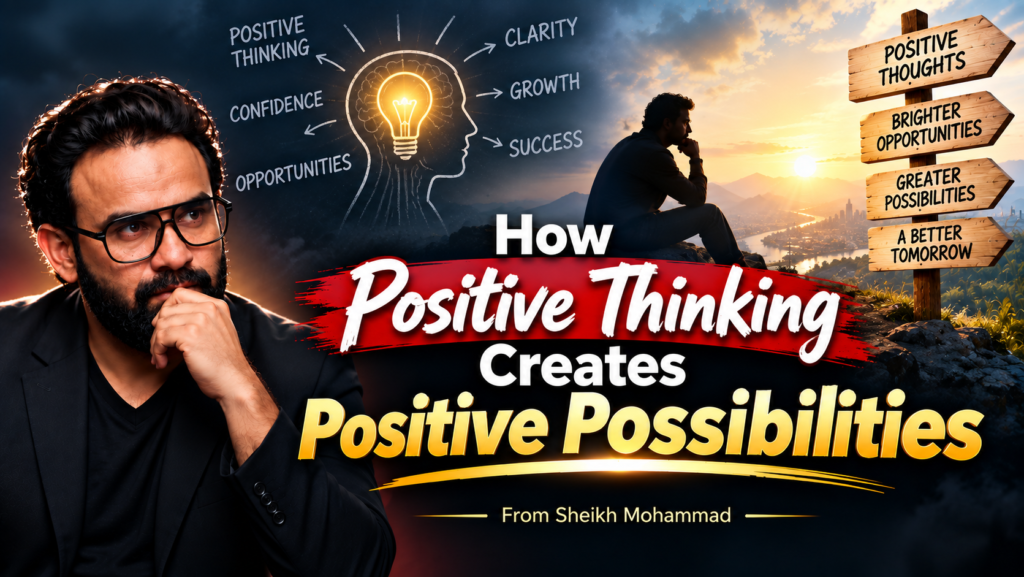
Positive Thinking Changes Your Starting Point
Imagine Two People Lose Their Jobs.
The First Person Thinks:
“My Career Is Over. I Have Failed.”
The Second Thinks:
“This Is Difficult, But Maybe This Is a Chance to Explore Something New.”
Neither Person Has Control Over What Happened.
But They Have Some Control Over What They Do Next.
The First Person May Stop Looking for Opportunities Because They Believe There aren’t Any.
The Second Person May Update Their Skills, Contact People, Explore New Careers, Or Even Consider Starting Something of Their Own.
Positive Thinking Doesn’t Remove the Problem.
It Changes the Starting Point for Solving the Problem.
Your Thoughts Influence Your Actions
Think About Something You Have Wanted to Do but Kept Postponing.
Maybe You Wanted to Start Exercising.
Learn A Skill.
Write A Book.
Start A Business.
Create Content.
Apply For a New Job.
If Your First Thought Is:
“I’ll Probably Fail.”
You May Never Begin.
But If Your Thought Becomes:
“I May Not Be Good at This Yet, But I Can Learn.”
Your Behavior Changes.
You Become More Willing to Try.
You Take the First Step.
You Make Mistakes.
You Learn.
You Improve.
The Positive Thought Didn’t Guarantee Success.
It Simply Made Action More Likely.
And Action Creates Opportunities That Thinking Alone Cannot.
Positive Thinking Helps You See Possibilities
Have You Ever Noticed That Once You Become Interested in Something, You Suddenly Start Seeing It Everywhere?
Maybe You Decide You Want to Buy a Particular Car.
Suddenly, You Notice That Car on The Road All the Time.
The Cars Didn’t Suddenly Appear.
Your Attention Changed.
Something Similar Can Happen with Opportunities.
When You Constantly Think:
“There Are No Opportunities For Me,”
Your Brain Tends To Focus On Evidence Supporting That Belief.
But When You Start Asking:
“Where Could an Opportunity Be?”
You Become More Alert.
You Notice Conversations.
You Notice Ideas.
You Notice People.
You Notice Problems That Need Solving.
You Notice Skills You Could Learn.
The Opportunity May Have Been There Before.
You Simply Weren’t Looking for It.
Positive Thinking Is Not Wishful Thinking
There Is an Important Difference Between Positive Thinking and Unrealistic Thinking.
Unrealistic Thinking Says:
“Everything Will Work Out Perfectly.”
Positive Thinking Says:
“Things May Be Difficult, But I Can Focus on What I Can Control.”
Unrealistic Thinking Avoids Problems.
Positive Thinking Faces Them.
Unrealistic Thinking Says:
“I Don’t Need to Prepare.”
Positive Thinking Says:
“I Can Prepare and Give Myself A Better Chance.”
This Is Why Positive Thinking Becomes Powerful When It Is Combined with Action.
Think Positively. Then Do Something with That Thought.
Change The Questions You Ask Yourself
Your Mind Is Constantly Asking and Answering Questions.
When Something Goes Wrong, You Might Ask:
“Why Does This Always Happen to Me?”
“What If Everything Goes Wrong?”
“Why Am I Not Good Enough?”
These Questions Can Keep You Trapped in the Problem.
Try Changing Them.
Ask:
“What Can I Learn from This?”
“What Can I Control Right Now?”
“What Is One Possible Solution?”
“Who Could Help Me?”
“What Can I Try Differently?”
A Better Question Doesn’t Magically Solve a Problem.
But It Can Direct Your Attention Toward Solutions.
And Where Attention Goes, Action Often Follows.
Small Positive Thoughts Can Create Momentum
You Don’t Need to Wake Up Every Morning Feeling Incredibly Positive.
That’s Unrealistic.
Some Days You Will Feel Tired.
Some Days You Will Doubt Yourself.
Some Days Things Simply Won’t Go Your Way.
The Goal Isn’t to Eliminate Negative Thoughts.
The Goal Is to Avoid Allowing One Negative Thought to Become Your Entire Story.
Instead Of:
“Today Is Terrible.”
Try:
“Today Is Difficult. What Can I Do to Make the Next Hour Better?”
Instead Of:
“I Can’t Handle This.”
Try:
“This Is a Lot. What Should I Handle First?”
Instead Of:
“I’ll Never Get There.”
Try:
“What Is the Next Step?”
Small Positive Thoughts Can Lead to Small Positive Actions.
Small Positive Actions Can Create Momentum.
And Momentum Can Change Your Direction.
Surround Yourself With Possibility
The People Around You Can Influence the Way You Think.
If Every Idea You Share Is Immediately Met With:
“That Won’t Work.”
“People Like Us Don’t Do That.”
“It’s Too Difficult.”
“You Should Be Realistic.”
You May Eventually Stop Thinking Bigger.
This Doesn’t Mean You Should Surround Yourself Only with People Who Agree with Everything You Say.
Instead, Look for People Who Challenge You Constructively.
People Who Ask:
“What If It Works?”
“What Could You Try?”
“What Can We Learn?”
“How Can We Make It Better?”
The Right Environment Can Help You Think Beyond Your Current Limitations.
Practice Positive Thinking Every Day
Positive Thinking Becomes Stronger When You Practice It Regularly.
Try This Simple Three-Step Habit:
1. Notice The Thought
When You Catch Yourself Thinking Negatively, Don’t Judge Yourself.
Simply Notice It.
2. Question The Thought
Ask:
“Is This Absolutely True?”
Maybe You aren’t Incapable.
Maybe You’re Inexperienced.
Maybe You aren’t Stuck.
Maybe You Simply Haven’t Found the Next Step Yet.
3. Create A Possibility
Ask:
“What Could I Do Next?”
Then Take One Small Action.
This Simple Process Can Gradually Change the Way You Respond to Challenges.
Your Possibilities Begin with What You Allow Yourself to Imagine
Every Meaningful Achievement Begins as a Possibility in Someone’s Mind.
Before There Is a Business, There Is an Idea.
Before There Is a Book, There Is a Thought.
Before There Is a New Career, There Is a Decision to Explore Something Different.
Before There Is Change, There Is Often a Moment When Someone Says:
“Maybe There Is Another Way.”
That Sentence Can Be Powerful.
Because The Moment, You Allow Yourself to Imagine Another Possibility, You Become More Willing to Explore It.
And Exploration Leads to Learning.
Learning Leads to Action.
Action Creates Experience.
Experience Creates New Possibilities.
Create Your Positive Possibilities
You Don’t Control Everything That Happens in Life.
But You Can Influence How You Respond.
You Can Choose Curiosity Over Fear.
Learning Over Helplessness.
Action Over Endless Worrying.
Possibility Over Premature Defeat.
Positive Thinking Isn’t About Convincing Yourself That Life Will Always Be Easy.
It’s About Reminding Yourself That a Difficult Moment Is Not Necessarily the End of The Story.
So, The Next Time You Face a Challenge, Pause Before Saying:
“This Won’t Work.”
Try:
“What Could Work?”
Instead Of:
“I Can’t.”
Ask:
“How Can I Learn?”
Instead Of:
“There Is No Opportunity.”
Ask:
“What Possibility Am I Not Seeing Yet?”
That Shift May Seem Small.
But Small Shifts in Thinking Can Lead to Different Decisions.
Different Decisions Can Lead to Different Actions.
And Different Actions Can Lead to Different Possibilities.
Mega Mindset. Mega Possibilities.
Think Positive.
Stay Curious.
Look For Possibilities.
Take Action.
Because When You Change The Way, You See What Is Possible, You May Begin to See Opportunities That Were Invisible Before.
Frequently Asked Questions
1. What Is Positive Thinking?
Positive Thinking Is Choosing to Approach Situations with Hope, Possibility, And A Solution-Focused Attitude. It Does Not Mean Ignoring Problems or Pretending Everything Is Perfect.
2. Can Positive Thinking Really Create Opportunities?
Positive Thinking Doesn’t Magically Create Opportunities. However, It Can Influence Your Attention, Decisions, Confidence, And Willingness to Take Action. Those Behaviors Can Help You Recognize and Create More Opportunities.
3. Is Positive Thinking Better Than Negative Thinking?
Positive Thinking Is Generally More Useful When Facing Challenges Because It Encourages You to Look for Solutions and Take Constructive Action. However, Negative Emotions Can Also Provide Useful Information When They Help You Recognize Problems That Need Attention.
4. How Can I Become More Positive Every Day?
Start By Noticing Negative Thought Patterns. Then Question Them and Replace Them with More Useful Questions, Such as “What Can I Control?” Or “What Can I Try Next?” Small Daily Habits Can Gradually Change Your Thinking Patterns.
5. Does Positive Thinking Mean I Should Never Feel Negative?
No. Everyone Experiences Fear, Frustration, Sadness, And Doubt. A Positive Mindset Doesn’t Require You to Suppress These Emotions. It Means Not Allowing Temporary Negative Thoughts to Permanently Define What You Believe Is Possible.
6. What Is the Connection Between Positive Thinking and a Mega Mindset?
A Mega Mindset Encourages You to Look Beyond Immediate Limitations and Explore Possibilities. Positive Thinking Supports This by Helping You Focus on Learning, Solutions, Opportunities, And Meaningful Action.