What If a Challenge Is Not Just Something Standing in Your Way?
What If It Could Also Show You a New Way Forward?
When Life Becomes Difficult, Our First Reaction Is Often to Ask:
“Why Is This Happening to Me?”
But What If We Asked a Different Question?
“What Can I Do With This?”
That Small Change in Thinking Can Completely Change the Way You Respond to Difficult Situations.
Challenges are A Natural Part of Life. Everyone Faces Them at Work, In Business, In Relationships, With Money, With Health, Or Simply While Trying to Achieve Something Meaningful.
You Cannot Control Every Challenge That Comes Your Way.
But You Can Control How You Respond to It.
And Sometimes, A Challenge That Looks Like a Roadblock Today Can Become the Starting Point for a New Possibility Tomorrow.
That Is the Power of a Mega Mindset.
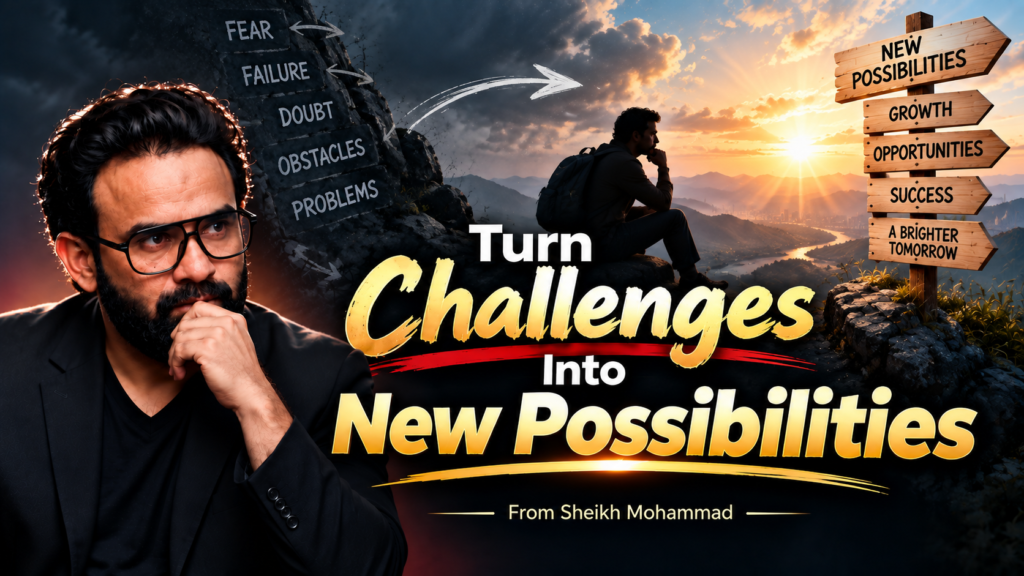
Every Challenge Has a Question Hidden Inside
When Something Goes Wrong, It Is Easy to Focus Only on the Problem.
“My Plan Failed.”
“I Lost the Opportunity.”
“This Didn’t Work.”
“I Don’t Know What to Do Next.”
These Thoughts are Understandable.
But Staying Focused Only on the Problem Can Make the Situation Feel Bigger Than It Actually Is.
Try Asking:
“What Is This Challenge Asking Me to Learn?”
Maybe It Is Asking You to Develop a New Skill.
Maybe You Need a Better Strategy.
Maybe You Need to Become More Patient.
Maybe You Need to Meet Different People.
Maybe You Need to Change Direction.
The Challenge May Not Disappear Immediately.
But Your Relationship with the Challenge Begins to Change.
A Roadblock Can Become a Detour
Imagine You are Driving Somewhere and the Road Ahead Is Closed.
You Have Two Choices.
You Can Sit There and Complain About the Closed Road.
Or You Can Look for Another Route.
Life Often Works the Same Way.
A Rejected Application May Encourage You to Improve Your Skills.
A Failed Business Idea May Teach You What Customers Actually Need.
A Missed Opportunity May Push You Toward an Opportunity You Hadn’t Considered.
A Difficult Project May Reveal Abilities You Didn’t Know You Had.
The Original Plan May Not Work.
That Doesn’t Mean the Journey Has to End.
Sometimes You Simply Need a Different Route.
Challenges Can Reveal Hidden Strengths
We Don’t Always Know What We Are Capable Of Until We Are Tested.
Think About a Time When You Faced Something Difficult and Somehow Got Through It.
Maybe You Learned Something New.
Maybe You Became More Confident.
Maybe You Discovered That You Could Stay Calm Under Pressure.
Maybe You Realized That You Were Stronger Than You Thought.
The Challenge Didn’t Create All Those Qualities from Nothing.
It Gave You a Reason to Discover Them.
This Is One of the Hidden Benefits of Challenges.
They Can Reveal Abilities That Comfort Never Requires You to Use.
Don’t Ask “Why Me?” For Too Long
There Is Nothing Wrong with Asking, “Why Is This Happening?”
Sometimes You Need Time to Process Disappointment.
But Eventually, Another Question Becomes More Useful:
“What Now?”
That Question Brings Your Attention Back to The Present.
You May Not Be Able to Change What Happened.
But You Can Decide What Happens Next.
You Can Make a Phone Call.
You Can Learn Something.
You Can Ask for Help.
You Can Change Your Plan.
You Can Start Again.
You Can Take One Small Step.
The Past May Explain Where You are.
Your Next Action Helps Determine Where You Go.
Look For the Possibility Inside the Problem
Every Challenge Doesn’t Automatically Contain a Hidden Opportunity.
We Shouldn’t Pretend That Every Difficult Experience Is Somehow Good.
Some Situations are Genuinely Painful.
Some Losses Cannot Simply Be Turned into Something Positive.
But Even When You Cannot Change the Situation, You Can Often Look for Something Constructive Within Your Response to It.
Ask Yourself:
- What Can I Learn?
- What Can I Improve?
- What Can I Control?
- What New Option Can I Explore?
- Who Can Help Me?
- What Should I Do Differently Next Time?
These Questions Don’t Erase Difficulty.
They Help You Move Through It.
The First Solution Doesn’t Have to Be Perfect
Sometimes Challenges Feel Impossible Because We Expect Ourselves to Find the Perfect Answer Immediately.
But You Don’t Always Need the Perfect Solution.
You Need a Possible Next Step.
If Your Business Is Struggling, You Might Test One New Offer.
If You’re Trying to Learn Something, You Might Practice For 20 Minutes.
If You’re Searching for a Job, You Might Contact Three People.
If You Have a Large Project, You Might Complete the First Small Task.
Progress Often Begins Before You Have the Complete Answer.
Start With What You Know. Learn From What Happens. Adjust As You Go.
That’s How Possibilities Become Real.
Turn “This Is a Problem” Into “This Is a Problem to Solve”
Language Matters.
Compare These Two Statements:
“I Have a Problem.”
And
“I Have Something to Solve.”
The First Can Make You Feel Stuck.
The Second Encourages Action.
Instead of Saying:
“I Don’t Know How to Do This.”
Try:
“I Need to Learn How to Do This.”
Instead Of:
“This Isn’t Working.”
Try:
“What Needs to Change?”
Instead Of:
“I’ve Failed.”
Try:
“What Did This Attempt Teach Me?”
You aren’t Denying Reality.
You Are Changing Your Position Within It from Helpless Observer to Active Problem-Solver.
Challenges Can Expand Your Thinking
Comfort Often Keeps Us Doing What We Already Know.
Challenges Force Us to Think Differently.
When The Usual Approach Stops Working, You Start Searching for Alternatives.
You Might Discover a New Technology.
A New Business Model.
A New Skill.
A New Relationship.
A New Way of Working.
A New Perspective.
In That Way, Challenges Can Expand Your Thinking.
They Can Make You Ask Questions You Might Never Have Asked When Everything Was Going Smoothly.
And Sometimes, Those Questions Lead to Your Next Big Possibility.
Build The Habit of Looking For “What Next?”
You Don’t Need to Become Positive About Every Difficult Situation.
Instead, Develop A Simple Habit:
When Something Goes Wrong, Ask, “What Next?”
Not:
“What If Everything Gets Worse?”
Not:
“Why Can’t Life Be Easier?”
But:
“What Is the Next Useful Thing I Can Do?”
That One Question Can Help You Move from Frustration to Action.
And Action Creates Momentum.
Even A Tiny Action Can Remind You That You are Not Completely Powerless.
Your Challenge Doesn’t Have to Become Your Identity
Be Careful About Turning a Difficult Experience into a Permanent Statement About Yourself.
You Failed at Something.
That Doesn’t Mean You are A Failure.
You Lost an Opportunity.
That Doesn’t Mean You are Unlucky Forever.
You Made A Mistake.
That Doesn’t Mean You are Incapable.
You Are Going Through a Difficult Period.
That Doesn’t Mean Your Entire Future Will Be Difficult.
Separate The Event from Your Identity.
You are Still Learning.
You are Still Growing.
You are Still Capable of Making Another Decision.
Turn Challenges into New Possibilities
The Next Time Life Puts an Obstacle in Front of You, Give Yourself Permission to Pause.
Feel The Disappointment.
Understand The Problem.
Accept What You Cannot Control.
Then Ask:
“What Possibility Can I Create From Here?”
Maybe The Answer Will Be Obvious.
Maybe It Won’t.
That’s Okay.
You Don’t Need to See the Entire Path.
You Only Need to Find the Next Step.
Because A Mega Mindset Isn’t About Having a Life Without Challenges.
It’s About Developing the Ability to Look at Challenges Differently.
A Challenge Can Test You.
A Challenge Can Teach You.
A Challenge Can Redirect You.
And Sometimes, A Challenge Can Reveal a Possibility You Couldn’t See Before.
So Don’t Always Ask, “How Do I Avoid Challenges?”
Sometimes Ask:
“How Can I Grow Through This?”
That’s Where a Difficult Moment Can Become a New Beginning.
Mega Mindset. Mega Possibilities.
Challenges Will Come.
Roadblocks Will Appear.
Plans Will Change.
But You Can Keep Moving.
Look For the Lesson. Find The Next Step. Explore Another Path.
You Never Know What Possibility Is Waiting on the Other Side of a Challenge.
Frequently Asked Questions
1. How Can I Turn a Challenge into An Opportunity?
Start By Accepting the Situation and Identifying What You Can Control. Then Ask What You Can Learn, What You Can Improve and What Alternative Actions You Can Take.
2. Does Every Challenge Have a Positive Outcome?
No. Not Every Difficult Experience Produces an Obvious Positive Result. The Goal Isn’t to Pretend That Every Challenge Is Good. It Is to Find Constructive Ways to Respond and Move Forward.
3. What Should I Do When I Feel Completely Stuck?
Don’t Try to Solve Everything at Once. Ask, “What Is One Small Thing I Can Do Next?” A Small Action Can Create Momentum and Help You See Additional Options.
4. How Does Mindset Affect the Way We Handle Challenges?
Mindset Influences How We Interpret Difficulty. A Limiting Mindset May See an Obstacle as the End, While A Growth-Focused Mindset Is More Likely to Look for Lessons, Alternatives, And Possible Next Steps.
5. Can Failure Create New Possibilities?
Yes. Failure Can Reveal What Doesn’t Work, Highlight Skills You Need to Develop, And Encourage You to Try a Different Approach. Failure Isn’t Automatically a Path to Success, But It Can Provide Valuable Information.
6. What Is the Mega Mindset Approach to Challenges?
The Mega Mindset Approach Is to Acknowledge the Challenge Without Allowing It to Define Your Future. Focus On What You Can Learn, What You Can Control and What Possibility You Can Explore Next.