
Have You Ever Had an Important Task to Complete but Found Yourself Doing Everything Except That Task?
You Check Your Phone, Watch A Few Videos, Organize Your Desk, Or Tell Yourself You’ll Start After a Short Break. Before You Know it, An Hour Has Passed and the Task Is Still Waiting.
You Know What Needs to Be Done, But Getting Started Feels Surprisingly Difficult.
This Is Procrastination and It Happens to Many People. Sometimes, We Delay Tasks Because They Feel Overwhelming. Other Times, We Fear Making Mistakes, Feel Unsure About Where to Begin, Or Simply Don’t Feel Motivated.
The Good News Is That You Don’t Have to Wait for Motivation to Appear Before Taking Action.
With A Growth Mindset, You Can Learn to Approach Difficult Tasks Differently, Start with Small Steps, And Gradually Build Momentum.
Welcome to Mega Mindset, Mega Possibilities, Where Small Actions and Better Thinking Can Help You Create Meaningful Progress.
Let’s Explore How to Beat Procrastination and Make Getting Started Easier.
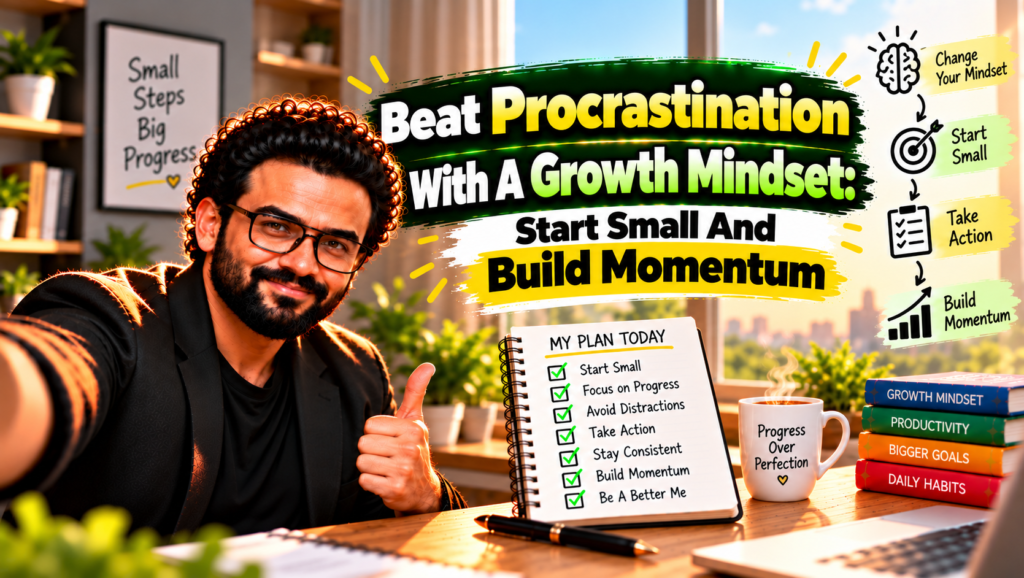
1. Understand Why You Procrastinate
Before You Try to Overcome Procrastination, Take A Moment to Understand Why You’re Delaying a Task.
Not All Procrastination Has the Same Cause.
You Might Postpone a Task Because:
- It Feels Too Large or Complicated.
- You’re Afraid of Making Mistakes.
- You Don’t Know What the First Step Should Be.
- You’re Distracted by Your Phone or Surroundings.
- You’re Tired or Mentally Overwhelmed.
- You Believe You Need to Feel Motivated Before Beginning.
For Example, Imagine That You’re Writing an Important Article. You Keep Delaying It Because You Want Every Sentence to Be Perfect.
The Real Problem May Not Be Laziness. It May Be the Pressure You’re Putting on Yourself to Produce Excellent Work Immediately.
Once You Understand the Reason Behind Your Delay, You Can Choose a More Useful Solution.
If The Task Feels Overwhelming, Break It into Smaller Steps. If You’re Afraid of Making Mistakes, Allow Yourself to Create a Rough First Draft. If Distractions are the Problem, Change Your Environment.
Mega Mindset Tip: Instead Of Asking, “Why Am I So Lazy?” Ask, “What’s Making This Task Difficult to Start?”
That Question Helps You Focus on Solutions Rather Than Negative Labels.
2. Stop Waiting for The Perfect Moment
One Common Reason People Procrastinate Is That They Wait Until They Feel Ready.
They Tell Themselves:
“I’ll Start When I Have More Energy.”
“I’ll Work on It When I’m In the Right Mood.”
“I’ll Begin Tomorrow When Everything Is Organized.”
Sometimes, Waiting Is Reasonable. Rest, Preparation and Additional Information Can Genuinely Help.
But Waiting for the Perfect Moment Can Become a Habit That Keeps You from Making Progress.
A Growth Mindset Teaches You That Confidence and Motivation Can Develop Through Action. You Don’t Always Need to Feel Ready Before You Begin.
If You Want to Exercise, Start with a Short Walk. If You Want to Learn a New Skill, Complete One Small Lesson. If You Need to Write a Report, Open the Document and Write the First Few Sentences.
You May Not Feel Motivated at The Beginning. That’s Okay.
Your First Step Doesn’t Need to Be Impressive. It Simply Needs to Move You from Thinking About the Task to Doing Something About It.
3. Break Big Tasks into Tiny Actions
Large Tasks Often Create Mental Resistance Because They Seem Difficult to Complete.
Imagine That Your Goal Is to Start an Online Business.
Writing “Start My Business” On Your To-Do List May Feel Overwhelming Because the Goal Contains Many Different Activities.
You Need to Research Your Audience, Choose A Product, Understand Your Costs, Plan Your Marketing, And Decide How to Reach Customers.
Instead of Treating the Entire Goal as One Task, Divide It into Smaller Actions.
For Example:
- Spend 15 Minutes Researching Your Target Audience.
- Write Down Three Possible Product Ideas.
- Compare The Advantages of Each Idea.
- Identify One Potential Customer Problem.
- Plan The Next Step.
Now You Have a Clear Starting Point.
The Same Method Works for Studying, Writing, Exercising, Organizing Your Home or Completing Work Projects.
Whenever A Task Feels Too Big, Ask Yourself:
“What’s The Smallest Useful Action I Can Take Right Now?”
A Small Action Reduces the Pressure of Getting Started and Gives You a Clear Direction.
4. Use The Five-Minute Starting Rule
When You’re Struggling to Begin, Make A Simple Agreement with Yourself: Work on the Task for Just Five Minutes.
Set A Timer and Focus Only on Starting.
If You Need to Study, Read One Page. If You Need to Clean Your Room, Organize One Small Area. If You Need to Write, Create A Rough Outline.
For Those Five Minutes, Forget About Finishing the Entire Task.
Your Only Goal Is to Begin.
Why Can This Help?
Starting Removes One of The Biggest Barriers to Action: The Transition from Avoiding a Task to Engaging with It.
Once You Begin, You May Find That Continuing Feels Easier Because You Already Understand the First Step.
Of Course, You Won’t Always Want to Continue After Five Minutes. If You’re Genuinely Exhausted or Need to Stop for Another Important Reason, Respect That.
The Purpose Isn’t to Force Yourself to Work Endlessly. It’s To Make Starting Feel More Manageable.
Try It Today: Choose One Task You’ve Been Postponing and Give It Five Focused Minutes.
You May Accomplish More Than You Expected and Even If You Stop, You’ve Practiced Beginning Instead of Avoiding.
5. Replace Perfectionism with Progress
Sometimes, Procrastination Comes from Wanting to Do Everything Perfectly.
You Might Delay Publishing a Project Because You’re Afraid People Won’t Like It. You May Avoid Asking a Question Because You Don’t Want to Appear Inexperienced. You Might Keep Preparing for an Activity Without Ever Taking the First Step.
Perfectionism Can Make Ordinary Tasks Feel Like Major Tests of Your Ability.
A Growth Mindset Offers a Healthier Approach: Focus on Learning and Improvement Rather Than Expecting Perfection from the Beginning.
For Example, If You’re Writing a Blog Post, Allow Yourself to Create an Imperfect First Draft. You Can Improve the Structure, Correct Mistakes and Polish the Language Later.
If You’re Learning a New Skill, Accept That Your Early Attempts May Be Awkward.
Your First Effort Doesn’t Need to Represent Your Final Ability. It Needs to Give You Something to Learn From.
Replace Thoughts Such As “I Must Get This Right Immediately” With “I’ll Start, Learn from The Result and Improve It.”
This Doesn’t Mean Quality Is Unimportant. It Means Quality Often Develops Through Practice, Feedback and Revision.
6. Make Your Environment Support Action
Your Surroundings Can Make Procrastination Easier or Harder.
If Your Phone Is Beside You, Notifications are Constantly Appearing and Several Unrelated Tasks Compete for Your Attention, Staying Focused Becomes More Challenging.
Instead of Relying Entirely on Willpower, Create an Environment That Supports the Behavior You Want.
Try These Simple Changes:
Put Your Phone Away. Silence Unnecessary Notifications and Place Your Phone Out of Reach During Focused Work.
Prepare Your Materials. Keep Your Notebook, Laptop, Study Materials, Or Other Essentials Ready Before Beginning.
Choose One Task. Write Down the Specific Activity You Want to Complete Rather Than Keeping Several Competing Tasks Open.
Create A Starting Routine. For Example, Sit at Your Desk, Open Your Document, Review Your Next Step and Begin Working.
Reduce Unnecessary Choices. Decide What You’ll Work on Before Your Planned Work Session Starts.
These Small Adjustments Can Reduce Distractions and Make It Easier to Begin.
Remember, Your Environment Won’t Eliminate Every Challenge. But It Can Help You Spend Less Energy Resisting Distractions and More Energy Taking Useful Action.
7. Build Momentum with Small Wins
Every Time You Complete a Meaningful Action, You Create Evidence That You Can Make Progress.
You Finish a Short Study Session. You Write a Paragraph. You Complete a Workout. You Finally Send an Email You’ve Been Avoiding.
These Small Wins May Not Seem Significant Individually, But They Can Help You Build a More Consistent Routine.
Instead Of Setting a Goal That Feels Impossible to Maintain, Choose A Realistic Starting Point.
For Example:
- Read For 10 Minutes Each Day.
- Practice A Skill for 15 Minutes.
- Work On an Important Project for One Focused Session.
- Complete One Postponed Task Before Checking Social Media.
Track Your Efforts So You Can See What You’re Doing Consistently.
Don’t Use Your Progress Tracker to Criticize Yourself When You Miss a Day. Use It to Understand Your Habits and Decide How to Restart.
You May Gradually Increase Your Effort as the Activity Becomes More Familiar.
However, Remember That Small Actions Alone Don’t Guarantee Large Results. Meaningful Goals Often Require Sustained Effort, Adjustment and Patience.
The Value of Small Wins Is That They Help You Practice Taking Action Instead of Remaining Stuck at The Starting Line.
8. Learn From Delays Without Blaming Yourself
Even When You Develop Better Habits, You’ll Probably Procrastinate Sometimes.
You May Have a Difficult Week, Lose Focus, Or Delay Something Important.
When This Happens, Avoid Turning One Difficult Day into A Judgment About Your Character.
Instead, Review the Experience.
Ask Yourself:
- What Task Did I Avoid?
- What Was I Feeling or Thinking at The Time?
- What Distracted Me?
- What Could Make Starting Easier Next Time?
Perhaps You Discover That You Procrastinate Most When a Task Is Unclear. Your Next Step Could Be to Write Down the First Three Actions Before Beginning.
Maybe You Avoid Difficult Conversations Because You’re Worried About the Outcome. You Could Prepare A Few Key Points Before Speaking.
Use What You Discover to Improve Your Approach.
If Procrastination Is Persistent, Causes Significant Distress, Or Seriously Interferes with Daily Life, It May Also Help to Seek Support from a Qualified Professional.
The Goal Is Not to Criticize Yourself into Becoming Productive. It’s To Understand Your Behavior and Develop Strategies That Work for You.
Your Mega Mindset Anti-Procrastination Plan
Ready To Put These Ideas into Practice? Follow This Simple Plan the Next Time You Delay an Important Task.
Step 1: Choose One Task. Select Something Meaningful That You’ve Been Postponing.
Step 2: Identify The Obstacle. Ask Yourself Why Starting Feels Difficult.
Step 3: Make The Task Smaller. Break It into an Action You Can Complete in Five To 15 Minutes.
Step 4: Remove One Distraction. Put Your Phone Away, Prepare Your Materials, Or Clear Your Workspace.
Step 5: Start Before You Feel Completely Ready. Focus On Taking the First Step Rather Than Finishing Everything.
Step 6: Recognize Your Progress. Notice What You Accomplished and Decide on Your Next Action.
You Don’t Need to Transform Your Entire Routine Overnight. Begin With One Task and Practice Starting More Consistently.
Conclusion: Start Small, Think Bigger
Procrastination Can Make Important Goals Feel Distant, But You Don’t Have to Overcome It Through Pressure or Self-Criticism.
You Can Begin by Understanding Why You Delay, Breaking Large Tasks into Smaller Actions, Reducing Distractions and Accepting That Your First Attempt Doesn’t Need to Be Perfect.
Some Days, Taking Action Will Feel Easy. Other Days, You’ll Need to Make the First Step Smaller or Adjust Your Expectations.
Both Experiences Can Teach You Something Useful.
Remember, You Don’t Need to Finish Everything Today. You Need to Stop Waiting for The Perfect Moment and Take One Meaningful Step Toward What Matters.
Think Bigger. Stay Curious. Take Action.
Mega Mindset. Mega Possibilities.
Frequently Asked Questions (FAQs)
1. How Can I Stop Procrastinating with a Growth Mindset?
Start By Identifying Why You’re Delaying a Task. Break It into Smaller Actions, Focus on Progress Instead of Perfection, And Take One Manageable Step. Review What Works and Adjust Your Approach Over Time.
2. Why Do I Procrastinate Even When I Know a Task Is Important?
You Might Feel Overwhelmed, Fear Making Mistakes, Lack Clarity About Where to Begin, Or Face Distractions. Understanding The Reason Behind Your Delay Can Help You Choose a Practical Strategy to Address It.
3. What Is the Five-Minute Rule for Procrastination?
The Five-Minute Rule Involves Committing to Work on A Task for Just Five Minutes. The Goal Is to Make Starting Easier by Focusing on a Short Period of Action Rather Than the Entire Task.
4. Can Small Daily Actions Really Help Me Achieve Big Goals?
Small Actions Can Help You Build Consistent Habits and Make Progress Toward Larger Goals. However, Results Also Depend on the Quality of Your Actions, The Time Invested, Your Circumstances, And Your Willingness to Adapt When Needed.
5. How Can I Overcome Procrastination Caused by Perfectionism?
Allow Yourself to Create a First Attempt That You Can Improve Later. Divide The Task into Manageable Steps and Focus on Learning Through Practice and Feedback Instead of Expecting an Excellent Result Immediately.
6. What Should I Do If I Procrastinate Again After Making Progress?
Avoid Treating a Setback as Proof That You’ve Failed. Review What Made the Task Difficult, Identify A Practical Adjustment and Restart with A Manageable Action. Building New Habits Often Involves Learning Through Setbacks.
7. How Can I Stay Motivated to Complete Difficult Tasks?
Make Your Next Action Clear, Reduce Distractions, Set Realistic Targets and Recognize Small Wins. Rather Than Depending Entirely on Motivation, Develop Routines That Help You Begin Even When You Don’t Feel Particularly Enthusiastic.