
Introduction
Have You Ever Decided to Wake Up Early, Exercise Daily, Read More Books, Or Stop Wasting Time on Your Phone, Only to Return to Your Old Habits After A Few Days?
You Are Not Alone. Many People Begin with Excitement and Big Plans, But Maintaining New Habits Can Be Difficult When Life Becomes Busy or Motivation Disappears.
The Problem Is Often That We Expect Too Much Too Soon. We Want Immediate Results, Perfect Routines, And Quick Transformations. When Progress Feels Slow, We Become Disappointed and Sometimes Give Up.
But What If You Approached Habits Differently?
Instead Of Expecting Perfection, Imagine Treating Every Day as An Opportunity to Learn, Practice, And Improve. This Is the Power of a Growth Mindset.
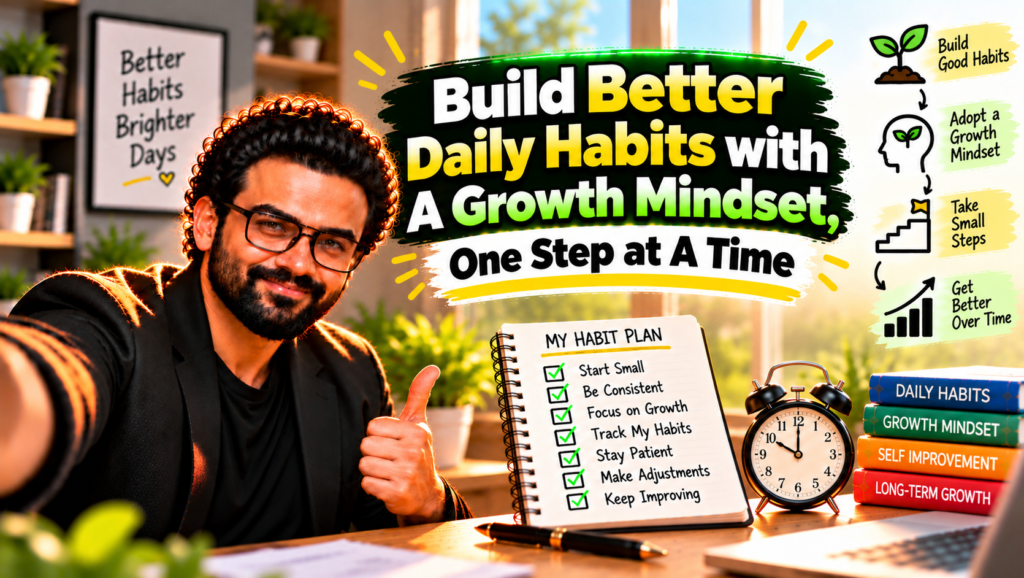
Under The Theme Mega Mindset, Mega Possibilities, Building Better Habits Is Not About Changing Your Entire Life Overnight. It Is About Taking Small, Meaningful Steps and Repeating Them Until They Become Part of Your Daily Routine.
In This Article, You Will Discover How to Build Better Daily Habits with a Growth Mindset, Overcome Common Challenges, And Create Lasting Improvements One Step at a Time.
1. Understand That Habits Can Be Learned
One Of the Biggest Mistakes People Make Is Believing They are Simply Not the Kind of Person Who Can Maintain Good Habits.
You Might Say:
- “I Am Not a Morning Person.”
- “I Can Never Stay Consistent.”
- “I Am Too Lazy to Exercise.”
- “I Always Lose Focus While Studying.”
These Statements Turn Temporary Struggles into Permanent Labels.
A Growth Mindset Encourages You to Think Differently. Instead of Saying, “I Cannot Do This,” Ask, “What Can I Learn That Will Help Me Do This Better?”
For Example, If You Struggle to Read Regularly, The Solution May Not Be to Force Yourself to Read for an Hour Every Night. You Could Begin with Five Minutes Before Bedtime.
The Goal Is to Recognize That Your Current Habits Do Not Have to Define Your Future Behavior.
You May Not Have Mastered a Habit Yet, But You Can Experiment with Ways to Make It Easier to Practice.
2. Start Small Instead of Changing Everything
Imagine Deciding to Transform Your Entire Routine in One Day.
You Plan to Wake Up At 5 A.M., Exercise for an Hour, Meditate, Read Twenty Pages, Eat Healthier Meals, Study for Three Hours, And Avoid social media.
Your Plan Looks Impressive. However, Maintaining So Many Changes at Once Can Become Overwhelming, Especially When You Already Have Work, School, Family, Or Other Responsibilities.
A Better Approach Is to Start with One Small Habit.
For Example:
- Want To Read More? Read Two Pages Each Day.
- Want To Exercise? Begin With a Ten-Minute Walk.
- Want To Improve Your Focus? Work Without Distractions for Five Minutes.
- Want To Plan Your Day? Write Down Your Three Main Priorities.
- Want To Spend Less Time Scrolling? Keep Your Phone Away During One Important Activity.
Small Actions are Easier to Fit into a Busy Schedule and Give You Opportunities to Practice Consistently.
Once A Habit Feels Manageable, You Can Gradually Increase the Effort If It Suits Your Goals and Circumstances.
Remember, The Purpose of Starting Small Is Not to Limit Your Potential. It Is to Make the First Step Easier to Take.
3. Focus On Consistency, Not Perfection
Many People Believe That Building a Habit Means Performing It Perfectly Every Day.
If They Miss One Workout, Skip A Reading Session, Or Wake Up Late, They Feel They Have Failed.
This All-Or-Nothing Thinking Can Turn One Missed Day into Several Missed Weeks.
A Growth Mindset Teaches You to View Setbacks as Part of the Learning Process.
Suppose Your Goal Is to Study Every Evening. One Day, An Unexpected Family Responsibility Prevents You from Following Your Usual Schedule.
Instead Of Deciding That Your Routine Has Failed, Review What Happened. Could You Adjust Your Study Time Tomorrow? Would A Shorter Session Be Useful on Particularly Busy Days? Do You Need a More Flexible Schedule?
The Important Thing Is to Respond Thoughtfully Rather Than Give Up Because Your Routine Was Interrupted.
Consistency Does Not Mean Being Perfect. It Means Learning How to Return to Your Habits When Life Gets in the Way.
4. Connect New Habits to Existing Routines
One Practical Way to Make a New Habit Easier Is to Connect It to Something You Already Do Regularly.
This Technique Is Often Called Habit Stacking.
The Idea Is Simple: Use an Existing Routine as A Reminder to Perform a New Action.
For Example:
- After Brushing Your Teeth, Spend Two Minutes Planning Your Day.
- After Breakfast, Read A Few Pages of a Book.
- After Returning Home, Take A Short Walk If Your Schedule Allows.
- After Finishing Work, Write Down What You Accomplished.
- Before Going to Bed, Prepare the Materials You Need for Tomorrow.
The Existing Routine Acts as a Natural Reminder, Making the New Behavior Easier to Remember.
Try Choosing a Habit That Fits Comfortably into Your Current Lifestyle. You Do Not Need to Redesign Your Entire Day to Begin.
Over Time, The Connection Between Your Existing Routine and The New Action May Help You Practice More Consistently.
5. Make Good Habits Easier to Follow
Sometimes, The Biggest Obstacle to A Good Habit Is the Environment Around You.
Suppose You Want to Read More, But Your Books are Stored in a Cupboard While Your Phone Sits Beside Your Bed. When You Have A Few Free Minutes, Reaching for Your Phone May Be Easier Than Opening a Book.
You Can Make a Small Environmental Change by Placing Your Book Beside Your Bed and Keeping Your Phone Farther Away.
Similarly, If You Want to Exercise in The Morning, Preparing Your Clothes the Night Before Can Reduce the Effort Required to Get Started.
Try These Simple Adjustments:
Prepare In Advance: Keep The Materials You Need for Your Habit Ready.
Reduce Distractions: Silence Unnecessary Notifications During Focused Activities.
Use Visible Reminders: Place A Book, Water Bottle, Or Planner Somewhere You Will Notice It.
Remove Unnecessary Steps: Make It Easier to Begin the Desired Behavior.
Choose Realistic Times: Schedule Habits Around Your Actual Responsibilities and Energy Levels.
You Do Not Need Unlimited Willpower to Build a Better Routine. Sometimes, A Small Change to Your Surroundings Can Make the Desired Action More Convenient.
6. Learn From the Days You Struggle
There Will Be Days When Your Habits Feel Difficult to Maintain.
You May Feel Tired, Lose Interest, Become Distracted, Or Face Unexpected Responsibilities.
Instead Of Treating These Moments as Proof That You Lack Discipline, Use Them to Understand What Is Happening.
Ask Yourself Three Questions:
- What Made This Habit Difficult Today?
- Was My Plan Realistic for My Current Situation?
- What Small Change Could Help Me Next Time?
For Example, If You Repeatedly Skip Your Evening Workout Because You Feel Exhausted After Work, You Could Explore a Shorter Routine or a Different Time of Day.
If You Struggle to Study Because Your Next Steps are Unclear, Spend A Few Minutes Identifying the Exact Topic or Task Before Your Next Session.
However, Remember That Not Every Difficulty Requires a Productivity Solution. Sometimes, You Need Rest, Support, Or A Lighter Schedule.
The Purpose of Reflection Is to Understand Your Needs and Improve Your Approach, Not to Blame Yourself for Every Missed Habit.
7. Track Your Progress and Celebrate Small Wins
When You Work Toward a Goal, It Is Easy to Focus Only on The Final Result.
You Might Want to Become Physically Fitter, Read Twelve Books, Improve Your Grades, Or Develop a More Organized Routine.
These Goals Can Take Time. If You Measure Success Only by The Final Outcome, You May Overlook the Progress You Make Along the Way.
Instead, Track the Actions That Support Your Goal.
For Example, If You Want to Build a Reading Habit, Record the Days You Read. If You Want to Improve Your Focus, Note When You Complete a Distraction-Free Work Session.
You Can Use a Notebook, Calendar, Or Simple Habit Tracker.
At The End of Each Week, Ask Yourself:
- Which Habit Did I Practice Most Consistently?
- What Helped Me Follow Through?
- What Made the Habit Difficult?
- What Would Make Next Week Easier?
Celebrate Your Effort and Improvements, Even When They Are Small.
A Missed Day Does Not Erase the Progress You Have Already Made. Your Tracker Should Help You Understand Your Behavior, Not Become Another Reason to Criticize Yourself.
8. Build Your Habits One Step at a Time
Lasting Change Rarely Requires You to Become a Completely Different Person Overnight.
It Is Usually More Practical to Make Manageable Improvements, Observe What Works, And Adjust Your Approach as Your Life Changes.
Here Is a Simple Process to Follow:
Step 1: Choose One Habit. Decide Which Behavior Would Make a Meaningful Difference in Your Life.
Step 2: Make It Manageable. Choose A Version You Can Reasonably Practice.
Step 3: Select A Regular Time or Reminder. Connect The Habit to An Existing Routine When Possible.
Step 4: Prepare Your Environment. Remove Obstacles and Make Getting Started Easier.
Step 5: Track Your Actions. Notice How Often You Practice and What Helps You Succeed.
Step 6: Review And adjust. If Your Plan Is Too Difficult, Simplify It. If It Becomes Easy, Consider Gradually Increasing the Challenge.
Step 7: Begin Again When Necessary. If You Miss a Day, Return to The Routine When You Are Ready.
You Can Apply This Process to Studying, Reading, Exercise, Time Management, Personal Development and Many Other Areas of Life.
The Key Is to Build a System That Supports Your Goals Without Creating Unnecessary Pressure.
Conclusion: Small Habits Create New Possibilities
Building Better Daily Habits Is Not About Having Unlimited Motivation or Following a Perfect Routine. It Is About Learning What Works for You, Making Realistic Commitments and Returning to Useful Actions Even When Progress Becomes Difficult.
A Growth Mindset Helps You See Habits as Skills You Can Develop Rather Than Qualities You Either Have or Do Not Have.
You Can Start Small, Learn from Mistakes, Adjust Your Environment and Recognize Your Progress Along the Way.
Choose One Habit You Want to Improve. Make It Simple Enough to Begin Today. Practice It, Reflect on Your Experience, And Adjust When Necessary.
You Do Not Have to Change Everything at Once. You Only Need to Identify the Next Useful Step.
Over Time, Those Small Steps Can Help You Develop Routines That Support Your Goals and the Life You Want to Build.
Think Bigger. Stay Curious. Take Action.
Mega Mindset. Mega Possibilities.
Frequently Asked Questions (FAQ’s)
1. What Is a Growth Mindset When Building Daily Habits?
A Growth Mindset Means Believing That You Can Learn and Improve Your Habits Through Practice, Reflection and Adjustment. Instead of Treating Difficulties as Permanent Limitations, You Look for Practical Ways to Improve.
2. How Long Does It Take to Build a New Habit?
There Is No Fixed Timeline for Everyone. The Time Required Depends on The Habit, Your Circumstances, How Regularly You Practice It. Focus on Making the Behavior Manageable and Sustainable Rather Than Expecting Instant Results.
3. What Is the Best Way to Start Building Better Habits?
Choose One Habit That Matters to You and Begin with A Small, Realistic Action. Connect It to an Existing Routine, Prepare Your Environment, And Track Your Progress.
4. What Should I Do If I Miss a Day?
Avoid Treating One Missed Day as A Complete Failure. Consider Why You Missed the Habit, Adjust Your Plan If Needed and Return to It When Practical. If You Need Rest or are Dealing with an Emergency, Give Yourself Appropriate Time.
5. How Can I Stay Consistent When Motivation Disappears?
Make Your Habit Small Enough to Manage, Use Reminders, Prepare in Advance, And Establish a Regular Routine. You Can Also Create a Simpler Version of the Habit for Busy Days, While Recognizing When Rest Is the Better Choice.
6. Why Should I Track My Daily Habits?
Tracking Helps You Notice Patterns, Recognize Progress and Identify Obstacles. It Can Show You Which Strategies are Working and Where You May Need to Make Adjustments.
7. Can Small Habits Really Make a Difference?
Small Habits Can Support Meaningful Long-Term Improvement When They are Useful and Practiced Consistently. Their Impact Depends on the Behavior, Your Circumstances and How Well the Habits Support Your Goals.