Have You Ever Said, “I’m Just Not Good at This”?
Maybe It Was About Mathematics, Public Speaking, Business, Learning A New Skill, Or Even Building Better Habits.
Now Imagine Changing That Thought To:
“I’m Not Good at This Yet, But I Can Learn.”
That Small Change in Thinking Can Completely Change How You Approach Challenges.
This Is Where the Difference Between a Growth Mindset and a Fixed Mindset Becomes Important.
Your Mindset Influences How You See Your Abilities, Mistakes, Challenges, Feedback, And Opportunities to Improve. While Nobody Has a Single Mindset All the Time, Understanding These Two Ways of Thinking Can Help You Become More Aware of The Choices You Make.
And That Awareness Is an Important Part of Building a Mega Mindset.
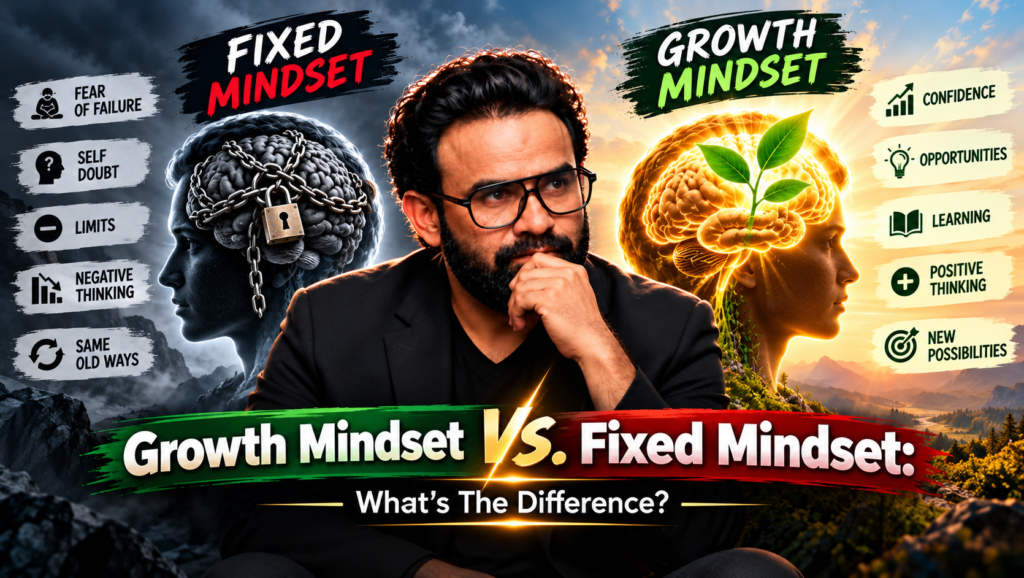
What Is A Fixed Mindset?
A Fixed Mindset Is the Belief That Your Abilities, Intelligence, Talent, Or Personality Are Largely Fixed.
Someone With a Fixed Mindset May Think:
- “I’m Either Good at It or I’m Not.”
- “I’m Not a Creative Person.”
- “I’ve Never Been Good at Math’s.”
- “I Always Fail at This.”
- “If I Make a Mistake, People Will Think I’m Not Capable.”
- “There’s No Point Trying Because I Probably Won’t Succeed.”
The Problem Isn’t Simply Having These Thoughts.
The Problem Is When You Treat Them as Permanent Facts.
For Example, Imagine Someone Wants to Learn Public Speaking. They Give One Presentation, Feel Nervous, Make A Few Mistakes, And Decide:
“I’m Terrible at Public Speaking.”
Because They Believe the Ability Is Fixed, They May Avoid Presentations in the Future.
That Means They Get Fewer Opportunities to Practice.
Less Practice Means Less Improvement.
And The Original Belief Becomes Even Stronger.
What Is a Growth Mindset?
A Growth Mindset Is the Belief That Abilities Can Develop Through Learning, Practice, Feedback, Effective Strategies and Persistence.
Instead Of Saying:
“I Can’t Do This.”
A Growth-Oriented Person Asks:
“What Can I Learn So I Can Do This Better?”
They Understand That Being Inexperienced at Something Today Doesn’t Mean They Have to Remain Inexperienced Tomorrow.
For Example:
Fixed Mindset:
“I’m Bad at Writing.”
Growth Mindset:
“My Writing Needs Improvement. I Can Practice and Learn.”
Fixed Mindset:
“I Failed, So I’m Not Capable.”
Growth Mindset:
“That Didn’t Work. What Can I Learn from It?”
Fixed Mindset:
“They are Naturally Talented.”
Growth Mindset:
“What Can I Learn from Their Approach?”
The Goal Isn’t to Pretend Everything Is Easy.
The Goal Is to Believe That Improvement Is Possible.
Growth Mindset Vs. Fixed Mindset
Let’s Look at Some Everyday Differences.
| Situation | Fixed Mindset | Growth Mindset |
| Challenge | “This Is Too Difficult.” | “This Will Challenge Me.” |
| Failure | “I’m Not Capable.” | “What Can I Learn?” |
| Feedback | “They Are Criticizing Me.” | “What Can I Improve?” |
| Mistakes | “I Should Have Known Better.” | “Mistakes Can Teach Me.” |
| Effort | “If I Were Talented, It Would Be Easy.” | “Effort Helps Me Improve.” |
| Success Of Others | “They Are Better Than Me.” | “I Can Learn From Them.” |
| Learning | “I’m Not Good At This.” | “I Can Get Better At This.” |
Notice Something Important?
The Circumstances May Be Exactly the Same.
The Interpretation Changes.
And That Interpretation Can Influence What You Do Next.
How A Fixed Mindset Can Limit Possibilities
Imagine Two People Applying for A New Job.
The First Person Thinks:
“I Don’t Have All the Skills They Want. I Probably Won’t Get Selected.”
So They Don’t Apply.
The Second Person Thinks:
“I Don’t Have Every Skill Yet, But I Can Learn. I’ll Prepare and Give It a Try.”
So, They Apply, Improve Their Skills, Prepare for the Interview and Gain Experience.
Neither Person Knows the Final Outcome.
But Their Mindset Influences Their Actions.
This Is Why Mindset Matters.
A Fixed Mindset Can Cause You to Avoid Challenges, Protect Yourself from Failure, Reject Feedback, Or Stop Trying Too Early.
Over Time, These Choices Can Reduce the Possibilities You Explore.
How A Growth Mindset Expands Possibilities
A Growth Mindset Doesn’t Guarantee Success.
Instead, It Changes How You Respond to the Process of Learning and Improving.
When You Believe You Can Develop, You May Become More Willing To:
- Try Something Unfamiliar
- Ask Questions
- Practise
- Learn From Mistakes
- Accept Constructive Feedback
- Experiment With Different Approaches
- Continue After Setbacks
- Develop New Skills
Consider Someone Starting a Business.
Their First Advertisement Doesn’t Perform Well.
A Fixed Mindset Might Say:
“I’m Not Good at Marketing.”
A Growth Mindset Might Ask:
“Why Didn’t This Work? What Can I Test Next?”
The Second Response Creates Another Opportunity to Learn.
That Is the Power of Possibility-Focused Thinking.
“I Can’t” Vs. “I Can’t Yet”
One Of the Simplest Mindset Shifts Is Adding One Small Word:
Yet.
“I Can’t Do This.”
Becomes:
“I Can’t Do This Yet.”
“I Don’t Understand This.”
Becomes:
“I Don’t Understand This Yet.”
“I’m Not Confident.”
Becomes:
“I’m Not Confident Yet.”
The Word “Yet” Doesn’t Promise That Success will Automatically Happen.
Instead, It Keeps the Door Open for Learning.
It Changes a Permanent-Sounding Statement into a Temporary Challenge.
Growth Mindset Doesn’t Mean Positive Thinking All the Time
A Growth Mindset Isn’t About Pretending Everything Is Wonderful.
You Can Feel Frustrated.
You Can Feel Disappointed.
You Can Admit That Something Is Difficult.
You Can Even Decide That a Particular Goal Isn’t Right for You.
Growth Mindset Simply Encourages You to Ask Better Questions.
Instead Of:
“Why Am I So Bad at This?”
Ask:
“What Part of This Do I Need to Improve?”
Instead Of:
“Why Does Everyone Else Seem Better Than Me?”
Ask:
“What Can I Learn from Them?”
Instead Of:
“I Failed.”
Ask:
“What Did This Experience Teach Me?”
Better Questions Can Lead to Better Actions.
How To Develop a Growth Mindset
You Don’t Need to Completely Change Your Personality Overnight.
Start With Small Changes.
1. Notice Your Fixed-Mindset Thoughts
Pay Attention to Statements Like:
“I Can’t.”
“I’m Not Talented.”
“I’ll Never Be Good at This.”
Simply Noticing These Thoughts Creates an Opportunity to Question Them.
2. Add “Yet”
Replace Permanent Language with Learning Language.
“I Can’t Do It” → “I Can’t Do It Yet.”
3. Focus On Progress
Don’t Only Ask Whether You Succeeded.
Ask:
“Am I Better Than I Was Before?”
Small Improvements Matter.
4. Learn From Feedback
Feedback Isn’t Always Comfortable.
But Useful Feedback Can Show You What to Improve.
Instead Of Immediately Defending Yourself, Ask:
“Is There Something Useful Here?”
5. Learn From Other People’s Success
Someone Else’s Success Doesn’t Automatically Mean Your Opportunity Is Smaller.
Study What They Did.
What Skills Did They Develop?
What Habits Helped Them?
What Can You Apply to Your Own Journey?
6. Keep Taking Small Actions
Mindset Becomes Meaningful When It Influences Behavior.
Learn Something.
Practise Something.
Try Something.
Reflect.
Improve.
Then Repeat.
Mega Mindset: Choose Possibility Over Limitation
A Mega Mindset Doesn’t Mean Believing You Can Do Absolutely Anything Instantly.
It Means Refusing to Unnecessarily Define Your Future by Your Current Abilities.
You May Not Know How to Do Something Today.
You May Not Have the Experience Yet.
You May Have Failed Before.
But Your Current Situation Doesn’t Have to Become a Permanent Definition of Your Potential.
Ask Yourself:
“What Is Possible If I Learn?”
“What Could Change If I Practise?”
“What Opportunity Am I Avoiding Because I’m Afraid of Failing?”
“What Could I Become If I Stopped Saying ‘I Can’t’ and Started Asking ‘How Can I Learn?’”
These Questions Shift Your Attention from Limitation Toward Possibility.
And That Is Where a Mega Mindset Begins.
Final Thoughts
The Difference Between a Growth Mindset and A Fixed Mindset Isn’t Simply About Being Positive or Negative.
It’s About How You Interpret Your Abilities and Experiences.
A Fixed Mindset Can Make Your Current Abilities Feel Like Permanent Boundaries.
A Growth Mindset Treats Your Current Abilities as a Starting Point.
You Will Still Experience Failure.
You Will Still Face Difficult Days.
You Will Still Have Limitations.
But You Can Approach Those Experiences Differently.
Instead Of Asking:
“Am I Good Enough?”
Start Asking:
“What Can I Learn?”
Instead Of:
“Can I Do This?”
Ask:
“What Would I Need to Learn to Do This?”
Your Possibilities Don’t Have to Be Limited to What You Can Do Today.
Think Bigger. Stay Curious. Keep Learning. Take Action.
Mega Mindset. Mega Possibilities.
Faqs
1. What Is the Main Difference Between a Growth Mindset and A Fixed Mindset?
A Fixed Mindset Views Abilities as Relatively Fixed, While A Growth Mindset Focuses on the Possibility of Developing Abilities Through Learning, Practice, Feedback and Persistence.
2. Can Someone Have Both a Growth and Fixed Mindset?
Yes. People Can Show Different Mindsets in Different Situations. Someone May Have a Growth Mindset About Learning but A More Fixed Mindset About Another Area of Life.
3. Is A Growth Mindset the Same as Positive Thinking?
No. A Growth Mindset Isn’t About Pretending Everything Will Work Out. It Is About Believing That Learning and Improvement are Possible and Responding to Challenges Accordingly.
4. How Can I Develop a Growth Mindset?
Start By Noticing Fixed-Mindset Thoughts, using “Yet” When Appropriate, Learning from Feedback, Focusing on Progress, Studying Useful Examples, And Taking Consistent Action.
5. Does A Growth Mindset Guarantee Success?
No. A Growth Mindset Does Not Guarantee a Particular Outcome. It Can Encourage Learning, Persistence, Experimentation and Improvement, But Results Also Depend on Circumstances, Resources, Strategy and Many Other Factors.
6. Why Is Growth Mindset Important for a Mega Mindset?
A Growth Mindset Encourages You to See Your Current Abilities as A Starting Point Rather Than a Permanent Limit. This Can Help You Stay Open to Learning, Action and New Possibilities.