
Have You Ever Caught Yourself Saying:
“I’m Just Not Good at This.”
“I Can’t Do It.”
“I’ll Never Be Able to Learn This.”
“That’s Just the Way I Am.”
These Thoughts Can Feel Completely Natural.
But Sometimes, The Way We Talk to Ourselves Can Quietly Shape the Way We Behave.
If You Believe You Can’t Improve, You May Avoid Challenges, Give Up Quickly, Or Stop Looking for Solutions.
But What Happens When You Change the Question?
Instead Of:
“Why Can’t I Do This?”
You Ask:
“What Can I Learn?”
That Small Shift Is the Foundation of Moving from Fixed Mindset Thinking to Growth Mindset Thinking.
A Growth Mindset Doesn’t Mean Believing That Everything Is Possible or That Success Is Guaranteed. It Means Remaining Open to Learning, Improvement, Feedback, And New Approaches.
And When Your Thinking Becomes More Flexible, You Can Begin to See Possibilities That Fixed Thinking May Have Hidden.
That’s The Heart of Mega Mindset, Mega Possibilities.
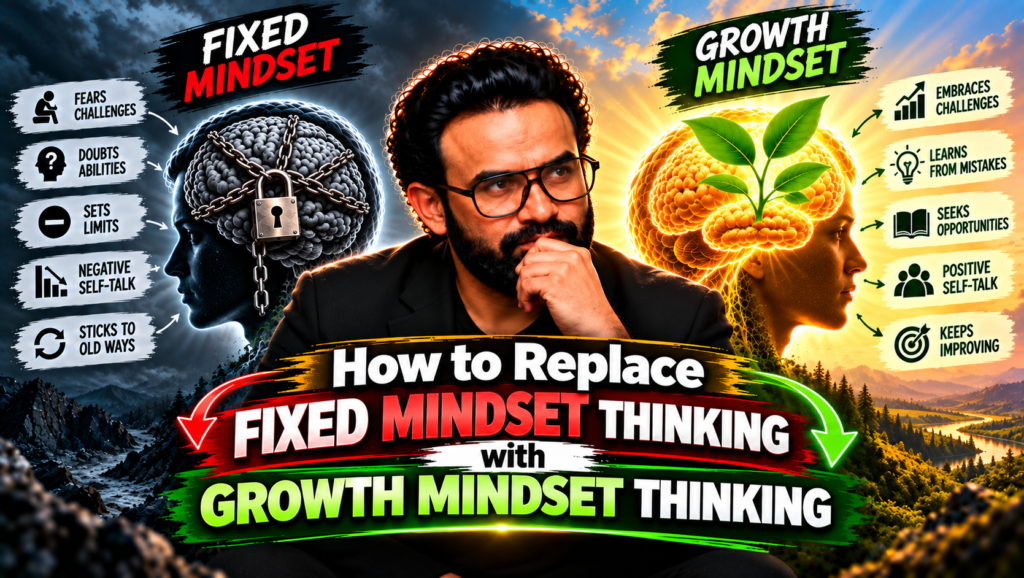
First, Understand the Difference
Before Changing Your Thinking, You Need to Recognize the Two Patterns.
A Fixed Mindset Often Sounds Like:
- “I’m Not Talented.”
- “I’m Bad at This.”
- “I Always Fail.”
- “I Can’t Learn This.”
- “I’m Not a Confident Person.”
- “People Like Me Don’t Do Things Like That.”
A Growth Mindset Sounds Different:
- “I Can Improve.”
- “I Can Learn.”
- “I Need More Practice.”
- “What Can This Mistake Teach Me?”
- “What Could I Try Differently?”
- “I’m Not Good at This Yet.”
The Goal Isn’t to Force Yourself to Think Positively Every Second.
The Goal Is to Replace Automatic, Limiting Conclusions with More Useful Ways of Looking at the Situation.
Step 1: Notice Your Fixed Mindset Thoughts
You Can’t Change a Pattern You Don’t Notice.
Start Paying Attention to Your Internal Dialogue.
When Something Goes Wrong, What Do You Immediately Tell Yourself?
Maybe:
“I’m Terrible at This.”
Maybe:
“I Knew I Couldn’t Do It.”
Maybe:
“Everyone Else Is Better Than Me.”
Don’t Judge Yourself for Having These Thoughts.
Simply Notice Them.
You Can Even Write Them Down.
For One Week, Keep A Small List of Recurring Thoughts That Appear When You Face Challenges.
Awareness Gives You Something to Work With.
Step 2: Separate Facts from Conclusions
This Is One of The Most Useful Changes You Can Make.
Imagine You Give a Presentation and Don’t Perform as Well as You Wanted.
The Fact Might Be:
“I Struggled During the Presentation.”
The Conclusion Might Be:
“I’m Terrible at Public Speaking.”
Those are Not the Same Thing.
The First Describes an Experience.
The Second Turns One Experience into an Identity.
Try Asking:
“What Actually Happened?”
Then Separate That From:
“What Am I Assuming This Means About Me?”
This Simple Distinction Can Help You Think More Clearly.
Step 3: Add The Word “Yet”
One Small Word Can Create a Very Different Perspective:
Yet.
“I Can’t Do This.”
Becomes:
“I Can’t Do This Yet.”
“I’m Not Good at This.”
Becomes:
“I’m Not Good at This Yet.”
“I Don’t Understand It.”
Becomes:
“I Don’t Understand It Yet.”
The Word Doesn’t Promise That You’ll Eventually Become Excellent.
It Simply Recognizes That Your Current Ability May Not Be Your Final Level.
It Keeps the Door Open.
Step 4: Change “I Can’t” Into “How Can I?”
This Is an Even More Powerful Shift.
When You Say:
“I Can’t Do This.”
The Conversation Often Ends.
When You Ask:
“How Can I Do This?”
Your Brain Has a Problem to Explore.
For Example:
“I Can’t Learn Digital Marketing.”
Becomes:
“How Can I Learn the Basics of Digital Marketing?”
“I Can’t Speak Confidently.”
Becomes:
“How Can I Practise Speaking More Confidently?”
“I Can’t Manage My Time.”
Becomes:
“How Can I Improve the Way I Plan My Day?”
The New Question Doesn’t Guarantee an Easy Answer.
But It Moves You from Limitation Toward Exploration.
Step 5: Turn Mistakes into Lessons
A Fixed Mindset Can Make Mistakes Feel Personal.
You Make a Mistake and Think:
“I’m Not Capable.”
A Growth Mindset Asks:
“What Can I Learn from This?”
Suppose You Launch a Project and It Doesn’t Work.
Instead Of Immediately Saying:
“I’m Bad at This.”
Break Down What Happened.
Ask:
- What Worked?
- What Didn’t Work?
- What Did I Overlook?
- What Could I Change?
- What Should I Try Next?
You Don’t Have To Call Failure A Success.
You Simply Need to Extract Useful Information from The Experience.
Step 6: Stop Comparing Your Beginning with Someone Else’s Results
Comparison Can Quickly Activate Fixed Thinking.
You See Someone Who Has Spent Years Developing a Skill.
You Look at Your First Attempt.
Then You Think:
“I’ll Never Be That Good.”
But You’re Comparing Different Stages.
Instead, Become Curious.
Ask:
“What Can I Learn from Their Process?”
If Someone Is a Great Speaker, Study How They Communicate.
If Someone Creates Excellent Content, Study Their Approach.
If Someone Has Developed a Skill You Want, Identify the Smaller Skills Behind It.
Turn Comparison Into Research.
Step 7: Welcome Useful Feedback
Feedback Can Challenge Your Self-Image.
That’s Why It Can Feel Uncomfortable.
But Useful Feedback Can Show You Something You Didn’t Notice.
When Someone Points Out an Area for Improvement, Don’t Immediately Think:
“They Think I’m Bad.”
Ask:
“Is There Something Here I Can Use?”
You Don’t Have to Accept Every Opinion.
Evaluate It.
If It’s Useful, Apply It.
If It Isn’t, Let It Go.
The Goal Is to Become Open to Feedback Without Becoming Dependent on It.
Step 8: Replace “I Have to Be Good” With “I Have to Learn”
One Of the Hidden Problems with Fixed Thinking Is the Pressure to Perform Immediately.
You Believe:
“If I’m Talented, This Should Be Easy.”
So, When Something Is Difficult, You Assume You Aren’t Talented.
But Learning Is Supposed to Involve Difficulty.
When You’re Learning Something New, You May Feel Slow.
You May Make Mistakes.
You May Need Repeated Practice.
Instead Of Asking:
“Am I Good at This?”
Ask:
“Am I Learning?”
That’s A Much Better Measure When You’re Developing a New Skill.
Step 9: Take Smaller Steps
Sometimes Fixed Thinking Becomes Stronger Because the Goal Feels Too Large.
You Want To:
“Become A Great Writer.”
That’s Huge.
Instead, Focus On:
Write 200 Words Today.
You Want To:
“Become Confident at Public Speaking.”
Start With:
Speak For Two Minutes and Record Yourself.
You Want To:
“Learn A New Technology.”
Start With:
Learn One Basic Feature Today.
Small Actions Make Learning Less Overwhelming.
And Consistent Small Actions Can Create Meaningful Progress Over Time.
Step 10: Build An Environment That Supports Growth
Your Mindset Doesn’t Operate In Isolation.
Your Environment Matters Too.
Surround Yourself with People, Resources and Situations That Encourage Learning.
Read.
Take Courses.
Ask Questions.
Find Mentors.
Practice With Others.
Join Communities Where Learning Is Normal.
Most Importantly, Give Yourself Opportunities to Apply What You’re Learning.
It’s Difficult to Develop a Growth-Oriented Approach If You Never Give Yourself Permission to Practice.
A Simple Fixed-To-Growth Mindset Table
| Fixed Mindset | Growth Mindset |
| “I’m Not Good at This.” | “I Can Improve with Practice.” |
| “I Can’t Do It.” | “What Can I Learn?” |
| “I Failed.” | “What Did I Learn from This Attempt?” |
| “They’re Better Than Me.” | “What Can I Learn from Them?” |
| “I Hate Feedback.” | “Is There Something Useful Here?” |
| “This Is Too Difficult.” | “What Is the Next Step?” |
| “I’ll Never Learn This.” | “I Don’t Understand It Yet.” |
| “I’m Not Talented.” | “What Skills Can I Develop?” |
The Goal Isn’t to Repeat These Phrases Mechanically.
The Goal Is to Develop the Thinking Pattern Behind Them.
A 5-Minute Daily Growth Mindset Practice
You Can Make This Very Simple.
At The End of Each Day, Ask Yourself:
1. What Challenged Me Today?
Identify One Difficult Situation.
2. What Did I Learn?
Write Down One Lesson.
3. Where Did I Use Fixed Thinking?
Be Honest Without Judging Yourself.
4. How Could I Respond Differently Next Time?
Create A Better Response.
5. What Is One Thing I Can Practice Tomorrow?
Choose One Small Action.
Five Minutes of Reflection Can Help You Become More Aware of Your Thinking Patterns.
Build Your Mega Mindset
A Mega Mindset Doesn’t Mean Replacing Every Negative Thought With:
“I Can Do Anything!”
That’s Not Realistic.
Instead, It Means Learning to Ask Better Questions.
“What Can I Learn?”
“What Can I Improve?”
“What Is the Next Step?”
“What Did This Experience Teach Me?”
“What Can I Try Differently?”
These Questions Don’t Guarantee a Particular Outcome.
But They Keep You Engaged with Learning.
And When You Keep Learning, You May Discover Abilities, Interests and Opportunities That You Couldn’t See Before.
That’s Where Mega Possibilities Come From.
Final Thoughts
Changing From Fixed Mindset Thinking to Growth Mindset Thinking Isn’t a One-Time Decision.
It’s A Practice.
You Will Still Have Moments When You Think:
“I Can’t.”
You Will Still Feel Frustrated.
You Will Still Compare Yourself with Others.
You Will Still Make Mistakes.
That’s Normal.
The Goal Isn’t to Eliminate Those Experiences.
The Goal Is to Respond Differently When They Appear.
Notice The Thought.
Question It.
Add “Yet.”
Ask What You Can Learn.
Take One Small Action.
Then Reflect and Adjust.
Over Time, These Small Choices Can Change the Way You Approach Challenges.
You Don’t Have to Know Exactly How Everything Will Work Out.
You Simply Need to Remain Open to Learning What Comes Next.
Think Bigger. Stay Curious. Keep Learning. Take Action.
Mega Mindset. Mega Possibilities.
Faqs
1. What Is the Easiest Way to Shift from a Fixed Mindset to a Growth Mindset?
Start By Noticing Your Fixed Thoughts. When You Catch Yourself Saying “I Can’t,” Ask “What Can I Learn?” Or Add “Yet” When It Accurately Reflects Your Situation.
2. Can I Completely Eliminate Fixed Mindset Thinking?
You Don’t Need To. Everyone Can Experience Doubt, Frustration, And Fixed Thinking in Certain Situations. The Goal Is to Become Aware of These Patterns and Practice Responding to Them More Constructively.
3. How Does “Yet” Help with Fixed Mindset Thinking?
“Yet” Recognizes Your Current Situation Without Automatically Treating It as Permanent. “I Can’t Do This Yet” Leaves Room for Learning While Avoiding a Promise That Success Is Guaranteed.
4. How Can I Turn Failure into Growth?
Separate The Outcome from Your Identity. Instead Of Saying “I’m A Failure,” Examine What Happened, Identify What You Learned, And Decide Whether There Is a Better Approach You Can Try.
5. Does A Growth Mindset Mean I Should Never Give Up?
No. Sometimes Changing Direction Is the Sensible Choice. A Growth Mindset Means Making That Decision Thoughtfully Rather Than Automatically Giving Up Because Something Feels Difficult.
6. How Long Does It Take to Develop a Growth Mindset?
There Is No Fixed Timeline. Mindset Is Influenced by Repeated Experiences, Beliefs, Habits, Learning Environments and Behavior. Focus On Practicing Small Changes Consistently Rather Than Expecting an Overnight Transformation.
7. How Does This Connect to Mega Mindset?
Mega Mindset Encourages You to Look Beyond Unnecessary Mental Limitations and Remain Open to Learning and Possibility. Replacing Fixed Conclusions with Learning-Focused Questions Is One Practical Way to Develop That Approach.