
Have You Ever Felt Like You’re Trying Your Best, But Nothing Seems To Be Changing?
You Set Goals, Make Plans, And Promise Yourself That Things Will Be Different. Yet, After Some Time, You Find Yourself In The Same Place, Facing the Same Problems.
Maybe You’re Struggling To Learn A New Skill. Perhaps Your Career Isn’t Moving Forward, Your Habits Aren’t Improving, Or A Dream You’ve Carried For Years Still Feels Far Away.
When This Happens, It’s Easy To Think:
“Maybe I’m Not Capable Of Doing This.”
But Feeling Stuck Doesn’t Necessarily Mean You Lack Ability. Sometimes, You Need A Different Strategy, More Support, A Smaller Goal, Or Simply A Clearer Understanding Of What Is Holding You Back.
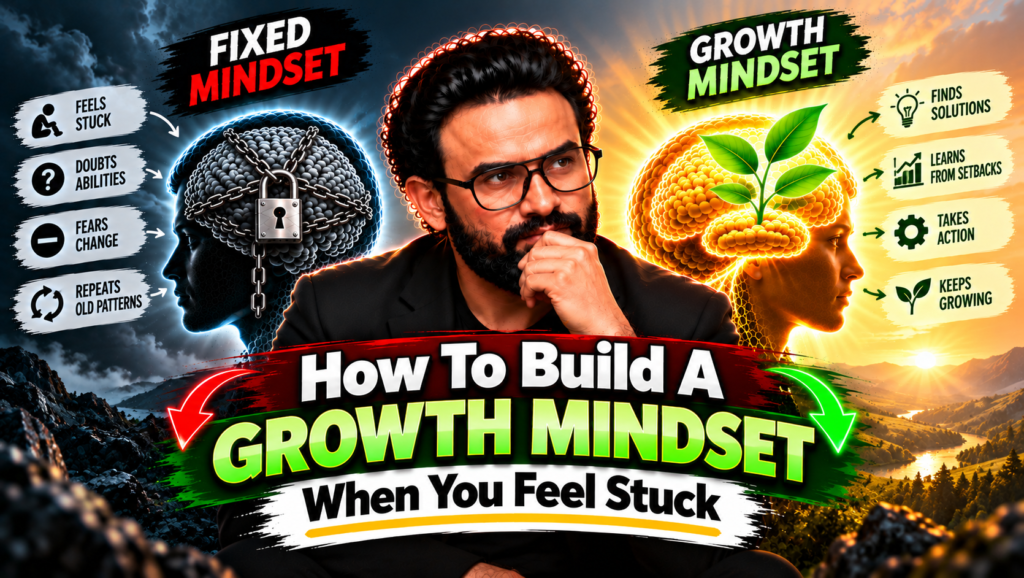
This Is Where A Growth Mindset Can Help.
A Growth Mindset Encourages You To See Your Abilities As Something You Can Develop Through Learning, Practice, Feedback, And Thoughtful Effort.
You May Not Control Every Situation, But You Can Often Change How You Respond To It.
And That Can Be The Beginning Of New Possibilities.
1. Understand Why You Feel Stuck
Before Trying To Move Forward, Take A Moment To Understand What’s Keeping You Where You Are.
Feeling Stuck Can Have Different Causes.
- Fear Of Failure: You Avoid Taking Action Because You Might Make A Mistake.
- Perfectionism: You Wait Until Everything Is Perfect Before Beginning.
- Overthinking: You Spend More Time Planning Than Doing.
- Unclear Goals: You Want To Improve, But Don’t Know What To Focus On.
- Unhelpful Strategies: You’re Working Hard, But Your Approach Isn’t Producing Results.
- Limited Resources: You May Need More Time, Guidance, Money, Or Support.
Each Problem Requires A Different Response.
For Example, If You’re Afraid Of Making Mistakes, You Might Need To Practice Taking Small Risks. If Your Goal Is Unclear, You May Need To Define Your Next Step.
Don’t Label Yourself As The Problem Before Examining The Problem.
Understanding The Obstacle Helps You Choose A More Useful Response.
2. Change “I Can’t” Into “What Can I Learn?”
When You Feel Stuck, Your Inner Voice Can Become Your Biggest Critic.
You Might Say:
“I Can’t Do This.”
“I Always Fail.”
“I’m Not Smart Enough.”
“I’ll Never Improve.”
These Thoughts Can Make A Difficult Situation Feel Permanent.
Instead Of Fighting Every Negative Thought, Try Asking A Better Question.
“What Can I Learn From This Situation?”
If A Project Fails, Examine What Went Wrong.
If A Skill Feels Difficult, Identify The Part You Don’t Understand.
If A Habit Isn’t Working, Look At What Makes It Difficult To Maintain.
This Shift Doesn’t Mean Ignoring Disappointment. It Means Using Your Attention To Discover What You Can Do Next.
3. Stop Waiting To Feel Ready
One Common Reason People Remain Stuck Is That They Wait For Confidence Before Taking Action.
They Tell Themselves:
“I’ll Start When I Feel Confident.”
“I’ll Apply When I’m Fully Prepared.”
“I’ll Launch My Idea When Everything Is Perfect.”
But Confidence Often Develops Through Experience, Not Before It.
You Learn To Speak By Speaking. You Improve At Writing By Writing. You Become More Comfortable With New Technology By Using It.
You Don’t Need To Feel Completely Ready To Take A Sensible First Step.
Start Small Enough That You Can Begin Today.
Action Creates Experience, And Experience Gives You Something To Learn From.
4. Break Big Goals Into Smaller Steps
A Big Goal Can Feel Exciting At First And Overwhelming Later.
Imagine Wanting To Start An Online Business. You May Need To Learn Marketing, Create A Product, Build A Website, Understand Customers, And Manage Finances.
Looking At Everything At Once Can Leave You Feeling Paralyzed.
Instead, Break The Goal Into Manageable Steps.
Your First Step Might Be Researching Your Audience. The Next Might Be Speaking With Potential Customers. After That, You Could Create A Simple Version Of Your Product.
Each Step Gives You A Clearer Direction.
You Don’t Have To Solve The Entire Problem Today.
Ask Yourself:
“What Is The Smallest Useful Action I Can Take Right Now?”
Then Focus On Completing That Action.
5. Treat Setbacks As Feedback
A Setback Can Feel Like Proof That Your Plan Will Never Work.
But One Disappointing Result Doesn’t Always Tell The Whole Story.
Suppose You Spend Weeks Learning A New Skill And Still Struggle With A Particular Task.
A Fixed Response Might Be:
“I’m Just Not Good At This.”
A Growth-Oriented Response Might Be:
“My Current Approach Isn’t Working Well Enough. What Should I Change?”
You Might Need More Practice, Clearer Instructions, Feedback From An Experienced Person, Or A Different Learning Method.
Not Every Attempt Will Succeed, But Each Attempt Can Help You Understand The Situation Better.
The Goal Isn’t To Celebrate Every Setback. It’s To Avoid Wasting The Opportunity To Learn From It.
6. Focus On Progress, Not Perfection
When You’re Stuck, You May Overlook Small Improvements Because You’re Focused On How Far You Still Have To Go.
Imagine Learning A New Language. You May Not Be Fluent Yet, But Perhaps You Can Now Understand Simple Conversations Or Introduce Yourself Confidently.
Those Improvements Matter.
Instead Of Measuring Progress Only By The Final Result, Notice What Has Changed.
Ask Yourself:
- What Can I Do Today That I Couldn’t Do Last Month?
- What Mistake Do I Understand Better Now?
- What Task Feels A Little Easier?
- What Have I Learned About Myself Or My Approach?
Recognizing Progress Helps You Make More Realistic Decisions About What To Do Next.
7. Ask For Help Without Feeling Weak
Sometimes, The Best Way Forward Is To Stop Trying To Solve Everything Alone.
You Might Need A Teacher To Explain A Concept, A Colleague To Review Your Work, A Mentor To Share Experience, Or A Friend To Help You Think Clearly.
Asking For Help Doesn’t Mean You Lack Ability.
It Means You’re Willing To Use The Resources Available To You.
A Growth Mindset Includes Recognizing When Independent Effort Is Not Enough.
You Can Take Responsibility For Your Development While Still Learning From Other People.
8. Build A Daily Habit Of Learning
You Don’t Need To Transform Your Entire Life In One Day.
Instead, Create A Small Routine That Keeps You Moving.
Spend Ten Minutes Practicing A Skill. Read A Few Pages Of A Useful Book. Review A Mistake From Your Day. Ask Someone For Feedback. Write Down One Lesson You Learned.
Choose An Action You Can Realistically Repeat.
Consistency Matters, But Your Routine Should Also Be Flexible Enough To Adapt When Circumstances Change.
The Aim Is Not To Stay Busy Every Minute.
It’s To Create Regular Opportunities To Learn, Reflect, And Improve.
A Simple Five-Minute Reset For When You Feel Stuck
When You Don’t Know What To Do Next, Try This Quick Exercise.
Minute 1: Name The Problem.
Write Down Exactly What Feels Difficult.
Minute 2: Identify What You Control.
Separate Your Possible Actions From Factors Outside Your Control.
Minute 3: Choose One Lesson.
Ask What The Situation Might Be Teaching You.
Minute 4: Select One Small Action.
Choose Something Practical And Achievable.
Minute 5: Decide When To Begin.
Give Yourself A Realistic Starting Point.
This Exercise Won’t Solve Every Problem In Five Minutes. However, It Can Help You Move From Vague Frustration Toward A Clearer Next Step.
Build Your Mega Mindset
Feeling Stuck Is Part Of Being Human. It Doesn’t Mean You’ve Lost Your Potential Or That Your Future Has Already Been Decided.
Sometimes, Progress Requires Courage. Sometimes, It Requires Patience. And Sometimes, It Requires Admitting That Your Current Approach Needs To Change.
A Mega Mindset Isn’t About Believing That Every Challenge Will Be Easy.
It’s About Staying Curious Enough To Ask Questions, Flexible Enough To Change Direction, And Willing Enough To Take The Next Useful Step.
When You Feel Stuck, Remember Three Things:
Think Differently. Learn Continuously. Take One Step Forward.
You Don’t Need To See The Entire Road To Begin Moving.
You Need A Clear Next Step And The Willingness To Learn Along The Way.
Your Present Situation Is Part Of Your Story, Not Necessarily The End Of It.
Mega Mindset. Mega Possibilities.
Frequently Asked Questions
1. What Is A Growth Mindset When You Feel Stuck?
A Growth Mindset Means Believing That Your Skills And Abilities Can Develop. When You Feel Stuck, It Encourages You To Examine The Problem, Learn From Experience, And Explore Different Ways Forward.
2. Why Do I Feel Stuck Even When I’m Trying Hard?
You May Be Using An Ineffective Strategy, Pursuing An Unclear Goal, Facing Limited Resources, Or Trying To Change Too Many Things At Once. Reviewing Your Approach And Identifying The Specific Obstacle Can Help You Decide What To Do Next.
3. How Can I Change My Mindset When I Feel Discouraged?
Acknowledge Your Feelings, Identify The Problem, And Replace Broad Judgments Such As “I Always Fail” With Specific Questions Such As “What Went Wrong, And What Can I Change?” Then Choose One Manageable Action.
4. Does A Growth Mindset Mean Never Giving Up?
No. It Means Remaining Willing To Learn And Adapt. Sometimes That Involves Continuing, Sometimes Changing Your Strategy, And Sometimes Choosing A More Suitable Goal.
5. What Is The First Step To Getting Unstuck?
Identify What Is Actually Holding You Back. Once You Understand The Obstacle, You Can Choose A Realistic Next Step Instead Of Trying To Change Everything At Once.
6. How Long Does It Take To Develop A Growth Mindset?
There Is No Fixed Timeline. You Can Begin Practicing Growth-Oriented Thinking Immediately, But Making It A Consistent Habit Takes Experience, Reflection, And Repeated Effort.
7. How Does A Growth Mindset Create More Possibilities?
It Encourages You To Consider New Strategies, Seek Feedback, Learn Unfamiliar Skills, And Respond Constructively To Setbacks. These Behaviors Can Help You Recognize And Pursue Opportunities That You Might Otherwise Overlook.