
Have You Ever Argued With Someone Even When A Small Part Of You Knew They Might Be Right?
Have You Ever Avoided Asking A Question Because You Didn’t Want To Look Inexperienced? Or Blamed Someone Else When A Mistake Was Clearly Yours?
You’re Not Alone.
Sometimes, The Hardest Part Of Learning Isn’t Understanding Something New. It’s Accepting That We Don’t Already Know Everything.
We Want To Appear Intelligent, Capable, Successful, And Confident. So When Someone Challenges Our Ideas Or Points Out A Mistake, We May Feel The Need To Defend Ourselves.
This Is Where Our Ego Can Get In The Way.
Your Ego Isn’t Necessarily Your Enemy. Having Confidence And Valuing Yourself Are Healthy. The Problem Begins When Protecting Your Image Becomes More Important Than Discovering The Truth.
When You Focus More On Proving That You’re Right Than Learning What Is Right, You Can Miss Valuable Opportunities To Grow.
A Growth Mindset Offers Another Approach: You Don’t Have To Know Everything To Be Capable. You Simply Need To Remain Willing To Learn.
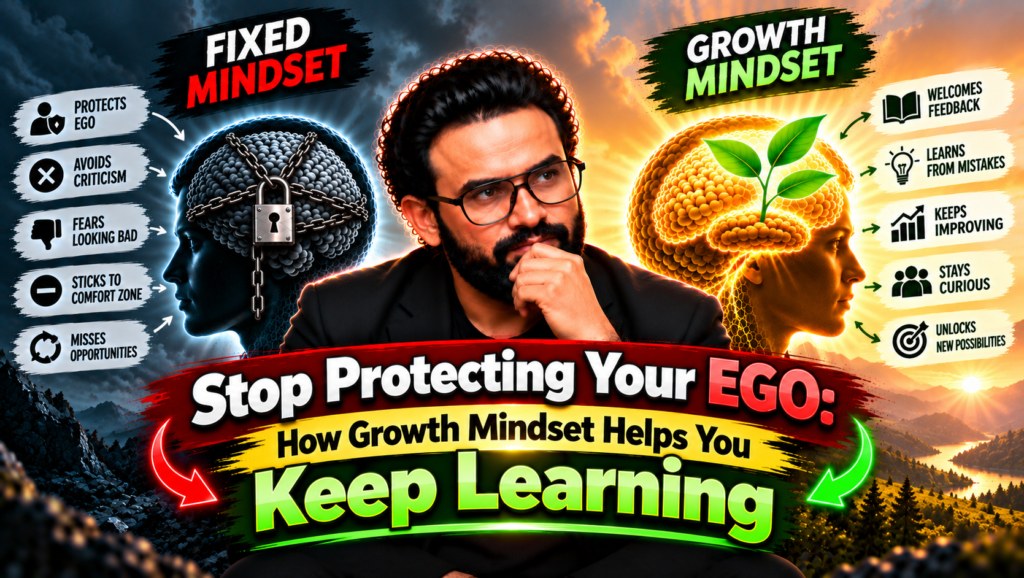
What Does It Mean To Protect Your Ego?
Protecting Your Ego Means Trying To Preserve Your Image Of Yourself, Especially When Something Challenges It.
Imagine You Consider Yourself A Good Communicator. During A Meeting, A Colleague Tells You That Your Explanation Was Confusing.
Instead Of Considering The Feedback, You Immediately Respond:
“Everyone Else Understood What I Meant. You’re The Only One Who Has A Problem.”
Perhaps Your Colleague Is Mistaken. But Perhaps There’s Something Useful In What They Said.
If You Reject The Feedback Simply Because Accepting It Feels Uncomfortable, You May Lose An Opportunity To Improve.
Ego Protection Can Appear In Everyday Situations:
- Refusing To Admit When You’re Wrong.
- Making Excuses Instead Of Accepting Responsibility.
- Avoiding Tasks Where You Might Struggle.
- Ignoring Advice Because It Comes From Someone Less Experienced.
- Pretending To Understand Something When You Don’t.
- Taking Every Disagreement As A Personal Attack.
These Behaviors Don’t Automatically Mean Someone Has A Bad Attitude. Sometimes They Arise From Insecurity, Embarrassment, Or Fear Of Judgment.
Recognizing Them Is The First Step Toward Responding Differently.
Why A Fixed Mindset Makes Learning Difficult
A Fixed Mindset Often Connects Ability With Identity.
You May Believe That Being Smart Means Understanding Things Quickly, Being Talented Means Performing Well Immediately, Or Being Successful Means Rarely Making Mistakes.
Under These Assumptions, A Mistake Becomes More Than A Mistake.
It Feels Like Evidence That You’re Not As Capable As You Thought.
So You Try To Protect Your Image.
You Avoid Difficult Questions. You Defend Your Decisions. You Hide Your Confusion. You May Even Stop Trying New Things Because Being A Beginner Feels Uncomfortable.
The Problem Is That Learning Requires You To Encounter Things You Don’t Yet Understand.
If You Only Choose Situations Where You Can Appear Competent, You May Protect Your Confidence In The Short Term While Limiting Your Development In The Long Term.
A Growth Mindset Makes Room For Being Wrong
A Growth Mindset Changes The Way You Interpret Mistakes And Feedback.
Instead Of Thinking:
“If I’m Wrong, People Will Think I’m Not Intelligent.”
You Begin To Think:
“If I’m Wrong, I Have An Opportunity To Understand Something Better.”
Consider Two People Learning A New Digital Tool.
The First Person Avoids Asking Questions Because They Don’t Want To Appear Inexperienced. They Struggle Privately And Continue Making The Same Mistakes.
The Second Person Admits They Don’t Understand A Feature And Asks Someone To Explain It. They May Feel Awkward For A Moment, But They Gain Information That Helps Them Move Forward.
Who Is More Likely To Learn Efficiently?
Often, It’s The Person Who Is Willing To Acknowledge What They Don’t Know.
Being Wrong Doesn’t Automatically Make You Better. What Matters Is Whether You’re Willing To Examine The Mistake And Learn From It.
Stop Trying To Win Every Conversation
Have You Ever Entered A Discussion Wanting To Understand Another Person’s Point Of View But Ended Up Trying To Prove Your Own?
It Happens Easily.
Once A Conversation Becomes About Winning, Listening Often Becomes Difficult. Instead Of Considering What The Other Person Means, You’re Preparing Your Next Argument.
A Growth-Oriented Approach Changes The Purpose Of The Conversation.
Instead Of Asking, “How Can I Prove Them Wrong?” Ask:
“Is There Something In Their Perspective That I Haven’t Considered?”
You Can Disagree With Someone While Remaining Curious.
You Can Defend A Well-Supported Opinion Without Dismissing Every Alternative.
And You Can Change Your Mind When New Information Gives You A Good Reason To Do So.
Changing Your Mind Isn’t Always A Sign Of Weakness. Sometimes, It Shows That You’ve Learned Something Important.
Learn To Accept Feedback Without Losing Confidence
Feedback Can Challenge Your Ego Because It Highlights A Gap Between How You See Your Performance And How Someone Else Experiences It.
Imagine Your Manager Tells You That Your Reports Contain Too Much Unnecessary Detail.
You Might Think:
“I’m A Hardworking Person. Why Can’t They Appreciate My Effort?”
But Effort And Effectiveness Aren’t Always The Same Thing.
You Can Work Hard And Still Need To Improve Your Approach.
Instead Of Treating The Feedback As A Judgment Of Your Worth, Look For The Specific Information It Provides.
Ask Questions Such As:
- What Exactly Needs Improvement?
- Can You Show Me An Example?
- Which Change Would Make The Biggest Difference?
- What Should I Try Next Time?
You Don’t Have To Accept Every Criticism As Correct. Evaluate The Feedback, Consider The Evidence, And Use What Is Helpful.
Confidence Doesn’t Require You To Be Perfect. It Allows You To Acknowledge Imperfections Without Losing Your Sense Of Worth.
Replace Excuses With Responsibility
When Something Goes Wrong, Blaming External Factors Can Feel Easier Than Examining Your Own Role.
Sometimes External Factors Really Are Responsible. Not Every Failure Is Your Fault, And Not Every Situation Is Within Your Control.
However, There May Still Be Something You Can Learn Or Change.
Suppose You Miss A Deadline Because You Underestimated How Long A Project Would Take.
You Could Blame The Workload And Move On.
Or You Could Acknowledge The Workload While Also Asking Whether You Need To Plan More Realistically, Start Earlier, Or Communicate Delays Sooner.
Taking Responsibility Doesn’t Mean Blaming Yourself For Everything.
It Means Identifying The Parts Of A Situation You Can Influence.
That Gives You A Better Chance Of Responding Effectively Next Time.
Five Ways To Put Learning Before Ego
You Don’t Need To Change Your Personality Overnight. Begin By Practicing These Habits.
1. Admit When You Don’t Know Something.
Try Saying, “I’m Not Familiar With That Yet. Can You Explain It?” Honesty Creates An Opportunity To Learn.
2. Ask Questions Before Making Assumptions.
When Someone Challenges Your Idea, Understand Their Reasoning Before Deciding Whether You Agree.
3. Separate Your Identity From Your Performance.
Making A Mistake Doesn’t Mean You’re A Failure. It Means Something Needs Attention, Correction, Or Improvement.
4. Give Credit Where It’s Deserved.
When Someone Offers A Better Idea, Recognize Its Value. Learning From Another Person Doesn’t Reduce Your Worth.
5. Review Your Mistakes Without Attacking Yourself.
Ask What Happened, What You Could Change, And What You Want To Do Differently Next Time.
These Habits Help You Protect Something More Valuable Than Your Image: Your Ability To Keep Learning.
Build Your Mega Mindset
A Mega Mindset Isn’t About Being The Smartest Person In The Room.
It’s About Being Willing To Learn From The People In The Room.
You Don’t Have To Know Every Answer. You Don’t Have To Defend Every Decision. And You Don’t Have To Pretend That Your Current Abilities Are The Best They Can Ever Be.
Sometimes, Growth Begins With Three Simple Words:
“I Was Wrong.”
Sometimes, It Begins With A Question:
“Can You Teach Me?”
And Sometimes, It Begins When You Stop Trying To Appear Perfect And Start Working On What You Can Improve.
Your Ego May Want To Protect The Person You Believe You Are.
Your Growth Mindset Encourages You To Explore The Person You Could Become.
The Next Time You Feel Defensive, Pause Before Reacting. Ask Yourself Whether You’re Protecting Your Self-Image Or Considering An Opportunity To Learn.
You Can Respect Yourself Without Always Being Right.
You Can Be Confident Without Knowing Everything.
And You Can Become Better Without Pretending You’re Already The Best.
Stop Protecting The Need To Be Right. Start Protecting Your Willingness To Grow.
Mega Mindset. Mega Possibilities.
Frequently Asked Questions
1. What Does It Mean To Protect Your Ego?
It Means Trying To Preserve Your Self-Image When Something Challenges Your Beliefs, Abilities, Or Decisions. It Can Involve Making Excuses, Rejecting Feedback, Or Refusing To Admit Mistakes.
2. How Does A Growth Mindset Help You Keep Learning?
A Growth Mindset Encourages You To View Abilities As Developable. It Makes It Easier To Approach Mistakes, Feedback, And Challenges As Opportunities To Learn Rather Than Simply As Threats To Your Self-Image.
3. Is Having An Ego Always A Bad Thing?
No. Confidence, Self-Respect, And A Healthy Sense Of Identity Are Valuable. Problems Arise When Protecting Your Image Becomes More Important Than Being Honest, Considering Evidence, Or Learning From Experience.
4. How Can I Stop Being Defensive When Someone Criticizes Me?
Pause Before Responding, Listen To The Specific Point Being Made, And Ask Clarifying Questions. Once You Understand The Feedback, Evaluate Whether It Is Accurate And Identify Anything Useful You Can Apply.
5. Does Admitting That I’m Wrong Make Me Look Weak?
Not Necessarily. Admitting A Mistake Can Demonstrate Honesty, Self-Awareness, And A Willingness To Improve. The Important Thing Is To Take Responsibility And Learn From The Experience.
6. How Can I Accept Feedback Without Losing Confidence?
Separate Your Performance From Your Personal Worth. Feedback May Identify Something You Need To Improve, But It Doesn’t Define Your Entire Ability Or Identity.
7. What Is The First Step Toward Putting Learning Before Ego?
Notice Your Reaction When Someone Challenges You. Before Defending Yourself, Ask: “Could There Be Something Useful For Me To Learn Here?” Then Consider The Evidence Before Deciding How To Respond.