
Have You Ever Tried Something New, Struggled For A While and Thought, “I’m Just Not Good at This”?
Maybe You Couldn’t Solve A Maths Problem. Perhaps You Struggled To Speak Confidently In Public, Learn A New Language, Use A Digital Tool, Or Build A New Habit.
After A Few Unsuccessful Attempts, It’s Easy To Decide That You Simply Don’t Have The Ability.
But What If You Changed One Small Sentence?
Instead Of Saying, “I’m Not Good At This,” Try Saying, “I’m Not Good At This Yet.”
That Tiny Word—Yet—Doesn’t Magically Solve Your Problem. It Doesn’t Guarantee Success Or Remove The Effort Required To Improve. But It Reminds You That Your Current Ability May Not Be The Limit Of What You Can Learn.
And That Is Where A Mega Mindset Begins: Not By Believing You Can Do Everything Immediately, But By Staying Open To What You Can Learn Next.
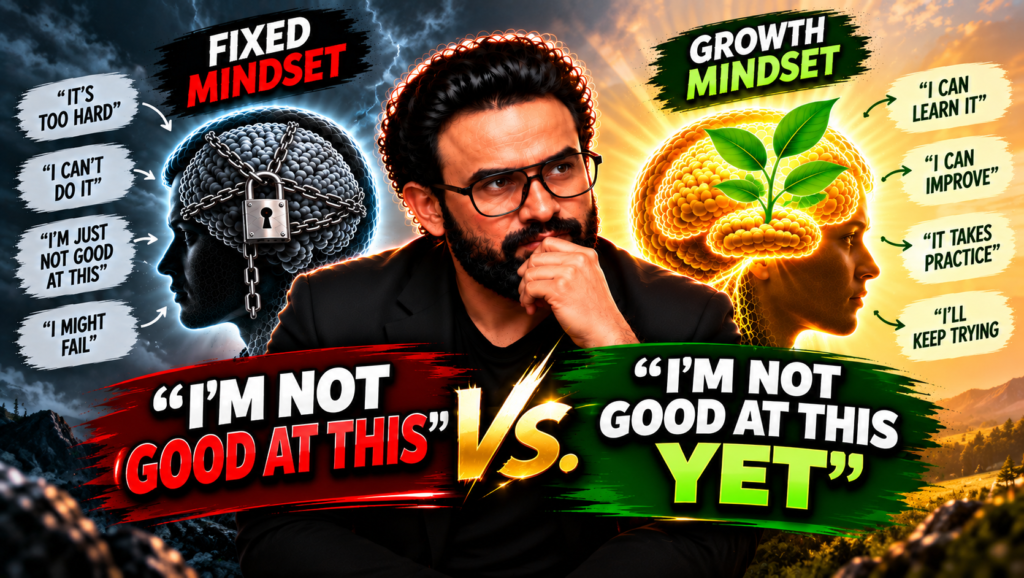
The Power Of One Small Word
Words Influence How We Describe Our Experiences.
When You Say, “I’m Not Good At This,” You May Be Describing Your Current Difficulty. But You May Also Be Treating That Difficulty As A Permanent Fact.
The Sentence Can Quietly Close The Door To Further Effort.
Now Add The Word Yet.
“I’m Not Good At This Yet.”
The Situation Hasn’t Changed. You May Still Be Confused, Inexperienced, Or Making Mistakes.
But Your Conclusion Has Changed.
You’re No Longer Saying That Improvement Is Impossible. You’re Acknowledging That You Are Still Learning.
“Yet” Turns A Final Judgment Into An Unfinished Story.
It Creates Space For Practice, Feedback, Experimentation, And Progress.
How “I’m Not Good At This” Holds You Back
Imagine A Student Who Receives A Low Score In Mathematics.
The Student Thinks, “I’m Just Bad At Maths.”
What Happens Next?
They May Avoid Difficult Questions, Stop Asking For Help, Or Assume That Extra Practice Won’t Make Much Difference.
Over Time, They May Put Less Effort Into The Subject Because They Believe The Outcome Has Already Been Decided.
Now Imagine The Same Student Thinking:
“I’m Not Good At Maths Yet. I Need To Understand Where I’m Going Wrong.”
This Thought Encourages A Different Response. The Student Might Review Mistakes, Ask A Teacher For Help, Or Practice One Concept At A Time.
The Student May Not Improve Overnight. Some Concepts May Still Take Considerable Effort.
But They Are More Likely To Look For A Way Forward Rather Than Treating One Disappointing Result As A Permanent Label.
The Difference Isn’t Simply Positive Thinking. It’s The Willingness To Take Another Useful Step.
“Yet” Doesn’t Mean Pretending Everything Is Easy
Let’s Be Realistic: Learning Can Be Frustrating.
You May Practice A Skill And Still Struggle. You May Try Several Approaches Before Finding One That Works. Sometimes Progress Is Slower Than You Expected.
A Growth Mindset Doesn’t Require You To Pretend That Everything Is Possible Through Effort Alone.
Instead, It Encourages You To Ask Better Questions.
- What Part Am I Struggling With?
- Do I Need More Practice Or A Different Strategy?
- Could Someone Help Me Understand This?
- What Can I Try Next?
- Is My Current Goal Realistic, And Should I Adjust My Approach?
These Questions Turn Vague Frustration Into Something You Can Investigate.
The Purpose Of “Yet” Isn’t To Promise Success. It’s To Keep You Open To Learning.
Five Everyday Situations Where “Yet” Can Help
1. Learning A New Skill
Instead Of: “I’m Not Creative.”
Try: “I Haven’t Developed This Creative Skill Yet.”
You Can Begin By Learning The Basics, Observing Examples, And Practicing Regularly.
Creativity Isn’t Always A Sudden Flash Of Inspiration. It Can Also Develop Through Curiosity And Experimentation.
2. Speaking With Confidence
Instead Of: “I’m Not Good At Speaking In Front Of People.”
Try: “I’m Not Confident At Public Speaking Yet.”
Start Small. Practice In Front Of A Mirror, Record Yourself, Or Speak To A Small Group.
You May Still Feel Nervous, But You Can Gradually Learn How To Prepare And Communicate More Effectively.
3. Building Better Habits
Instead Of: “I Can Never Stay Consistent.”
Try: “I Haven’t Found A Routine I Can Maintain Yet.”
Perhaps Your Plan Is Too Ambitious, Your Schedule Is Unrealistic, Or You Need A Simpler Starting Point.
Rather Than Judging Yourself, Examine The System You’re Using.
4. Using Technology
Instead Of: “I’m Too Old To Learn These Tools.”
Try: “I Haven’t Learned How To Use These Tools Yet.”
Break The Process Into Small Tasks. Follow A Tutorial, Practice One Feature, And Repeat It Until It Becomes Familiar.
Being A Beginner Is Not A Weakness. It’s A Stage Of Learning.
5. Dealing With Setbacks
Instead Of: “I’ll Never Achieve My Goal.”
Try: “I Haven’t Found The Right Path To This Goal Yet.”
This Doesn’t Mean You Must Pursue Every Goal Forever. You Can Change Your Strategy, Seek Advice, Or Decide That A Different Goal Better Suits Your Needs.
The Important Thing Is To Make That Decision Thoughtfully Rather Than Letting One Setback Decide Everything For You.
How To Make “Yet” Part Of Your Daily Life
You Don’t Need A Complicated Routine To Practice This Mindset. Start With These Four Steps.
Step 1: Notice Your Language
Pay Attention When You Use Words Like Always, Never, Impossible, Or Can’t.
Ask Yourself Whether You’re Describing A Genuine Limitation Or Reacting To A Difficult Moment.
Step 2: Add “Yet”
When Appropriate, Rewrite The Thought.
“I Don’t Understand This” Becomes “I Don’t Understand This Yet.”
“I Can’t Do It” Becomes “I Can’t Do It Yet.”
The Goal Isn’t To Deny Reality. It’s To Avoid Reaching Conclusions Before You’ve Explored Your Options.
Step 3: Choose One Practical Action
A New Sentence Is Useful Only If It Helps You Act.
If You’re Struggling With Writing, Practice One Paragraph. If You’re Learning A Language, Spend Ten Minutes Reviewing Vocabulary. If You’re Nervous About Speaking, Rehearse Your Opening Lines.
Make Your Next Step Small Enough To Begin.
Step 4: Review What You Learned
After Practicing, Ask:
“What Did I Understand Better Today?”
You Don’t Need A Dramatic Breakthrough Every Time. Sometimes Progress Means Discovering What Doesn’t Work Or Identifying The Question You Need To Ask Next.
Over Time, These Small Learning Experiences Can Help You Approach Challenges With Greater Confidence.
Stop Comparing Your Beginning With Someone Else’s Progress
One Reason People Give Up Early Is Comparison.
You See Someone Speaking Fluently, Building A Successful Business, Creating Beautiful Designs, Or Performing A Skill Effortlessly.
You Compare Their Current Ability With Your First Attempt.
But You May Not See The Practice, Mistakes, Support, And Experience Behind Their Progress.
Instead Of Asking, “Why Am I Not As Good As Them?” Ask:
“What Can I Learn From Their Experience?”
You Don’t Have To Match Someone Else’s Timeline. Focus On Your Next Step And Measure Your Progress Against Where You Started.
Build Your Mega Mindset
A Mega Mindset Doesn’t Mean You Must Feel Confident Every Day.
It Means You Don’t Let Every Difficult Moment Define Your Future.
You Can Acknowledge That Something Is Hard Without Deciding That You’re Incapable. You Can Recognize A Weakness Without Turning It Into Your Identity. And You Can Accept That Progress May Require Patience, Guidance, And A Change Of Strategy.
The Next Time You Catch Yourself Saying, “I’m Not Good At This,” Pause For A Moment.
Add One Word.
Yet.
Then Ask Yourself What You Can Learn, What You Can Change, And What Small Step You Can Take Today.
You Don’t Need To Know The Entire Path Before You Begin. You Only Need To Remain Willing To Learn From The Step In Front Of You.
Your Current Abilities Describe Where You Are Today. They Don’t Necessarily Tell The Whole Story Of Where You Could Go.
Keep Learning. Keep Adjusting. Keep Taking Action.
Mega Mindset. Mega Possibilities.
Frequently Asked Questions
1. What Is The Difference Between “I’m Not Good At This” And “I’m Not Good At This Yet”?
“I’m Not Good At This” Can Sound Like A Permanent Judgment About Your Ability. Adding “Yet” Acknowledges Your Current Difficulty While Leaving Room For Learning And Improvement.
2. How Does The Word “Yet” Support A Growth Mindset?
The Word “Yet” Reminds You That Skills Can Develop Over Time. It Can Encourage You To Practice, Seek Feedback, Try Different Strategies, And Remain Open To Improvement.
3. Does Saying “Yet” Guarantee That I Will Succeed?
No. Success Depends On Many Factors, Including Your Approach, Resources, Circumstances, Opportunities, And The Nature Of The Goal. “Yet” Encourages Continued Learning; It Does Not Guarantee A Particular Result.
4. How Can I Stop Thinking That I’m Not Good Enough?
Notice When You Turn One Mistake Or Difficulty Into A Judgment About Yourself. Focus On The Specific Skill You Need To Improve And Identify One Practical Action That Could Help.
5. Can “Yet” Help Students With Learning Difficulties?
It Can Encourage Students To View Challenges As Opportunities To Learn Rather Than Proof Of Inability. However, Students May Also Need Appropriate Teaching Methods, Individualized Support, Sufficient Practice, And Suitable Learning Resources.
6. What Should I Do When I Keep Trying But Don’t Improve?
Review Your Strategy Instead Of Repeating The Same Approach Automatically. Ask For Feedback, Break The Skill Into Smaller Parts, Seek Guidance, And Check Whether You Have The Resources You Need. You May Need A Different Method Or A Revised Goal.
7. How Can I Use The “Power Of Yet” Every Day?
Notice Discouraging Thoughts, Add “Yet” When It Accurately Reflects Your Situation, Choose One Achievable Action, And Reflect On What You Learned. Consistent Practice Can Help You Respond More Constructively To Challenges.