Opportunities Don’t Always Arrive Looking Like Opportunities.
Sometimes They Look Like a Difficult Problem.
Sometimes They Look Like a New Responsibility.
Sometimes They Look Like a Conversation with a Stranger.
Sometimes They Look Like a Mistake That Teaches You Something Important.
And Sometimes, An Opportunity Is Simply an Idea That You Almost Ignored.
The Difference Is Often Not Whether Opportunities Exist.
The Difference Is Whether You are Looking for Them.
An Opportunity-Focused Mindset Doesn’t Mean Believing That Everything Will Work Out Perfectly.
It Means Training Yourself to Notice Possibilities, Stay Curious, Ask Better Questions and Take Action When Something Worth Exploring Appears.
That Is an Important Part of Mega Mindset, Mega Possibilities.
Because When You Start Looking for Possibilities Instead of Only Problems, You May Begin Seeing Your World Differently.
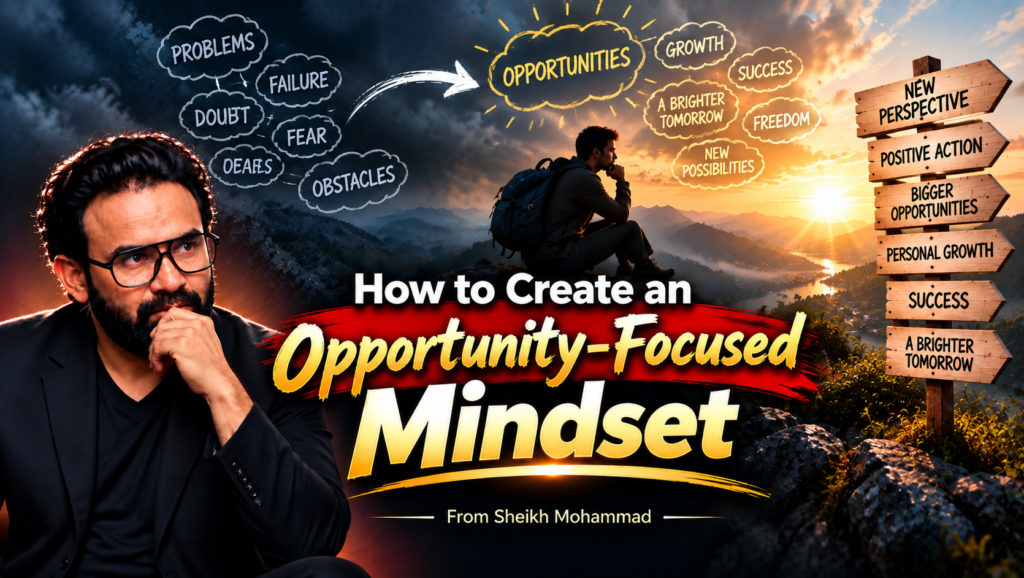
What Is an Opportunity-Focused Mindset?
An Opportunity-Focused Mindset Is a Way of Thinking That Asks:
“What Could Be Possible Here?”
Instead Of Immediately Focusing on What Is Wrong, You Also Look for What Could Be Learned, Improved, Created, Or Explored.
For Example, Imagine You Lose a client.
A Problem-Focused Mindset Might Say:
“I’m Losing Business. Everything Is Going Wrong.”
An Opportunity-Focused Mindset Might Ask:
“Why Did I Lose the Client and What Can I Improve Before the Next One?”
The Second Approach Doesn’t Deny the Problem.
It Simply Looks Beyond It.
That Is the Difference.
Stop Waiting for Opportunities to Find You
Many People Imagine an Opportunity as Something That Suddenly Appears.
A Job Offer.
A Lucky Connection.
A Business Idea.
An Unexpected Invitation.
Sometimes That Happens.
But Many Opportunities are Created Through Action.
You Learn A Skill.
You Meet People.
You Ask Questions.
You Solve Problems.
You Share Your Ideas.
You Experiment.
You Follow Up.
You Try Something New.
Everyone of These Actions Increases the Number of Possibilities You Can Discover.
If You Sit in the Same Place Doing the Same Things Every Day, You May Continue Seeing the Same Possibilities.
But When You Expand Your Actions, You Expand What You Can Discover.
Opportunity Often Follows Movement.
Train Yourself to Ask Better Questions
Your Questions Influence What Your Mind Searches For.
Consider The Difference Between:
“Why Is Everything So Difficult?”
And:
“What Can I Do to Make This Easier?”
Or:
“Why Don’t I Have Opportunities?”
Versus:
“Where Can I Create an Opportunity?”
Or:
“Why Did This Fail?”
Versus:
“What Can This Failure Teach Me?”
The Second Question in Each Example Moves Your Attention Toward Possibility.
You Don’t Have to Force Yourself to Be Positive All the Time.
Simply Become More Curious.
Curiosity Is One of the Most Powerful Tools for Discovering Possibilities.
Look For Problems Worth Solving
A Problem Isn’t Always Just A Problem.
Sometimes, A Problem Is a Signal.
If Many People Struggle with Something, There May Be an Opportunity to Create a Solution.
Think About Everyday Frustrations.
People Need Something Faster.
Something Simpler.
Something More Convenient.
Something More Affordable.
Something Better Designed.
Someone Who Notices These Problems and Asks, “How Could I Solve This?” May Discover an Opportunity.
You Don’t Always Need to Invent Something Completely New.
Sometimes, You Simply Need to Solve an Existing Problem Better.
Pay Attention to Conversations
Opportunities Often Begin With Conversations.
Someone Mentions a Problem.
Someone Asks for Help.
Someone Shares an Idea.
Someone Says, “I Wish There Was a Better Way to Do This.”
Listen Carefully.
You May Hear Something Others Overlook.
A Simple Conversation Can Lead To:
A New Collaboration.
A Business Idea.
A Useful Introduction.
A Learning Opportunity.
A New Project.
A Different Perspective.
This Doesn’t Mean Treating Every Conversation As A Business Opportunity.
It Means Becoming More Present.
Listen to Understand, Not Just to Respond.
You Never Know What You Might Learn.
Learn To See Possibility in Change
Change Can Be Uncomfortable.
A New Technology Appears.
Your Industry Changes.
Your Role Changes.
A Familiar Process Disappears.
Your Plans Change.
The Natural Reaction May Be:
“I Don’t Want Things to Change.”
But Change Can Also Create Space.
New Skills Become Valuable.
New Problems Need Solutions.
New Industries Emerge.
New Ways of Working Become Possible.
This Doesn’t Mean Every Change Is Good or Easy.
It Means That When the Environment Changes, There May Also Be New Possibilities to Explore.
Instead of Asking Only:
“What Am I Losing?”
Also Ask:
“What Is Becoming Possible Now?”
Build A Learning Habit
An Opportunity-Focused Person Stays Curious.
They Don’t Assume They Already Know Everything.
They Read.
They Watch.
They Experiment.
They Ask Questions.
They Learn from People with Different Experiences.
They Develop New Skills.
Why Does This Matter?
Because Knowledge Expands the Number of Possibilities You Can Recognize.
You May Not Notice an Opportunity in an Area You Know Nothing About.
But Once You Understand the Basics, You Start Seeing Connections.
A New Skill Can Reveal a New Career.
A New Technology Can Reveal a New Business Idea.
A New Subject Can Reveal a New Interest.
Learning Expands Your Map.
And A Bigger Map Can Help You Discover More Paths.
Don’t Reject an Idea Too Quickly
How Many Ideas Have You Had and Immediately Dismissed?
“That’s Probably Impossible.”
“Someone Else Is Already Doing It.”
“I Don’t Know Enough.”
“People Won’t Be Interested.”
Maybe Those Concerns are Valid.
But Instead of Rejecting the Idea Immediately, Try Exploring It.
Ask:
“What Would Have to Be True for This to Work?”
Then Investigate.
Talk To Someone.
Do Some Research.
Create A Small Experiment.
Test The Idea.
You Don’t Have to Commit to Every Idea.
You Simply Need to Give Good Ideas Enough Space to Prove Themselves or Teach You Why They Don’t Work.
Take Small Experiments
You Don’t Need to Make a Huge Commitment Every Time You See a Possibility.
Test It.
Want To Start Creating Content?
Create Five Pieces.
Thinking About a Business Idea?
Talk To Potential Customers.
Interested In a New Skill?
Take A Beginner Course.
Considering A New Service?
Offer It to A Small Group.
Small Experiments Reduce Unnecessary Risk and Provide Information.
Instead of Spending Months Wondering:
“Would This Work?”
You Can Begin Discovering the Answer.
Action Turns Possibilities Into Evidence.
Build An Opportunity Circle
Your Environment Matters.
Spend Time with People Who are Curious.
People Who Build.
People Who Learn.
People Who Solve Problems.
People Who Share Ideas.
People Who Ask, “What If?”
You Don’t Need to Surround Yourself with People Who Agree with Everything You Say.
You Need People Who Encourage Thoughtful Exploration.
Sometimes One Conversation with the Right Person Can Introduce You to an Idea You Would Never Have Discovered Alone.
Your Network Isn’t Only About Who Can Help You.
It’s Also About What You Can Learn from the People Around You.
Train Your Brain to Notice Possibilities
Try This Simple Daily Practice.
At The End of Each Day, Ask Yourself Three Questions:
1. What Problem Did I Notice Today?
2. What Did I Learn Today?
3. What Possibility Did I Notice That I Hadn’t Seen Before?
You Don’t Need Extraordinary Answers.
Maybe You Noticed a Customer Struggling with Something.
Maybe You Learned a New Tool.
Maybe You Discovered a New Way to Solve an Old Problem.
Maybe You Had a Conversation That Changed Your Perspective.
Over Time, This Practice Trains Your Attention.
You Begin Looking for Possibilities Naturally.
Don’t Confuse Opportunity with Luck
Luck Can Certainly Influence Life.
But You Don’t Have to Sit Around Waiting for Luck.
You Can Increase Your Exposure to Possibilities.
Meet More People.
Learn More.
Try More Things.
Ask Better Questions.
Create More.
Experiment More.
Solve More Problems.
Every Action Gives You Another Chance to Discover Something Useful.
You Can’t Control Whether Every Opportunity Will Succeed.
But You Can Influence How Often You Put Yourself in Situations Where Opportunities Can Appear.
Become Someone Who Looks for Possibilities
An Opportunity-Focused Mindset Is Not About Seeing a Business Opportunity in Everything.
It’s About Developing a Habit of Curiosity.
When Something Changes, Ask:
“What Does This Make Possible?”
When Something Fails:
“What Can I Learn?”
When You Meet Someone New:
“What Can I Learn from Them?”
When You Face a Problem:
“Could This Be Solved Differently?”
When You Have an Idea:
“How Could I Test It?”
These Questions Gradually Change the Way You See Your World.
And When Your Way of Seeing Changes, Your Actions Can Change Too.
Mega Mindset. Mega Possibilities.
Opportunities aren’t Always Obvious.
Sometimes They are Hidden Inside Problems.
Sometimes They Appear Through Learning.
Sometimes They Begin with A Conversation.
Sometimes They Come from Trying Something You’ve Never Tried Before.
And Sometimes, You Create Them Yourself.
So Don’t Wait for the Perfect Opportunity to Arrive at Your Door.
Become Curious. Stay Alert. Keep Learning. Take Action.
Look At the World and Ask:
“What Is Possible Here?”
You May Not Discover an Opportunity Every Time.
But You’ll Become Much Better at Recognizing One When It Appears.
And That Is a Powerful Way to Build a Mega Mindset.
Frequently Asked Questions
1. What Is an Opportunity-Focused Mindset?
An Opportunity-Focused Mindset Means Training Yourself to Look Beyond Immediate Problems and Notice Possibilities, Lessons, Solutions, Connections and Areas for Growth.
2. How Can I Become Better at Noticing Opportunities?
Stay Curious, Ask Better Questions, Learn Continuously, Talk to Different People, Pay Attention to Problems, And Experiment with New Ideas. The More You Explore, The More Possibilities You Can Discover.
3. Are Opportunities Created or Discovered?
They Can Be Both. Some Opportunities are Discovered Through Circumstances, While Others are Created by Solving Problems, Building Skills, Developing Relationships and Taking Action.
4. How Do Problems Create Opportunities?
Problems Can Reveal Unmet Needs or Areas That Could Be Improved. When You Identify a Genuine Problem and Find a Useful Solution, You May Create a New Possibility for Yourself or Others.
5. What Should I Do When I Have a New Idea?
Don’t Immediately Accept or Reject It. Explore It. Ask Questions, Research the Idea, Talk to Relevant People, And Run a Small Experiment to See What You Can Learn.
6. What Is the Connection Between an Opportunity-Focused Mindset and Mega Mindset?
A Mega Mindset Encourages You to Think Beyond Immediate Limitations and Remain Open to Learning and Growth. An Opportunity-Focused Mindset Puts That Thinking into Practice by Actively Looking for Possibilities and Taking Action on Them.