
One Simple Comment Can Trigger Thoughts Like:
Nobody Likes Hearing That They Could Have Done Something Better.
Whether It Comes from a Teacher, Manager, Friend, Customer, Parent, Or Colleague, Feedback Can Sometimes Feel Personal.
“They Don’t Think I’m Good Enough.”
“Why Are They Criticizing Me?”
“Maybe I’m Not Capable of Doing This.”
But Feedback Doesn’t Always Have To Feel Like Criticism.
Sometimes, It Can Be Information That Helps You See What You Couldn’t See On Your Own.
The Difference Often Comes Down To Your Mindset.
A Fixed Mindset May Treat Feedback As A Judgment Of Your Ability. A Growth Mindset Is More Likely To Treat It As Information That Can Help You Improve.
Your Mindset Doesn’t Determine Whether Feedback Is Correct Or Incorrect. Instead, It Influences How You Interpret It And What You Do Next.
And That Response Can Shape Your Learning, Relationships, Work and Personal Growth.
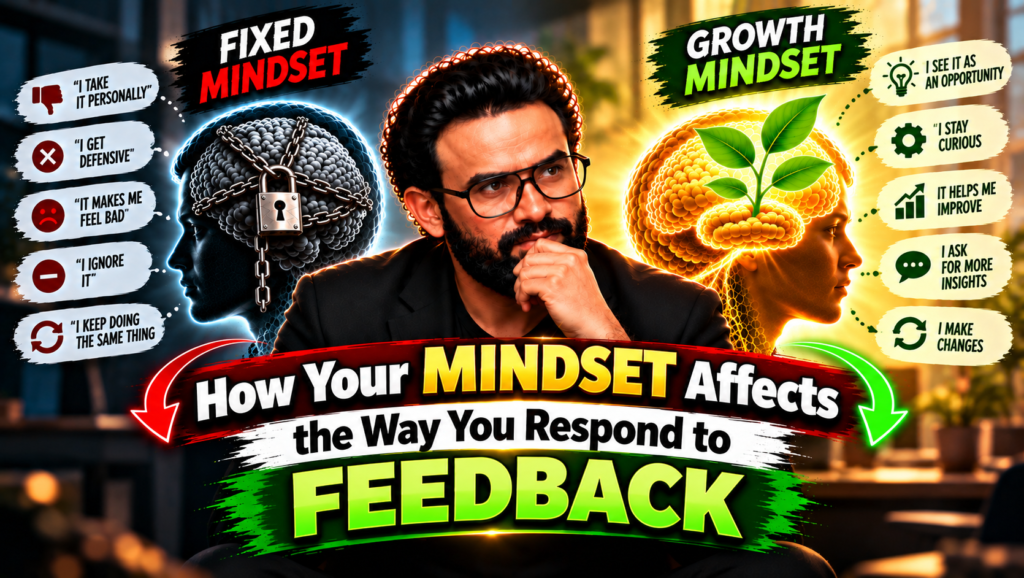
What Happens When You Have A Fixed Mindset?
With A Fixed Mindset, Abilities Can Feel Closely Connected To Identity.
So When Someone Says, “You Need To Improve This,” You May Hear:
“You Are Not Good Enough.”
For Example, Imagine A Student Receives This Feedback From A Teacher:
“Your Answer Is Correct, But Your Explanation Needs More Detail.”
A Fixed Mindset Might Interpret It As:
“I’m Bad At This Subject.”
The Student May Feel Embarrassed, Become Defensive, Or Avoid Asking Questions.
The Feedback Was About One Specific Part Of The Work.
But The Mind Turned It Into A Statement About The Person’s Overall Ability.
This Is One Of The Biggest Problems With A Fixed Mindset: Specific Feedback Can Become A Personal Judgment.
What Happens With A Growth Mindset?
A Growth Mindset Creates More Distance Between Who You Are And What You Currently Need To Improve.
The Same Student Might Think:
“My Answer Was Correct. Now I Know I Need To Improve My Explanation.”
That’s A Very Different Response.
The Student Doesn’t Have To Feel Happy About The Feedback.
They Simply Use It.
This Is An Important Point: Having A Growth Mindset Doesn’t Mean You Will Never Feel Disappointed, Frustrated, Or Defensive.
It Means You Can Learn To Move Beyond That First Emotional Reaction And Ask:
“What Can I Do With This Information?”
Feedback Is Information, Not An Identity
Imagine Someone Tells You:
“Your Presentation Was Difficult To Follow.”
There Are Two Ways You Could Interpret It.
Fixed Response:
“I’m Terrible At Presentations.”
Growth Response:
“What Made It Difficult To Follow? Was The Structure Unclear? Did I Explain Too Much? Should I Simplify The Slides?”
The Second Response Creates Possibilities.
You Now Have Something Specific To Work On.
Instead Of Judging Yourself, You’re Investigating The Problem.
That Shift Can Make Feedback Much More Useful.
Why Feedback Can Feel Uncomfortable
Even When Feedback Is Helpful, It Can Still Hurt.
Why?
Because Feedback Sometimes Challenges The Way We See Ourselves.
You Might Believe You’re A Good Communicator, Hard Worker, Creative Person, Or Strong Leader.
Then Someone Points Out Something You Need To Improve.
Your First Instinct May Be To Defend Yourself.
That’s Normal.
The Goal Isn’t To Eliminate That Reaction Completely.
The Goal Is To Create A Pause Between Receiving Feedback And Responding To It.
That Pause Gives You A Choice.
You Can React Immediately—Or You Can Understand First.
The Power Of Saying, “Tell Me More”
One Of The Most Useful Responses To Feedback Is Surprisingly Simple:
“Can You Tell Me More?”
Suppose Your Manager Says:
“Your Reports Need To Be Clearer.”
Instead Of Immediately Defending Your Work, Ask:
“Which Part Could Be Clearer?”
Now You Have Something Specific To Work With.
Good Questions Can Turn Vague Criticism Into Useful Information.
Try Asking:
- “What Specifically Should I Improve?”
- “Can You Give Me An Example?”
- “What Would A Better Version Look Like?”
- “What Should I Focus On First?”
- “Is There Something I’m Missing?”
You Don’t Have To Agree With Every Piece Of Feedback.
But Understanding It Before Rejecting It Can Be Valuable.
Not All Feedback Is Automatically Good
A Growth Mindset Doesn’t Mean Accepting Every Opinion As Truth.
This Is Important.
Some Feedback May Be Unclear.
Some May Be Based On Personal Preferences.
Some May Be Unfair.
Some May Come From Someone Who Doesn’t Understand The Situation.
So Instead Of Thinking:
“All Feedback Is Correct,”
Think:
“All Feedback Is Worth Evaluating.”
Ask Yourself:
Is This Specific?
Is It Relevant?
Does It Help Me Improve?
Is There Evidence Behind It?
Does This Person Understand The Situation?
Then Decide What To Use.
A Growth Mindset Makes You Open-Minded, Not Mindless.
Turn Feedback Into An Action
Feedback Becomes Valuable When It Leads To Action.
Suppose Someone Tells You:
“Your Writing Is Difficult To Read.”
Don’t Stop At Feeling Bad About It.
Ask:
“What Can I Change?”
Maybe You Can:
- Use Shorter Sentences.
- Organize Ideas With Headings.
- Remove Unnecessary Words.
- Use Simpler Language.
- Ask Someone To Review Your Next Draft.
Now Feedback Has Become A Learning Tool.
The Goal Isn’t Simply To Collect Feedback.
The Goal Is To Convert Useful Feedback Into Better Decisions And Behaviors.
Feedback And Learning
Think About Learning To Drive.
A Driving Instructor Might Tell You:
“You’re Turning Too Quickly.”
That Doesn’t Mean:
“You’re A Bad Driver.”
It Means:
“Here’s Something You Need To Adjust.”
Learning Works The Same Way.
A Teacher Corrects An Answer.
A Coach Adjusts Your Technique.
A Manager Improves Your Work.
A Customer Explains What They Didn’t Like.
Each Situation Can Reveal Something You Couldn’t See Yourself.
Feedback Becomes Especially Powerful When You Stop Seeing Correction As Failure.
Sometimes Correction Is Simply Direction.
How To Respond Better To Feedback
Try This Simple Four-Step Process.
1. Pause
Don’t Respond Immediately If You’re Emotional.
Give Yourself A Moment.
2. Listen
Make Sure You Understand What The Person Is Actually Saying.
Don’t Prepare Your Defense While They’re Still Talking.
3. Evaluate
Ask Whether The Feedback Is Specific, Useful, And Relevant.
4. Act
Choose One Improvement You Can Make.
This Simple Process Can Completely Change Your Relationship With Feedback.
Change The Question
A Fixed Mindset Often Asks:
“What Does This Feedback Say About Me?”
A Growth Mindset Asks:
“What Can This Feedback Teach Me?”
That’s The Real Shift.
The First Question Focuses On Identity.
The Second Focuses On Improvement.
And Improvement Gives You Something You Can Actually Work With.
Build Your Mega Mindset
Feedback Doesn’t Have To Be A Threat To Your Confidence.
It Can Become A Tool For Developing It.
You Don’t Need To Believe Every Criticism.
You Don’t Need To Agree With Every Opinion.
And You Don’t Need To Become Perfect.
Instead, Develop The Habit Of Listening Carefully, Thinking Objectively, Keeping What Is Useful, And Acting On It.
The Next Time Someone Gives You Feedback, Don’t Immediately Ask:
“Do They Think I’m Good Enough?”
Ask:
“Is There Something Here That Can Help Me Become Better?”
That Question Can Turn A Difficult Moment Into A Learning Opportunity.
Your Mindset Doesn’t Change The Feedback.
It Changes What You Do With The Feedback.
And Sometimes, That Small Shift Can Open A Much Bigger Possibility.
Mega Mindset. Mega Possibilities.
Frequently Asked Questions
1. How Does Mindset Affect The Way We Receive Feedback?
Your Mindset Can Influence How You Interpret Feedback. A Fixed Mindset May See It As A Judgment Of Ability, While A Growth Mindset Is More Likely To View Useful Feedback As Information For Improvement.
2. Does Having A Growth Mindset Mean Accepting All Feedback?
No. A Growth Mindset Means Being Willing To Consider Feedback, Evaluate It, And Learn From Useful Information. You Can Disagree With Feedback That Is Unfair, Irrelevant, Or Unsupported.
3. Why Do People Sometimes Become Defensive When Receiving Feedback?
Feedback Can Feel Personal When Someone Connects Their Performance With Their Identity Or Self-Worth. Taking A Pause And Asking Clarifying Questions Can Make It Easier To Respond Thoughtfully.
4. What Is The Best Way To Respond To Constructive Criticism?
Listen Carefully, Avoid Reacting Immediately, Ask For Specific Examples, Evaluate The Feedback, And Identify One Practical Improvement You Can Make.
5. Can Feedback Help Develop A Growth Mindset?
Yes. When Feedback Is Treated As Information Rather Than A Personal Judgment, It Can Encourage Reflection, Learning, And Improvement.
6. What Should I Say When I Don’t Understand Someone’s Feedback?
Try Asking, “Can You Give Me An Example?” Or “What Specifically Would You Like Me To Improve?” Specific Questions Can Turn Vague Feedback Into Useful Guidance.
7. How Can I Stop Taking Feedback Personally?
Separate Your Identity From Your Current Performance. Remind Yourself That Having Something To Improve Doesn’t Mean You Are Incapable. It Simply Means There Is An Opportunity To Learn.